




For some, it is a checklist; for others, a test of internal will. Some are driven by recovery — from cancer, from an eating disorder, from depression. And some, like true athletes, are motivated by gummy bears.
Colorado peaks have drawn inspiration and desire since the first indigenous inhabitants made a life in their shadow. Just west of Salida, the Angel of Shavano is said to be encapsulated on the snowy face of the mountain of the same name. A legend, repeated among several indigenous cultures, claims that a princess sacrificed herself so her tears could bring water to the sprawling valley, now known as Chaffee County.
In more modern times, the mountains have inspired songs by Katharine Lee Bates (“America the Beautiful”), John Denver (“Rocky Mountain High”), and Stevie Nicks (“Landslide”), arguably any of which would be a more beautiful and representative national anthem than the wartime tune we currently uphold.
Colorado is home to 58 peaks that stand above 14,000 feet. They span the length of the state, some in dense ranges, and some that stand alone. To be considered one of the 58, a peak must hit certain criteria. First, and most obviously, the peak must stand at le ast 14,000 feet above sea level. Second, there must be at least 300 feet of elevation gain between summits, meaning if a ridgeline connects them, one must go up and down 300 feet for it to be considered two different peaks. For a hiker to claim they have climbed a mountain, they must gain at least three thousand feet of elevation during their adventure.
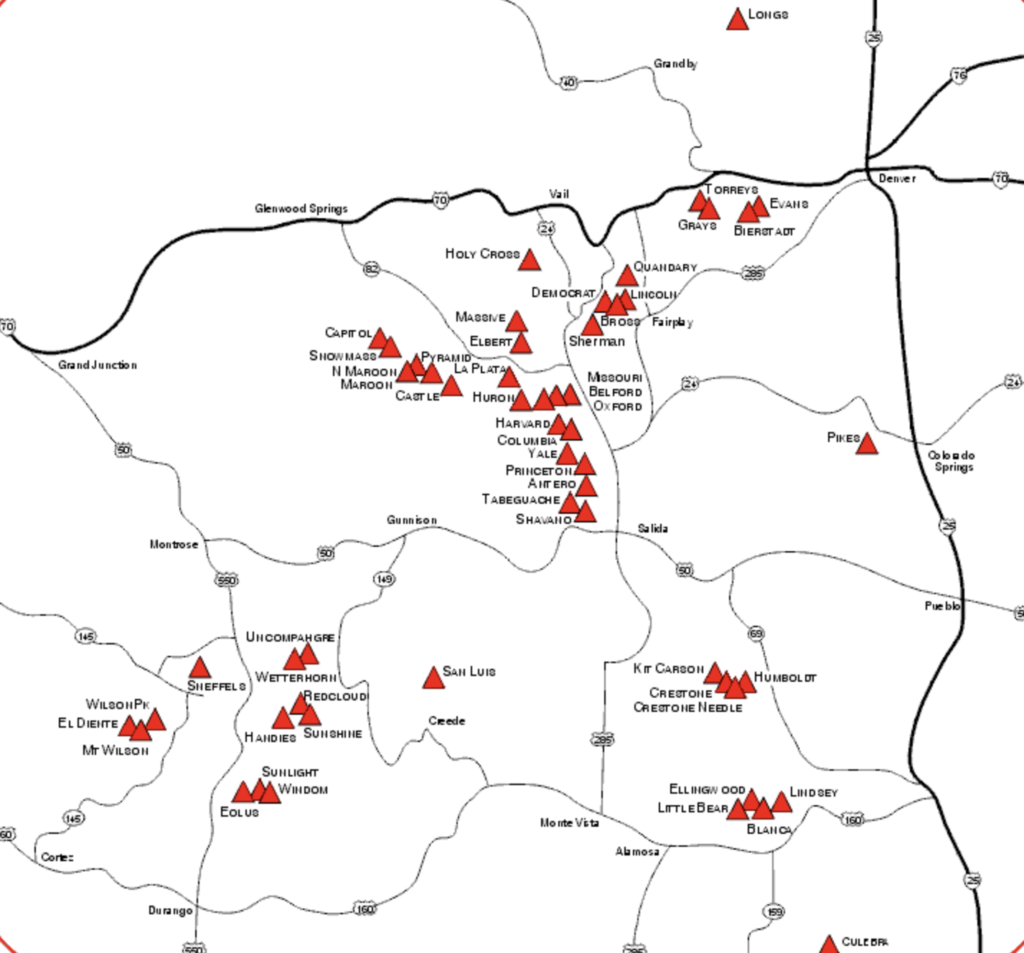
Map of Colorado’s 58 Fourteeners
What is “peak bagging”?
For many hikers, it is a goal to climb all 58 of the Fourteeners. Some make this a lifetime mission, while others attempt it in shorter time frames or even consecutively. The peaks stretch from the midline of the state to the far western border. The classes of difficulty range from Class I, an easy hike, to Class IV, which involves some climbing. While bagging a Fourteener is a major undertaking, it is attained by many, all coming from different backgrounds and abilities.
Who is taking on the challenge?
The mountains inspire passion and adventure in people of all walks of life. With early mornings, late-night camps, cold summits, and heavy packs, over 250,000 hikers make their way up the peaks every year. Each one travels with their own motivations, experience, and strength.
The Volunteer
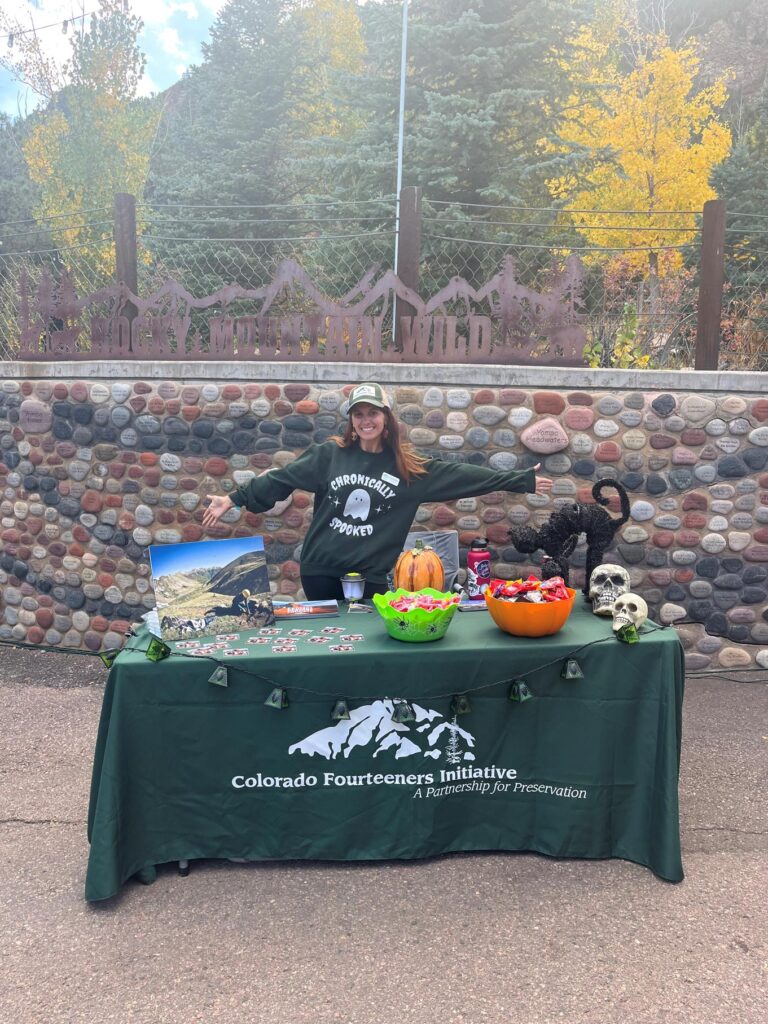
Emily Hemendinger spends her work week as a psychological clinical director at Anschutz Medical Campus. She runs programs, sees patients, and speaks at conferences, making a name for herself in the field of obsessive-compulsive disorder. In her free time, she is in the mountains. When not hiking, she volunteers with the Colorado Fourteeners Initiative as a peak steward, helping spread information about safety and sustainability at trailheads or along the trails leading to the summit. She explains, “I find it rewarding to educate people on why they shouldn’t be trampling through the alpine environment or why their dog should be on a leash.” Emily goes on to explain that hikers have expressed annoyance, especially after the pandemic, with the crowded trails, but with her work, she can help people find successful ways to share the space. “I think it can be frustrating for people that the peaks are crowded, but ultimately, we all deserve to be out there.”
Hemendinger began her fourteener journey about a decade ago after moving to Colorado. In her first year, she climbed six — all Class I — and located within a few hours of the Front Range. As she gained confidence, she started to push her boundaries and learn how to navigate the high alpine environment safely. She explains, “Being able to do all of the Fourteeners, I think they offered various experiences and challenges. Being seventeen years recovered from an eating disorder myself, I love being able to be in a place where I can fuel and push my body to the limit and see how resilient and amazing it can be when I’m in a place of recovery.” She goes on to state that this accomplishment has also given her a greater sense of gratitude and appreciation for her body.
Emily’s Top Tip: If it is financially reasonable, hire a guide. As she explains, “For Capitol and the Maroon Bells, I did not have anyone to go with and did not want to take those on alone. I understand that it is not reasonable for everyone, but it made it one of my best experiences to have a knowledgeable person helping with route finding and keeping my wits about me.”
The Couple
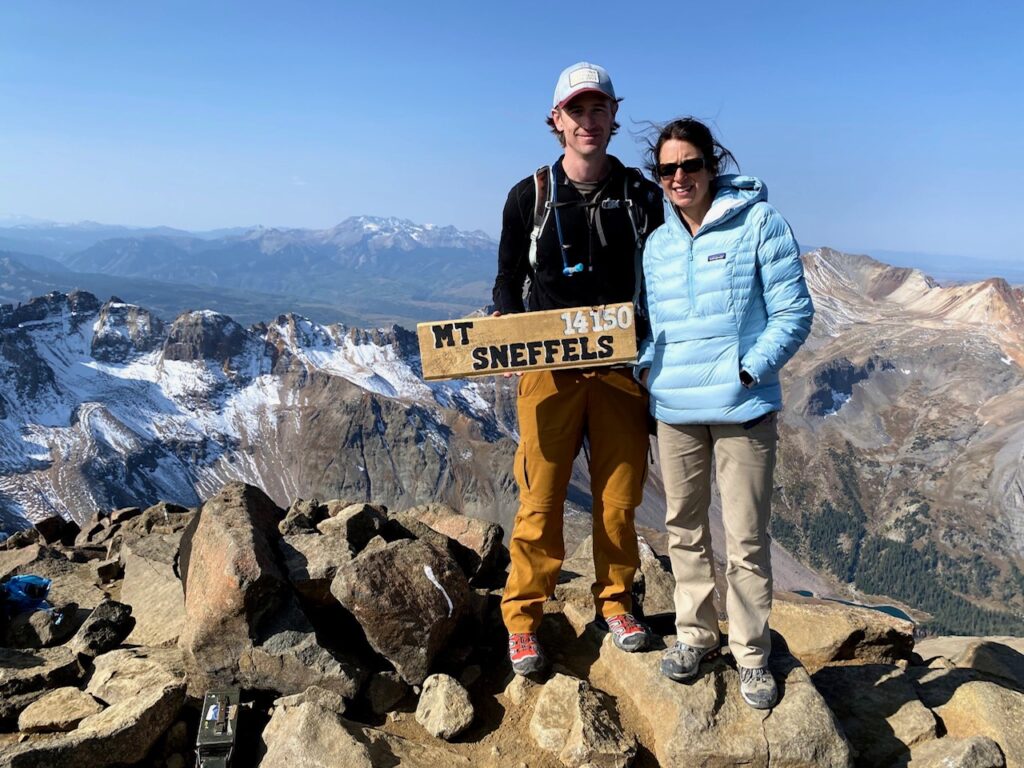
Adrienne and Colin Lane were childhood sweethearts from North Carolina. When they relocated to Colorado, there was a hold up with most of their belongings, and they went nearly a month without any possessions. It was then that they started exploring the peaks, first climbing Bierstadt, then making their way to longer, more demanding climbs and adventures.
Both Adrienne and Colin work alternative schedules, with Adrienne as a neonatal practitioner and Colin as a social worker. Working long shifts allows them to group days off to complete larger objectives. This was especially necessary when Adrienne faced a major health crisis. She recounts, “I was diagnosed with breast cancer in 2019. For me, the mountains were what was normal. And so in the midst of our lives, feeling like a bomb just went off, we could go to the mountains, feel like nothing changed.”
Now, cancer-free and having completed all the Fourteeners, Adrienne and Colin enjoy pushing their limits on new trails and backpacking, taking on some long, through (or continuous) hikes on long, rugged trails.
Adrienne and Colin’s Top Tip: Take your time and enjoy the experience. Colin explains, “I feel like people rush it a lot, and I get that. And it’s hard when you only have the weekends, which is why the Front Range peaks are packed, but take your time and enjoy it.” He recommends finding alternatives, taking longer routes, and trying backpacking.
The Advocate
Connor Koch came to Colorado immediately after graduation, being offered a position by Erik Weihenmayer, a renowned mountaineer who was the first to climb the tallest peak on every continent while completely blind. Connor was in charge of managing Erik’s keynote speaking business.
As a fledgling athlete, the Fourteeners were a way to forge his way into bigger adventures. Connor explains that he completed the Fourteeners two or three years after moving to Colorado, stating, “To me, that was just an excellent progression ramp of skills and risk and fitness and all the different things that go into decision making in the mountains.” As an athlete for Arc’Teryx, Connor has also climbed all of the Fourteeners in California, completed first descents of major ski mountaineering objectives, and helped lead the first wheelchair summit of a peak in Colorado.
In 2018, when Connor was still working with Weihenmeyer’s program, No Barriers, he was approached by Nerissa Cannon, a strong and spirited athlete who wanted to have the first wheelchair summit of a Colorado Fourteener. Connor planned and arranged for the right gear to help Nerissa summit. He states, “On the day, 30 strangers to Nerissa showed up and spent eight hours pushing, pulling, lifting, carrying, stabilizing her over creeks and up the ridge. And Nerissa, of course, is completely exhausted, right? She’s pushing her wheels; she’s using her core muscles to stay upright in her chair. Plus, it’s also totally exhausting to trust in people in that way.” Connor goes on to detail how crowded the trail was that day, how excited people were to be a part of such a monumental experience.
Connor’s Top Tip: Get creative. Connor explains, “I think you know, the further out I get from the 14ers project, as it were, the more gratitude and appreciation I have for what all that offered. I think it’s a unique challenge in terms of really, the sky’s the limit as far as how you want to link them up and how technical you want to get.”
The Creator
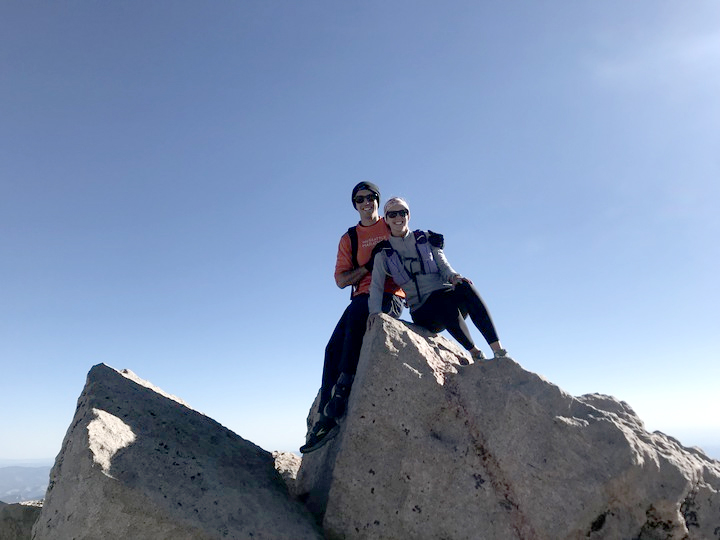
Greg Forkins hiked Longs Peak as his first fourteener with the rest of his Boy Scout troop, which was visiting from Illinois. Many years later, Greg moved to Colorado with his wife Keely to be closer to her family. “She and I started doing fourteeners right away after moving out here. We started with Pikes Peak, then resolved to climb the rest of the Fourteeners together.” It was from this goal that their passion project, 14er Summit Log, was born.
The log lists each peak with a place for a hiker to record the main details of their climb, such as time started and completed, which route was taken, who was there, and what plants and animals were seen. There is also space for the hiker to take more notes to remember the trip better. Much like a diary or gratitude journal, logging an adventure can be a way to remember an important milestone as time goes on. Greg said, “You might also see the blank pages and feel inspired to do more and push yourself.”
For Greg, there are deeper reasons. With a young child, he knows his mountain days will soon look different. “It’s really important to us that our son is growing up exposed to the outdoors. Hiking brought me closer to my dad during my Boy Scout days, and it’s something that my wife and I have bonded over, so we hope that climbing 14ers will keep our family close in the years ahead.”
Greg’s Top Tip: Do not give in to intimidation. He explains, “Although it can seem intimidating, with the right training and preparation, climbing fourteeners is more accessible than one might think. There is little that can compare to the feeling you get while standing on top of a 14,000-foot peak.”
The Family
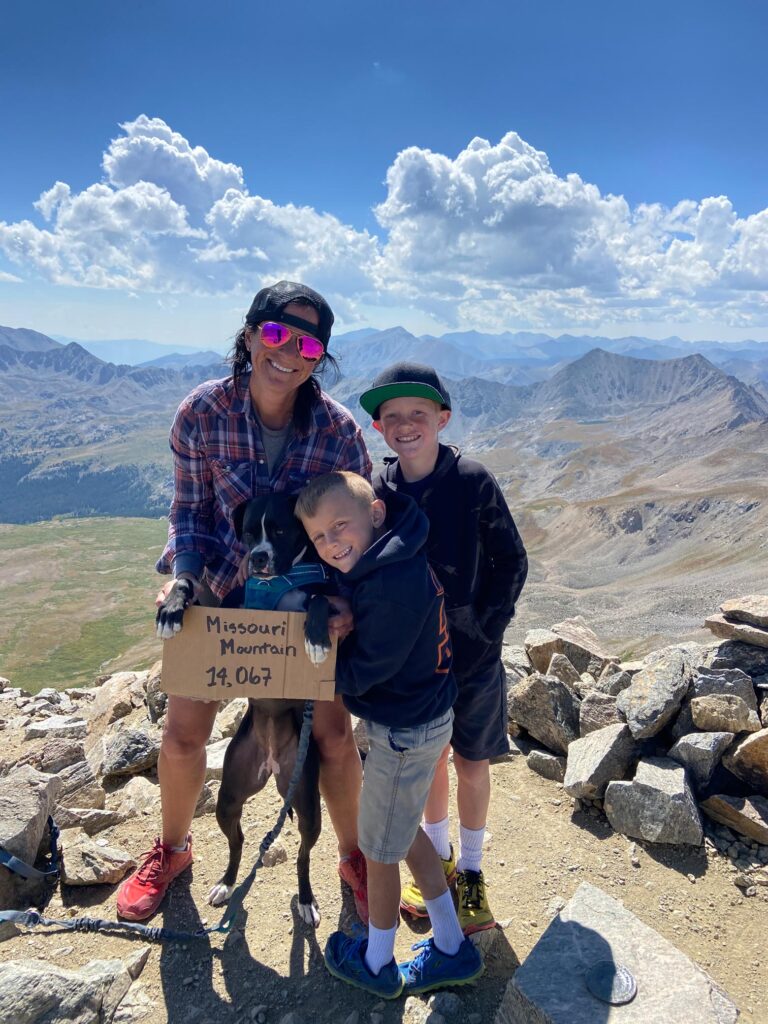
When Kate Beller started her fourteener journey, she was a single mom, finding her sanity and strength in trail running. At the time, her oldest son, Cole, was 5 years old, and she did not want to have to leave him every time she ventured to the trails, so together they started climbing the peaks. As the boys grew older, she started taking both of her sons. Kate goes on to retell that for a while, her younger son, Crew, would wear a Godzilla costume on the peaks, calling himself “Baby Godzilla,” adding some fun and whimsy to all they passed on the trails.
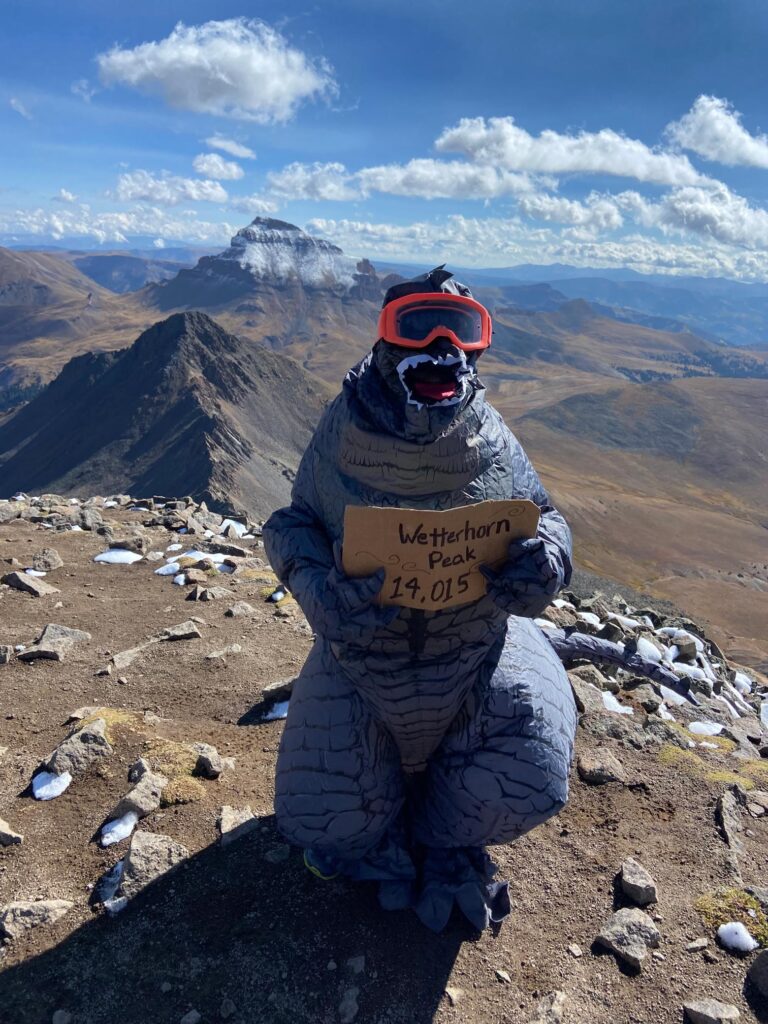 For Kate, she has learned to keep her personal goals and drive at bay. She states, “I don’t start a race and not finish the race.” Beyond this discovery, Kate has learned that both boys respond to different styles of encouragement. “I had to realize that I had to keep loving it. I didn’t want it to be something that he wasn’t enjoying anymore. He’s doing mountain biking and basketball, and he can have other things. And I’ve also told him that you don’t have to be a one-sport kid. You can enjoy multiple things.”
Kate’s Top Tip: Prioritize snacks. She explains, “When we started, I would give them a snack every half mile.” Kate believes this strategy helped the boys get more in tune with the distance traveled. Furthermore, Kate applied snacks on theme: “Haribo gummies — any kind — are always a must. Then themed things like Cheetos for Castle and Animal crackers for Antero, Twinkies for Tabeguache, and so on.”
The Self-Powered Athlete
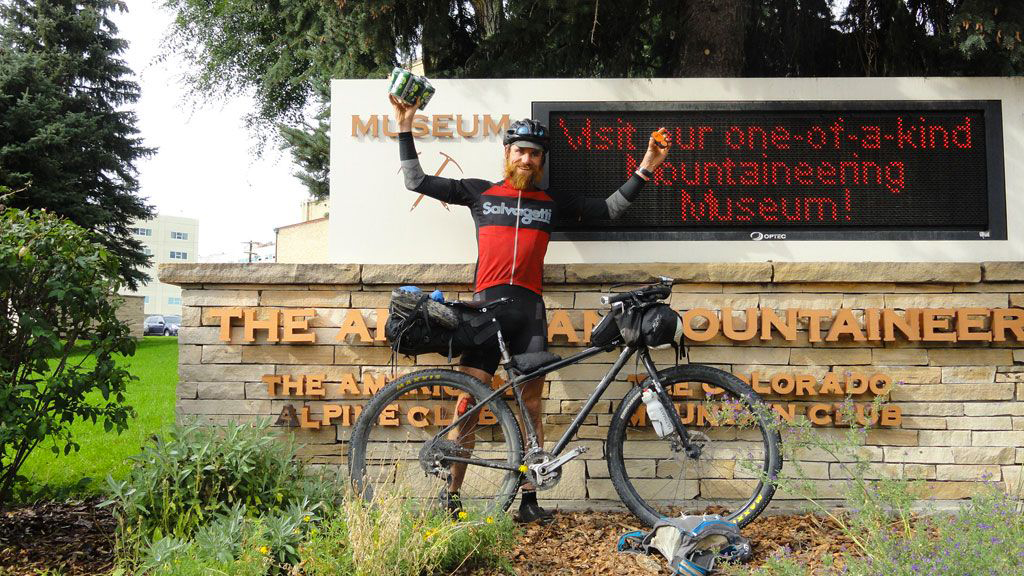
La Sportiva and Ultimate Direction athlete Justin Simoni rarely takes the conventional path. An athlete who makes art with his undertakings, he found a home in Colorado, taking on most major adventures on his bike. “I had already crossed the country three times on my bike when I hatched the idea to take on all the Fourteeners by bike.” As he started looking at maps and planning the attempt, he found that someone had completed this goal in 37 days in the ’90s.
“I moved from Denver to Boulder and just became like a Zen Buddhist monk, living in a little room and dedicating myself to this goal.” After six or seven months of training, I just felt ready to go. He started by riding his bike 100 miles from Golden to the base of Pikes Peak, then completing the 25 miles of hiking in one day. From there, the adventure became a whirlwind. “I ended each day thinking ‘Wow, that was nuts.” Eventually, Justin settled into using the bike during his recovery time, pushing his body to run the Fourteeners. With creativity, endurance, and speed, Justin knocked another three days off the attempt.
Justin’s Top Tip: Try leaving the car at home. “You catch the bus and ride up to Buena Vista, where you can ride your bike to the base of Shavano, where you can complete a hike. Justin states that all of this can be done in time to get home in time for dinner.
The Local Gal
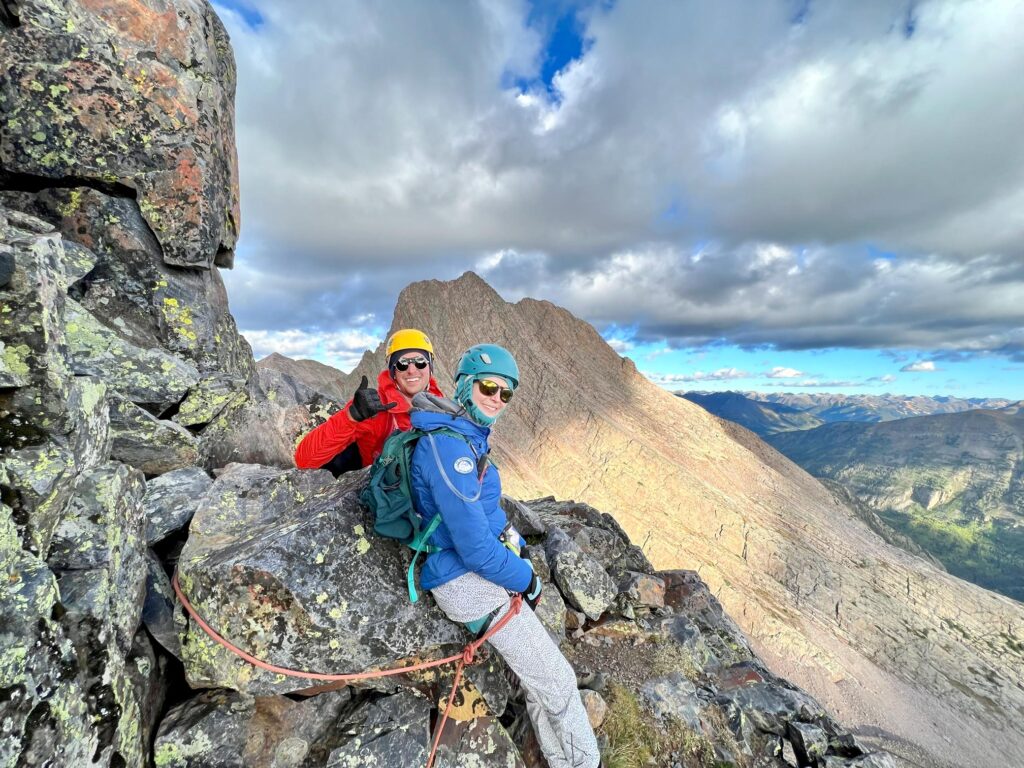
Kyra Whitworth grew up in Colorado, spending her formative weekends hiking and exploring the natural landscape. She explains, “I spent most of my childhood hiking or just being outside all the time, every spare moment, so that kind of just stuck. Then I met my husband in high school, and he had already done a couple of peaks, and I thought I would give it a try too.”
The peaks remained a pillar of her relationship, even when her partner moved to Iowa for dental school and Kyra remained in Colorado, adventuring. They spent their time together checking off peaks and growing in the sport together. They eventually got engaged on the Crestone Needle, solidifying their love and future together with the mountains as witnesses.
Kyra explains that having the list has motivated her. ?”I love going to new places and having new experiences and having a nice list of ‘Here’s all these places that I can go and new things to see.’” She refutes the idea that peak bagging is just about ticks on a list. “?People say, ‘Yeah, you’re just checking the box,’ but when you look back on it, even if it was really hard, you do feel a sense of accomplishment, and you’re like, ‘Hey, I got better because that was really hard,.’ I always [have] little things to learn on every single one that we’ve done.”
Kyra’s Top Tip: There will always be give and take regarding hiking with your partner. She explains, “?We’ve kind of traded off a lot regarding skill level. I feel like he started out at a more advanced level.” She states that she grew in her confidence and ability, making their team more dynamic and strong. She finishes with encouraging words for anyone getting ready to take their beloved on a new adventure: “You’re going to have to be patient or encouraging, and there’s gonna be times where you’re gonna have to make a really hard decision together. Be ready to listen.”
Looking at fellow trail users as a community, rather than a nuisance, can be the beginning of enjoying sharing the trails. Every person, making their way up the peak, has a motive, a goal, a drive to get them up high.