






Smart growth and affordable housing have become central issues in the Town of Erie over the past several years. As the town faces rapid population increases, local leaders are grappling with a fundamental question: how can Erie accommodate new residents in a way that supports long-term economic vitality, maintains quality of life, and avoids displacing current or prospective residents? Some advocates argue that the answer lies in affordable housing, while others believe it’s a band-aid solution. It’s a familiar challenge for many growing towns, but one that feels particularly urgent in Erie as policymakers make moves to chart out its future.
The town has made “Managing Growth” its top priority, and for good reason. The difference between smart growth and sprawl can shape a town’s future for decades. One leads to a connected, livable community; the other to rising costs, traffic congestion, and stretched infrastructure. But smart growth isn’t a single decision, it’s the result of choices about land use, transportation, zoning, and housing, all working together. And once those choices are set, they’re hard to undo. For a fast-growing town like Erie, the best option is to get it right the first time. That’s the goal behind Erie’s Comprehensive Plan, which outlines a vision for growth that meets community needs while preserving the small-town character that residents value. The vision builds on groundwork laid by previous leadership, particularly former Mayor Justin Brooks, who championed several affordable housing and smart growth initiatives that are still underway today. But under new leadership, questions have emerged about how that vision should evolve, what kinds of growth Erie needs most, and what role if any affordable housing should play.
What exactly is “affordable housing”, and what does it have to do with growth? Affordable housing refers to government supported houses that are priced so that they are easier to afford, specifically the U.S. The Department of Housing and Urban Development states that affordable housing shouldn’t cost a resident more than 30% of their income. Affordable housing is often stigmatized as a policy as some worry that affordable housing could lower property values, hurt the local economy, or increase crime with little upside. However, advocates for the policy suggest that affordable housing may not just be beneficial but key to ensuring smart growth. Research suggests affordable housing boosts local economies by increasing residents’ spending power, which supports small businesses and drives hiring. It’s also linked to better sustainability outcomes and healthier, more stable communities. If the goal is to create a more connected and livable, and sustainable community, then affordable housing appears to be a useful tool.
Despite general optimism around affordable housing, Mayor Moore has expressed caution regarding these projects, often emphasizing the need for due diligence. One such project sparking debate is the Cheeseman Property, Erie’s first affordable housing project under a regional initiative to expand affordable units across Boulder County. It marks an early step toward Erie’s goal to nearly triple the amount of affordable housing and reach 12% of total housing by 2035.

Mayor Moore
During both Town Council and study sessions, Mayor Moore has repeatedly questioned the public benefit of the Cheeseman Property project. He has said, “We don’t know how many of the applicants actually live in Erie or work in Erie,” and asked, “If this is really supposed to help Erie residents, then why don’t we have that information available to us?”
Much of his concern has centered on what he describes as a lack of transparency around applicant data. However, this information is legally protected and kept confidential due to regulations governing affordable housing, a fact that is seemingly overlooked. Regardless, this asserted lack of transparency has fueled questions about whether these developments will effectively serve Erie’s current and future residents. Critics argue that Moore’s emphasis on scrutinizing the data has contributed to delays, leaving Cheeseman and related projects in limbo. Yet, town staff maintain that the Cheeseman Property serves as a successful model for affordable housing development in Erie, highlighting its process and outcomes as a potential template for Coal Creek and other upcoming projects.
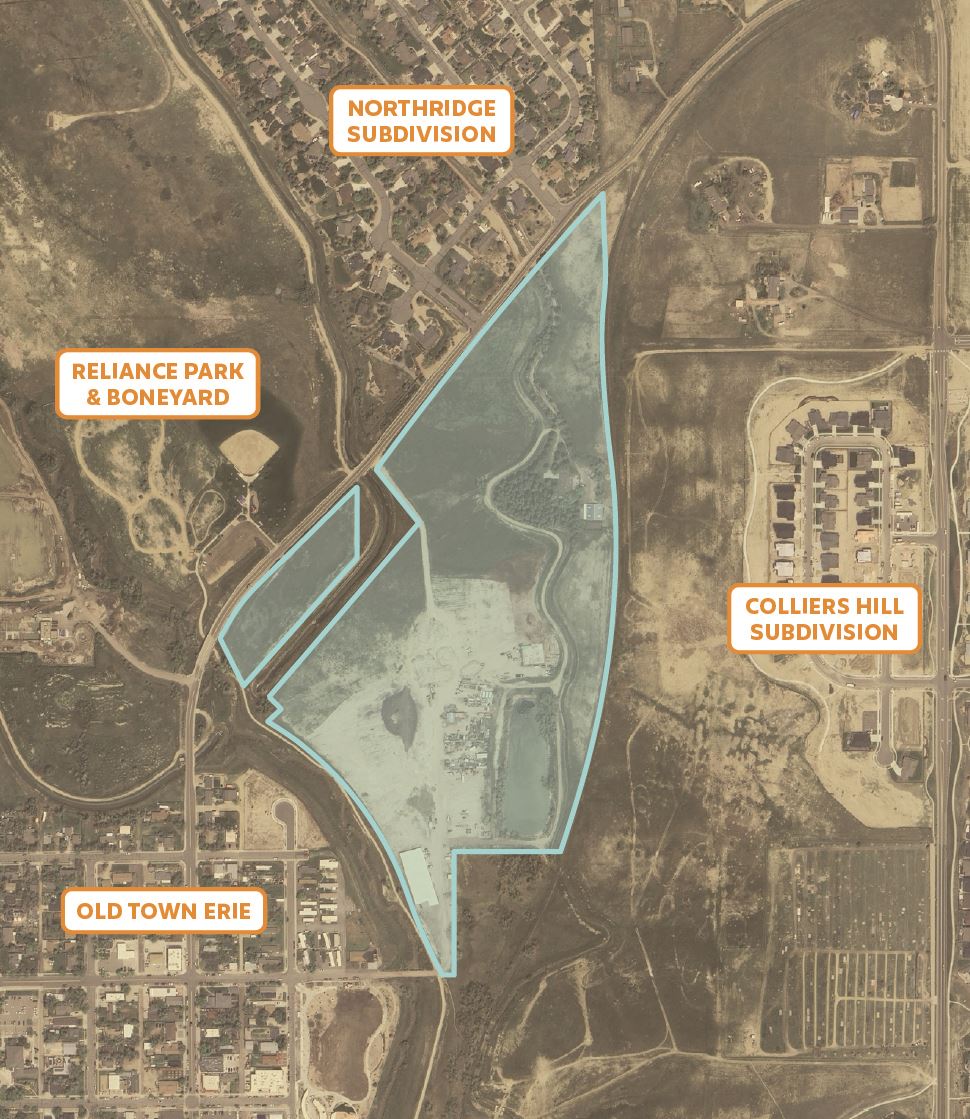
Getting the Cheeseman Property approved took years. Erie joined the regional housing partnership in 2020, set its own 12% affordable housing goal in 2021, and yet by April 2025, only 4.4% of current and projected units qualify as affordable. That slow progress helps explain the frustration around any sign of delay. Cheeseman has come to represent more than just one development; it’s become the foundation for Erie’s broader housing efforts. However, Cheeseman alone cannot get the town to its goal. That’s where the Coal Creek project comes in. Planned at a much larger scale than Cheeseman, it’s a critical piece of Erie’s path toward meeting its housing goals. The site is well-positioned: it links major trails and already includes plans for parks and open space. Yet during the April 15 study session, Mayor Moore raised the possibility of using the land exclusively for parks. He requested a feasibility study, and until the results come back, zoning decisions are paused. Without zoning, there can be no building permits, and no progress. The continued delay of Coal Creek risks more than simple inconvenience.
To understand the stakes behind Coal Creek’s delay, it’s important to follow the money. The $6.9 million purchase was funded through a mix of federal and local sources: $3.5 million from the American Rescue Plan Act (ARPA) and $3.4 million from Erie’s Trails, Natural Areas, and Community Character (TNACC) fund. But ARPA money comes with a deadline, if the land isn’t zoned by December 31, 2026, those funds must be reallocated to other ARPA-compliant projects, such as street maintenance. This means that Mayor Moore’s suggestion to repurpose the funds may be overly simplistic.
Town Attorney Kim Crawford explained “You can’t just say, ‘Oh, we changed our mind, we’re going to use it for open space,’” she continued, “The money was granted to us for a specific purpose. […] If this doesn’t go forward, then we’ve spent a bunch of money and we don’t have an affordable housing project and we don’t have the money.”
Each new delay pushes the timeline further into the future. And until the site is zoned, it can’t apply for state or federal housing grants, many of which prioritize “shovel-ready” developments. The longer Erie waits, the harder it becomes to take advantage of funding that could make the project feasible.
Coal Creek was meant to be a cornerstone of Erie’s affordable housing efforts. Without it, the town may be forced to rely on smaller, less cost-effective developments to reach its 12% affordability goal by 2035. At present, there’s no clear backup plan, raising concerns about whether that goal remains realistic.
“I just want to make sure that we’re not putting ourselves in a position where we’re going to lose money we already spent. That’s my biggest concern.” said Trustee Emily Baer.
Despite all the controversy and handwringing, the most consistent message from residents is simple: they want this. That reality hit home at last week’s Town Council meeting, when Claire Scott, an elderly resident who’s lived in Erie for 25 years, spoke with quiet urgency about how rising costs are making it nearly impossible for her to stay.
“I own my own home—luckily, I bought it 20 years ago,” she said. “I could never afford it now. But if I want to downsize and go to something smaller, there’s nowhere for me to go.”
Her story underscored what’s at stake. This issue isn’t just a matter of future growth, but also about ensuring longtime residents aren’t priced out of the community they helped build. Whether it’s young families looking to plant roots or older adults hoping to downsize, Erie residents have made affordable housing a priority. It’s now up to the mayor and counsel to show they’re listening.
It hit hard when, after 31 years, a beloved local publication closed its doors. Independent journalism in Colorado just got a little smaller. And a lot more vulnerable.
In Boulder County, only one locally-owned, independent news platform remains: Yellow Scene Magazine. We don’t answer to a corporate board. We’re not backed by a hedge fund. We answer and report to our readers..
The future isn’t found in selling out or corporate donors. It’s in community.
Help us keep unbought, unbossed journalism alive and delivered to your mailbox.
Become a sustaining supporter for just $8/month:

Democracy needs journalism more than ever. We’ve been telling the truth for 24 years. Your support helps us keep telling it for at least the next four years.