



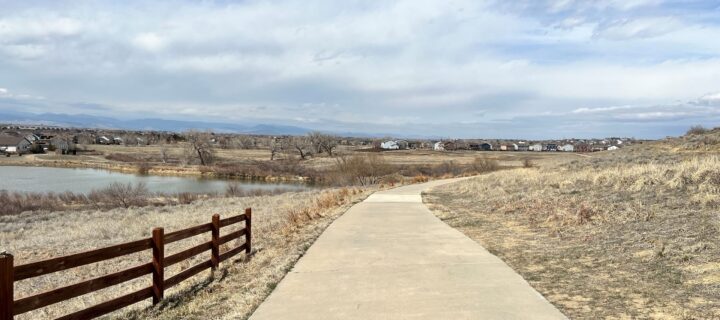

Erie’s debate over growth and affordability took another turn last week, as the Town Council asked staff to return with more information and additional options for the Coal Creek property, a 46.5-acre parcel that was once envisioned as a cornerstone of Erie’s affordable housing strategy.
The land, purchased in 2023 for $6.9 million through a mix of local and federal funds, represents the crossroads of two of Erie’s biggest policy goals: preserving open space and building homes that working families can afford. Half of the purchase was covered by federal American Rescue Plan Act (ARPA) funds earmarked for affordable housing, while the other half came from Erie’s Trails, Natural Areas, and Community Character (TNACC) program, which supports land conservation and recreation. That unusual funding split has left town leaders wrestling with how to balance fiscal responsibility, federal requirements, and community values.
Senior Planner Aly Burkhalter and Dig Studio founder Bill Vitek presented three concepts ranging from limited housing with agricultural preservation to a larger mixed-income neighborhood integrated with trail systems and restored open space. Each plan emphasized environmental restoration and floodplain protection, but none resolved the tension between development and conservation.
Mayor Andrew Moore acknowledged that the council had a “productive and candid” discussion but said the meeting raised more questions than answers. Since the town purchased the site, Moore and other trustees have walked the property and seen its challenges firsthand.
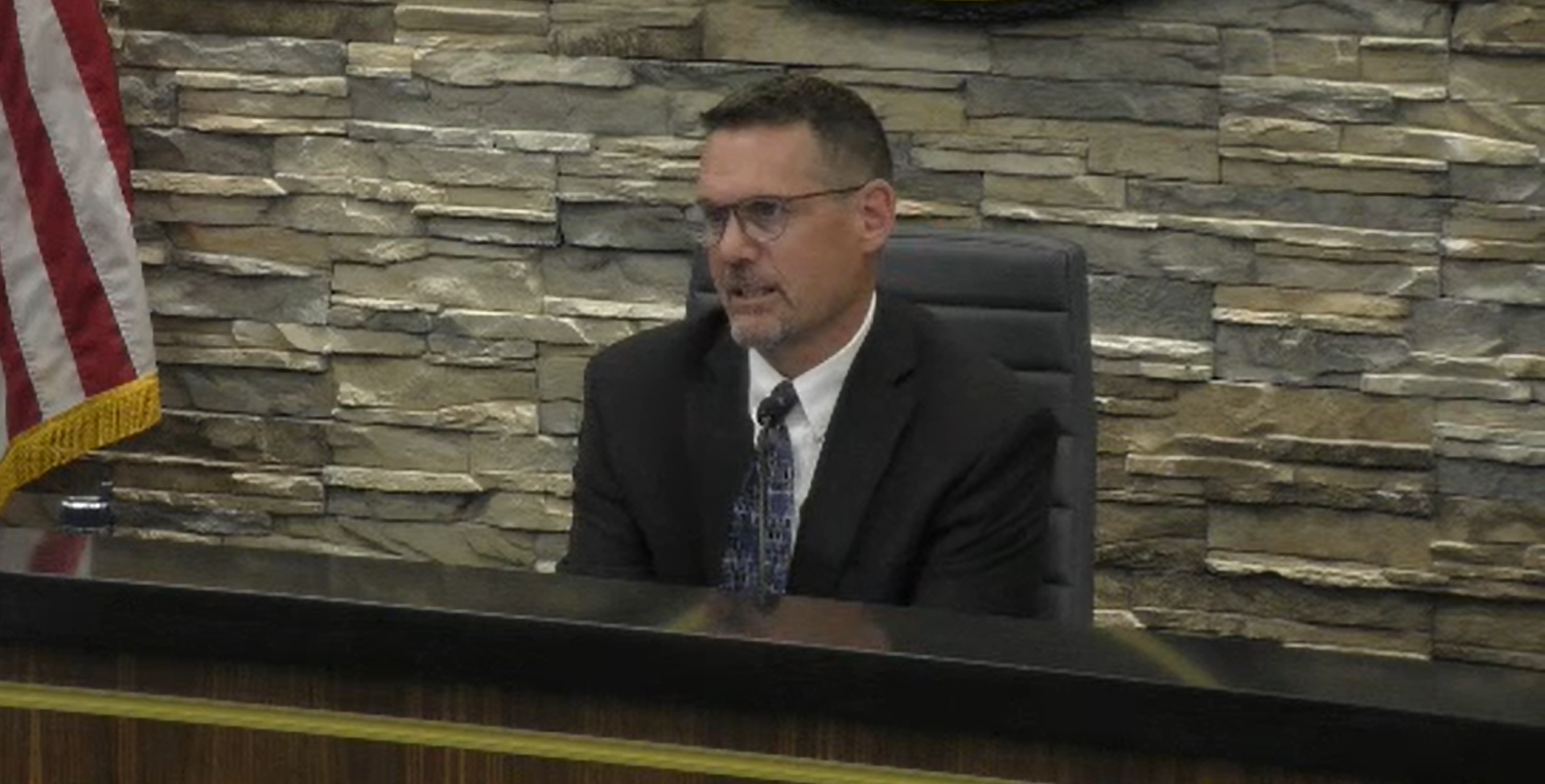
“I am struggling with this piece of property,” Moore said. “When I left the last discussion, I understood that we had to do affordable housing. Now I’m learning that this is mixed income, and the language says that it could include affordable housing. That changes my whole thought process here. This is a housing development right in the middle of a beautiful piece of land. Something seems off here.”
Councilmembers voiced a range of perspectives. Some, like Mayor Pro Tem Brandon Bell and Trustee Brian O’Connor, questioned whether the site’s steep topography, floodplain, and access limitations make it suitable for housing at all. Others, including Emily Baer and Anil Pesaramelli, emphasized the need to explore solutions that meet both housing and environmental goals.
“This is a complicated piece of land,” Baer said. “I still feel in my heart this could be a well thought-out and well-planned development if we give it a chance. I want to see it at its best and highest use.”
OSTAB, the town’s Open Space and Trails Advisory Board, has recommended against housing on the site, citing its ecological and scenic importance. Yet town staff maintain that using TNACC funds for the purchase doesn’t violate open-space contractsand that the inclusion of ARPA dollars legally and ethically ties the property to the affordable housing commitments that justified the purchase. Backing away from that purpose, even partially, could prove controversial.
The debate has become a test of Erie’s credibility on growth and affordability: whether the town will follow through on its commitment to build affordable housing or reconsider that goal amid political and community pressures.
Council ultimately decided to postpone any decision until a November 18 study session, directing staff to explore additional scenarios, including one for full open-space preservation, one for mixed-income housing, and one that reimagines the property altogether.
For now, Coal Creek stands as both an opportunity and a warning that Erie’s vision for smart, inclusive growth will mean little if it can’t decide what kind of community it wants to be.