





Back in August 2004, at the campus of Cal Poly Pomona, a crowd pressed shoulder to shoulder around a projector screen witnessed what would become one of the most replayed moment in competitive fighting game history: Evo Moment #37. Japan’s Daigo Umehara, down to a pixel of health in the Street Fighter III finals, survived what most players believed was an unblockable super from Justin Wong’s Chun-Li. Instead of folding, Daigo hit a string of frame-perfect parries, timed to each strike of Chun-Li’s iconic flurry, turning the tables, and snatching victory.
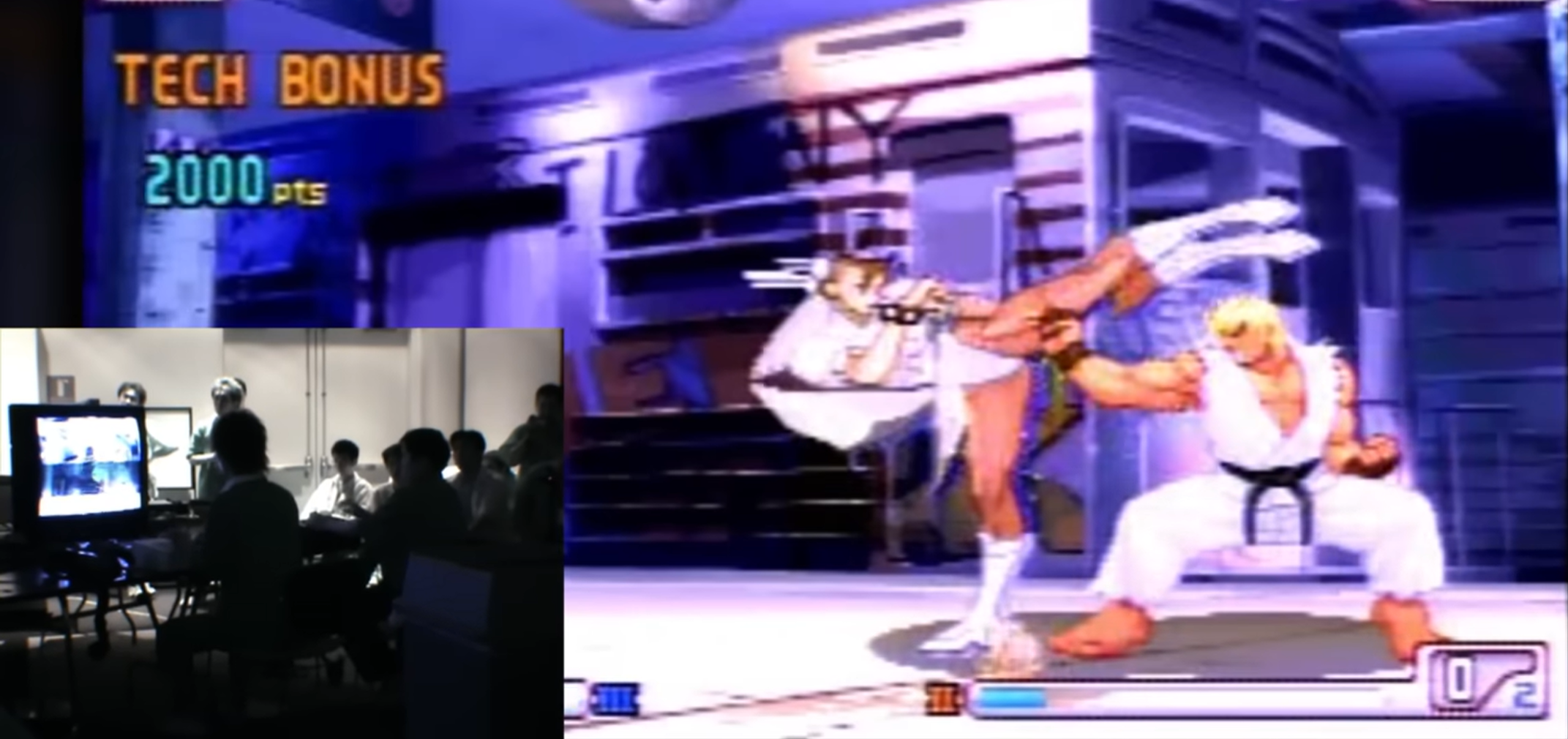
Daigo Umehara executes the legendary “Evo Moment #37” parry against Justin Wong’s Chun-Li during the Street Fighter III finals at Evo 2004.
For players inside the Fighting Game Community (FGC), this is a legendary moment. But outside the scene, tournaments like these often fly under the radar, and even when people have heard of e-sports, that doesn’t mean they have the access, support, or space to take part.
That idea, exposure versus access, came up repeatedly when I spoke with Donald Prellwitz, Longmont Library’s Device Specialist and the organizer behind something entirely new for the city: Longmont’s first-ever e-sports tournament. For Prellwitz, this small local bracket represents a first step toward equity in a space where opportunity is often gated by cost, equipment, and geography.
The idea began with Prellwitz’s long-standing love for gaming competitions.
“E-sports have kind of been a part of my life for a very long time. I started working in libraries back in 2015. This festival, in specific, has been a brainchild or passion project of mine in libraries for quite a while,” he told me.
His motivation came from what he noticed again and again: a gap in who gets to participate.
“A lot of it stems from experiences in libraries that showed a gap in equity when it came to certain opportunities. E-sports, especially, being one of those opportunities that is just missed out on by so many people simply because they don’t have access to it.”
Planning the event required a lot of passion and thoughtfulness. According to Prewllitz, “To plan this event we needed […] a committee of about thirteen individuals,” Prellwitz explained. “Our goal was to figure out what was possible. As part of that planning, we looked at racing games, fighting games, 5 v 5 MOBA games, so we looked at a lot of that.”
The team needed a game that was realistic for staff to run and accessible to as many people as possible. That meant something one-on-one, easy to learn, and playable on almost any device.
Brawlhalla fit perfectly.
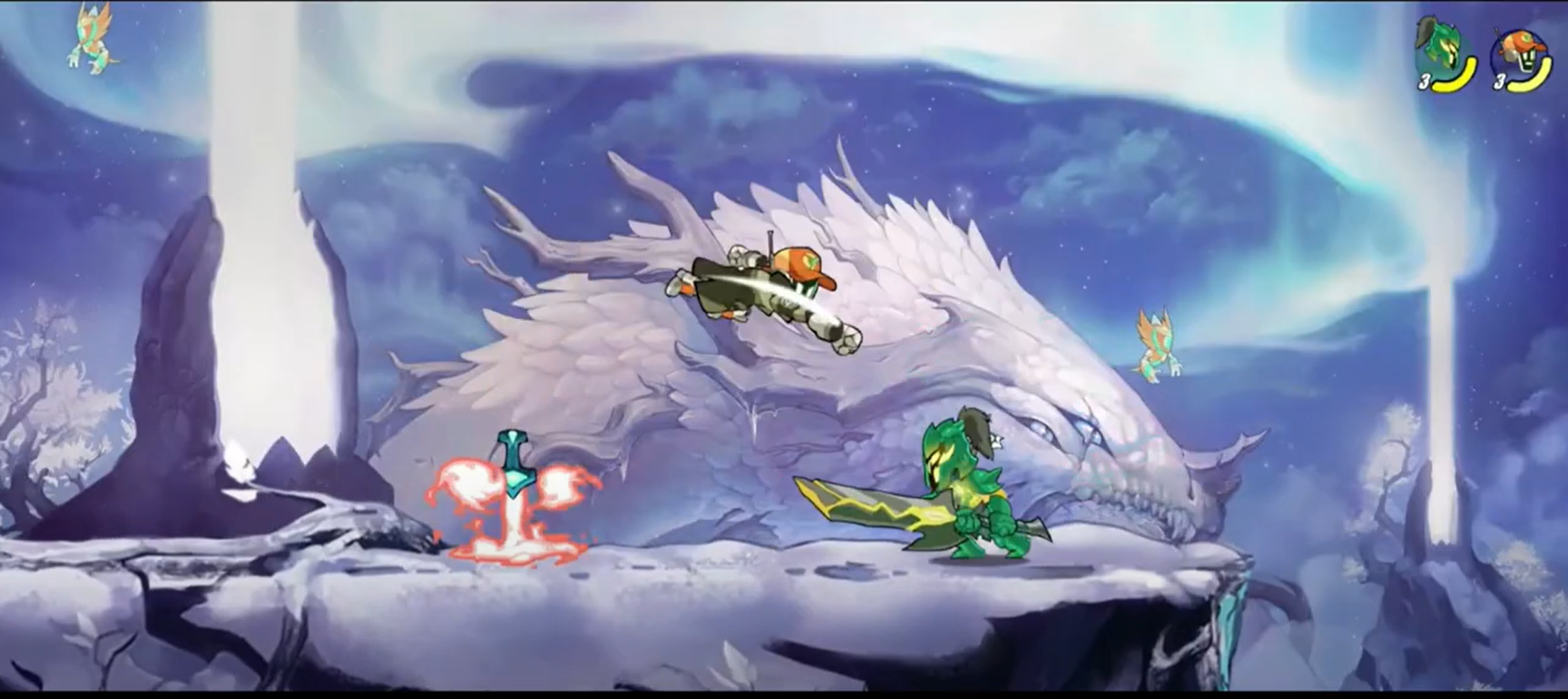
It’s a simple, fast-paced fighting game that’s completely free and works on phones, tablets, consoles, and computers. For a public library trying to build equity in a competitive scene where gear can cost hundreds of dollars, Brawlhalla checked every box.
This was Prellwitz’s first time running a tournament on this scale, and the process came with lessons. One of the surprising challenges was just getting the word out.
“We weren’t sure what the program would be because similar programs aren’t really that common, especially with the library demographic,” he said. After adjusting messaging and outreach, turnout for the second round of sign-ups grew far beyond what the team expected.
The players were learning too. Many had never touched Brawlhalla before registering.
“Most of our players didn’t know about Brawlhalla before the actual tournament. So, about a month or two before the tournament started, players started downloading the game and learning characters.”
Even so, the matches quickly showed depth.
“A lot of players had their own unique playstyles. We didn’t have players come in to just play a game. Players came in with intent, purpose, and a practiced regimen that they were trying to implement in matches.”
For Prellwitz, the biggest surprise wasn’t the skill of the gameplay. It was the connections forming in real time.

Players from the 13U and ABS divisions share their reflections following the 2025 Level Up Longmont Finals, held on September 27, highlighting standout performances and memorable moments
“Watching the players communicate during these matches was really refreshing to see,” he said. “A lot of them were talking to each other during the matches. And, after the matches, they continued playing just for fun. A few players ended up talking to each other, exchanged information with each other to potentially meet up later. It was really heartwarming to see that there is a gaming community in Longmont, that there are other people who share the same interests.”
For many people, the idea that fighting games build social skills seems counterintuitive, but anyone deep in the FGC understands it well. These games can foster a deep sense of respect and connection among competitors. Each opponent is a new puzzle, a new obstacle, a new temporary teacher. In good-faith competition, the same rival you’re trying to defeat often becomes the person who teaches you how to grow.
Where It Goes From Here
The tournament concluded earlier this fall, but Prellwitz is already thinking about what comes next.
“I would love to see tournaments that go intra-library or maybe you have organizations that have teams and then they send them to the library to compete. I would love to see it grow into something that outgrows us and flourish.”
A Brawlhalla tournament might seem small, but the doors it opens aren’t. Evo’s biggest prize pool came from MultiVersus, Brawlhalla’s closest cousin, with $100,000 up for grabs. Street Fighter 6’s latest Capcom Cup handed out a $1 million first-place check.
For Longmont, this first bracket is a rare chance to tap into a competitive world that’s usually expensive to break into. It is only up from here.
The ones who dared to fight City Hall.
When Boulder denied public access to police body-cam footage, we took it to court. Our fight for transparency is now before the Colorado Supreme Court — because accountability doesn’t stop at the city line.
Through December 31, every gift to Yellow Scene will be matched — dollar for dollar — through the Colorado Media Project’s Matching Grant. Give & Get Democracy this Holiday Season. Your $8 recurring monthly support not only gets you YS delivered to your house, but it’s matched for the entire year, bringing that $8/month to $192.
Because Independent journalism isn’t just about telling stories. It’s about protecting your right to know, holding power accountable, and keeping democracy in the light. This is #newsCOneeds