





Colorado state senator Judy Amabile is leading the effort to pass a bill that would shift the authority over minimum wage regulation to the state. The proposal is dividing local Democrats, restaurant owners, and labor advocates.

House Bill 1208, introduced in early 2025, would lower the minimum wage for tipped workers in any city that has adopted a higher local rate than the state’s, including Denver and Boulder County. The bill would affect more than 21,000 tipped workers and reduce their wages by an average of $2.50 an hour (or roughly $5,000 a year), according to the Colorado Sun. The bill is sponsored by Representatives Alex Valdez and Steven Woodrow of Denver, Senator Judy Amabile of Boulder, and Senator Lindsey Daugherty of Jefferson County.
What would the bill do?
In short, the bill would lower the base pay for tipped workers in cities with minimum wages above the state rate, while still requiring total earnings, including tips, to meet the local minimum. Supporters say this will help struggling restaurants manage labor costs. Opponents argue that the change will harm workers.
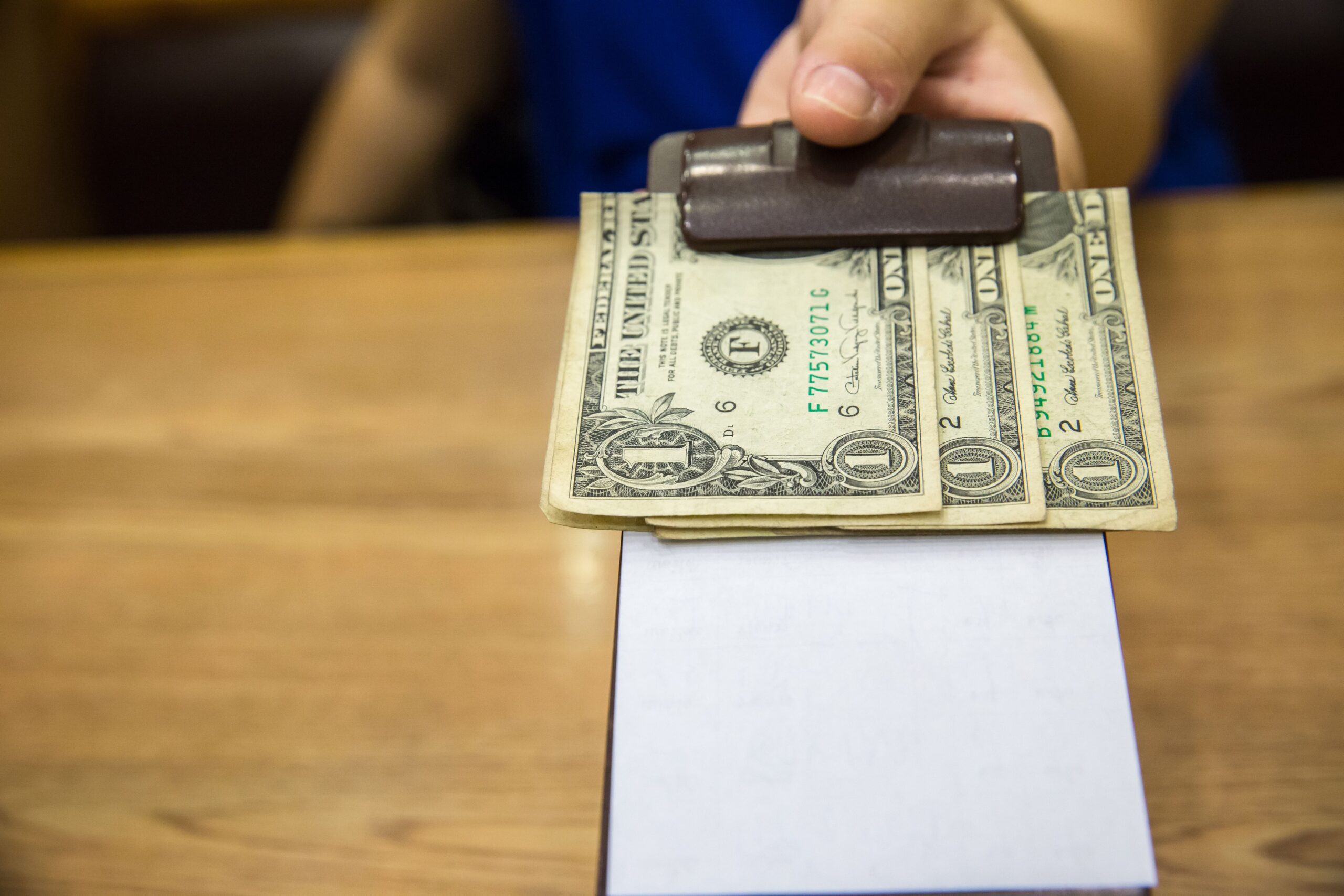
Under current Colorado law, businesses can pay tipped workers $3.02 less per hour than the standard minimum wage, based on the assumption that tips will fill the gap. This difference is known as the tip credit. If tips fall short, employers must make up the difference. Because Boulder and Boulder County have higher minimum wages, their tipped minimums are also higher. Colorado’s tipped minimum wage is about $11.79, while Boulder County’s is $12.55. The bill would bring Boulder’s tipped minimum down to the state’s rate of $11.79. Workers would still be legally entitled to earn the full local minimum wage once tips are factored in. House Bill 1208 would separate the tipped wage from the minimum wage so that cities could raise wages for non-tipped workers without automatically raising wages for tipped workers. Local governments could begin lowering their tipped wage on January 1, 2026, if the bill becomes law.
Supporters argue that the bill is necessary to help restaurants keep their doors open. According to Boulder Reporting Lab, groups such as the Boulder Chamber, Downtown Boulder Partnership, and Visit Boulder back the bill, saying Boulder’s minimum wage puts strain on restaurants during a periods of financial vulnerability.
Senator Amabile said restaurant owners hope to redirect the savings from reduced tipped wages toward higher rent, food costs, and overall labor expenses, which they see as essential to staying in business.
“Some are characterizing this bill as anti-labor. That is wrong and misleading,” Amabile said in the Daily Camera.
“The bill is a pragmatic, reasonable attempt to rebalance the tip credit for the benefit of all workers and the small, mom-and-pop businesses that are key to thriving communities.”
The sponsors frame the bill as an effort to stabilize restaurants by addressing the widening gap between tipped and non-tipped wages. They want to give employers more room to pay untipped workers. Under federal law, the minimum wage for most workers is $7.25 an hour, and in 14 states this also applies to tipped workers. Federal rules set a floor, not a ceiling, so each state decides its own rates. The result is a patchwork of standards that vary based on location and whether a worker is tipped.
“Many of these workers can earn up to $40 or more with tips, on good days. But these rates are often unpredictable; as a result, workers often turn towards second jobs or social assistance programs like SNAP or Medicaid,” Alejandra Beatty said in an interview with Yellow Scene.
Beatty is a longtime labor advocate and a retired member of the Alphabet Workers Union Local 2009. She helped launch the union and served on its executive council. Over the past year, she has led the campaign to raise the minimum wage in Boulder County.
Supporters of the bill argue that raising menu prices to cover higher wages can drive customers away, creating more harm than a reduction in tipped minimums. However, research shows that restaurants often absorb higher labor costs through reduced turnover, modest price increases, or increased productivity. Between 2011 and 2014, states such as Washington and California, which require employers to pay tipped workers the full minimum wage, saw a 6 percent increase in the number of restaurants. States with tipped minimums saw a 4.1 percent increase.
Progressive labor advocates oppose the bill because it would allow cities to lower the tipped minimum but not raise it unless they also raise the standard minimum wage. Other critics want to eliminate the tipped minimum entirely so that all workers earn the full wage before tips. States like Washington, California, and Minnesota do not have a tipped credit. Workers receive the full minimum wage, and tips are additional income.
Critics say the tipped minimum system is difficult to comply with because tracking tips can be burdensome. A report from the National Employment Law Project found that more than one in ten workers in tipped occupations report hourly wages below the federal minimum wage even after tips are included.
A significant share of tipped workers also fall into roles where tips are inconsistent or not customary, yet they earn enough in tips during some parts of the month to be classified as tipped employees. Their incomes fluctuate with weather, the economy, and day-to-day customer patterns. Many rely on public assistance to bridge the gap.
Efforts to raise the tipped minimum wage have often met resistance from restaurant industry groups, which argue that higher wages would cause more economic harm than good. But many economists say that industry growth is not meaningfully hindered by higher wages. The success of states with a single minimum wage supports this point.
Research suggests that higher wages reduce employee turnover, lowering recruitment and training expenses. Workers who are more financially secure are often more productive and provide better customer service. For the industry to thrive, labor advocates argue, tips cannot serve as a substitute for a stable wage.
“I think all of us need to wake up to the fact that good wages drive a good economy,” Beatty said in her interview with Yellow Scene. “If people are making good wages, they go spend those wages in their local economies, and those businesses thrive.”
In a statement, the Governor’s office expressed support for the bill and urged local governments to follow through by lowering their tipped minimums. “The Governor supports efforts geared towards keeping restaurants that make our communities unique and open while ensuring that workers receive fair wages,” spokesperson Eric Maruyama said.
If signed into law, the bill could next affect Denver, which has one of the highest tipped minimum wages in Colorado and the country. Edgewater, Boulder County, and the city of Boulder, all of which have raised their local minimum wages above the state rate, would also be affected.
The ones who dared to fight City Hall.
When Boulder denied public access to police body-cam footage, we took it to court. Our fight for transparency is now before the Colorado Supreme Court — because accountability doesn’t stop at the city line.
Through December 31, every gift to Yellow Scene will be matched — dollar for dollar — through the Colorado Media Project’s Matching Grant.Give & Get Democracy this Holiday Season. Your $8 recurring monthly support not only gets you YS delivered to your house, but it’s matched for the entire year, bringing that $8/month to $192.
Because Independent journalism isn’t just about telling stories. It’s about protecting your right to know, holding power accountable, and keeping democracy in the light. This is #newsCOneeds Becoming a sustaining supporter today for $8 a month!