




On April 6, Weld County Commissioners approved a county code that will define data centers and where they can be developed. The ordinance (2026?01) updates Chapter 23 of Weld County Code by adding language about data centers, and guidelines on where they can be built. While not specific to one data center project, it adds parameters to what future projects can look like.
The ordinance applies to the entire unincorporated Weld County, and is not specific to one particular site.
The new code clarifies data centers as, “A building or buildings used to house information technology or telecommunications equipment with which digital information is processed, transferred, and/or stored, with no limitation on peak electrical load.”
This definition was amended following discussions and public comment during the April 6 Board of Commissioners meeting.
The code adds that data centers can “include associated ancillary structures, including but not limited to offices, security buildings, cooling water tanks, and backup power systems with a total generation of less than fifty megawatts.”
Commissioners clarified during the board meeting that the 50 watt limitation is just for backup power, and does not limit the total power of the project.
Several Weld County residents spoke during the public comment to share concerns about the possible impacts of AI data centers. Concerns they pointed out were possible noise pollution, water usage, and electric consumption. Several spoke out and asked the board to pause their decision.
“Put on the brakes a little bit,” one resident said.
A Loveland resident highlighted the current drought in Colorado, as a reason to delay moving forward with the new Code Ordinance.
“We understand well how precious water is in the world, but especially here in Colorado for our farms and ranchers,” she shared.
Another resident was more blunt in their reservations , “We don’t have the water for these things.”
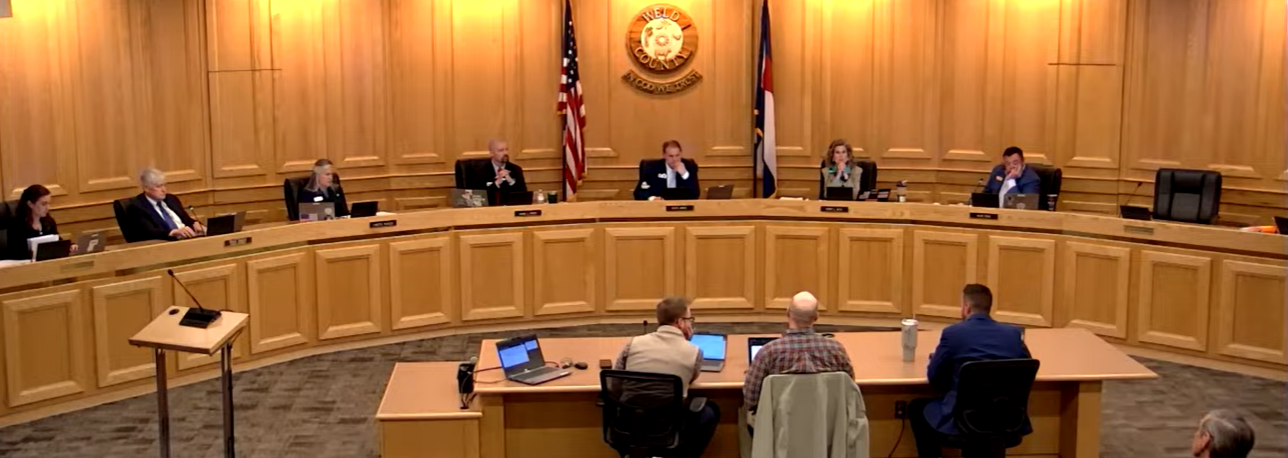
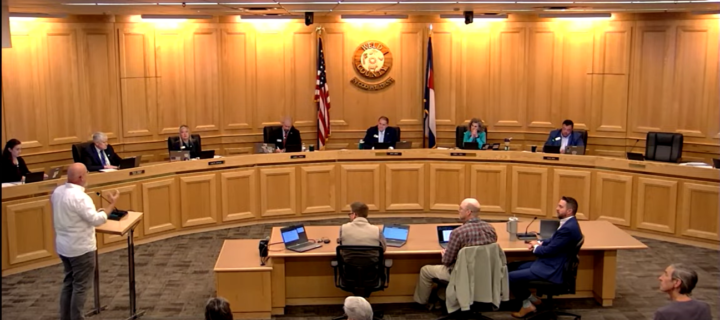
Weld County Board of Commissioners discuss Code Ordinance 2026-01 with the Department of Planning Services.
A.I. data centers across the country consumed around 17 billion gallons of water in 2023, according to the Association for Cleaning and Facility Solutions. Data centers are projected to be using approximately 68 billion gallons of water by 2028. Globally, they are expected to consume anywhere from 4.2 to 6.6 billion cubic meters of water in 2027, according to a 2023 study published by Cornell University.
David Eisenbraun, the director of Weld County’s Department of Planning and Development Services, told Yellow Scene Magazine that Colorado is familiar with water scarcity as a semi-arid state. Future developments could utilize dry cooling or closed loop systems, which rely on less water than some of the systems currently being used by data centers.
“However, we did not choose to mandate or specify a particular type of technology because in the data center world, technology is changing so rapidly, that was something we advised them [the board of commissioners] to not try and dictate,” Eisenbraun said.
As of April 7, over 40% of Weld County was in a severe drought, and around 38% was in an extreme drought. Just under 20% of the county was in a moderate drought.
Despite the worry some people shared, other residents were in support of the ordinance. One Weld County citizen felt it would “level the playing field,” while another stated the county needs to “keep moving forward.”
Code Ordinance 2026-01 was approved with a 4-1 vote, following around 3 hours of public comment from more than 25 residents. April 6 was the third reading of the ordinance, and each one included public comment.
Scott James was the “no” vote.
The Board of Commissioners first read the code in January. Since that time, board members have investigated data centers already in Colorado, and other parts of the country. They identified what worked well and what didn’t, according to the board members.
In addition to defining data centers, this ordinance also lays out where they can be built. With approval from a Use by Special Review (USR), they can be built in the I-1 (Light Industrial) zone. Centers can also be built in other Industrial Zone districts after being approved by an administrative Site Plan Review. The Use by Special Reviews are required to hold a public hearing in front of the Planning Commission and Board of County Commissioners.
The approved code ordinance also prohibits data centers being built on agricultural land, requires “Will Serve” letters for electricity, and implements dBA noise regulations.
Weld County is not the only place in Colorado where residents are vocal about opposing data center developments.
Tensions are on the rise in Colorado Springs due to a proposed data center near the Garden of the Gods, KOAA News5 reported. The crowd at a recent public forum was large enough to warrant two meetings, with a third one to be scheduled in the future. The debate got heated at times, according to KOAA, as several in attendance were clear about their opposition to the project.
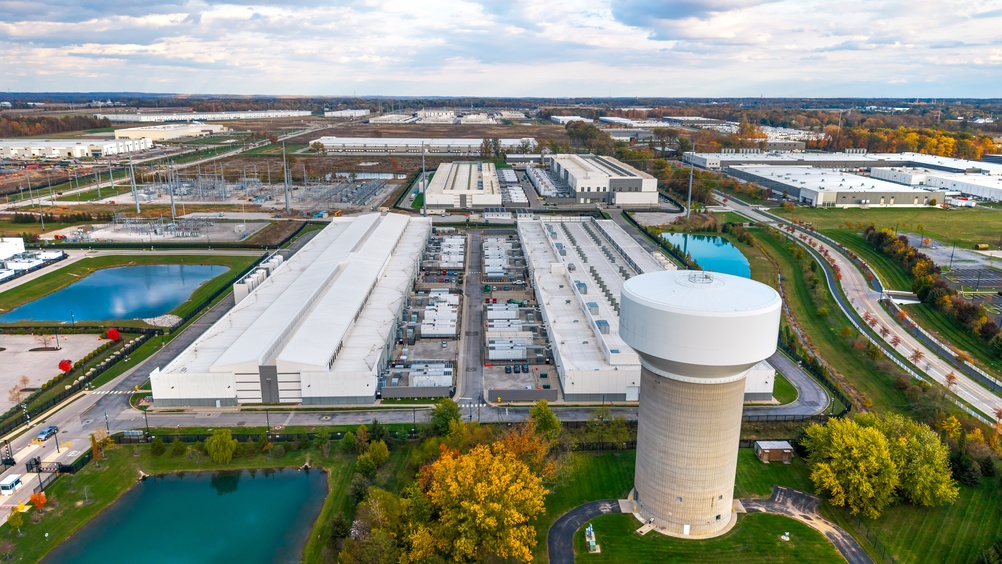
There are currently more than 50 data centers across 5 markets in Colorado, according to Data Center Map. The markets are Loveland, Walsenberg, Fort Collins, Denver, and Colorado Springs. Denver is the largest market, with 46 total data centers.
In February, Denver City Council announced that they would file a moratorium on new data centers. It will last for several months, if approved, but will not stop current projects. The pause will allow city officials to go over guardrails and review regulations regarding new data center developments in the city, according to Mayor Mike Johnston. Projects that were already permitted or are already underway might be expected to follow any new regulations.
Eisenbraun told Yellow Scene that the Department of Planning Services is not concerned about the environmental impacts of developing data centers in Weld County.
“We have good state agencies who can regulate the air quality permitting side,” Eisenbraun said. “We have a great county environmental health department who’s very good at managing wastewater, septic permits, things like that.”
Eisenbraun hopes that in the future, residents can see the potential benefits of data centers in Weld County.
“With these data centers being large property tax producers and then low infrastructure impacts, minimal impact on roads and traffic and things like that, I do think people are going to see the benefit of these when they’re done in the correct zone districts and properly mitigated,” he said.
A handful of data center projects have expressed interest in Weld County as a development site, according to Eisenbraun. However, no plans have been approved yet.
In today’s corporate world, finding true, honest journalism is getting harder, and that includes local news, too. From corporate takeovers to the nonprofit industry, finding reporters willing to ask the hard questions seems like a thing of the past.
Which is why Yellow Scene remains fiercely independent and never, ever accepts quid pro quo. We are only beholden to our readers, not funders.
The truth is, we really cannot do this without you. If you value our journalism, become a sustaining supporter for $8 a month. Your support keeps honest reporting alive and gets the hard copy delivered to your home.