




This piece is part of Yellow Scene Magazine’s Opinion section. The views expressed here are those of the author and do not represent a reported news position. At Yellow Scene, opinion pieces speak freely, challenge assumptions, and say the quiet parts out loud.
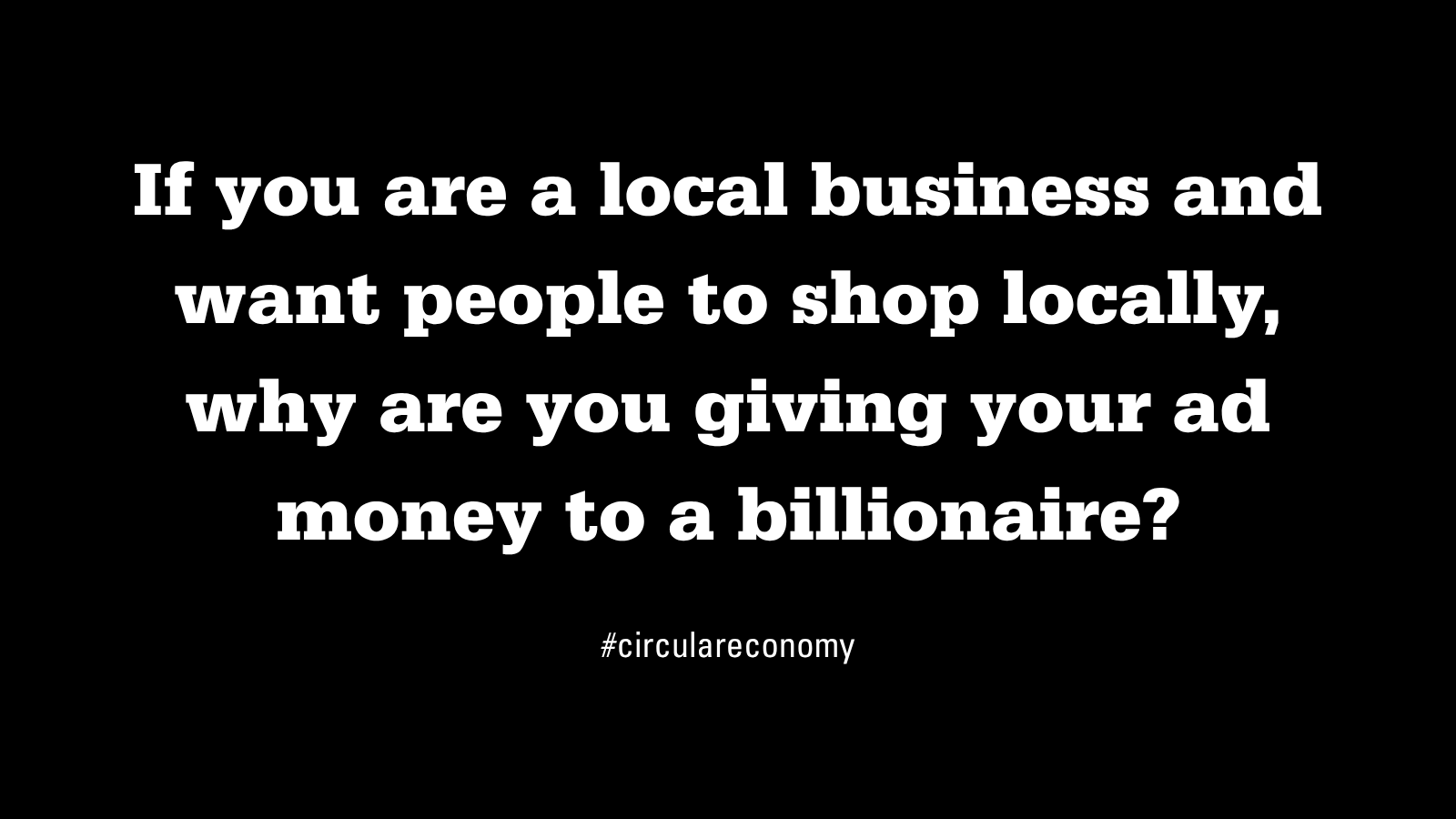
My answer to that question is YES. Yesterday, I had a local farm tell me they don’t pay for advertising except Meta. I see local shops boosting posts and paying for ads on Meta every day.
Daggers in the heart, that one stings.
Money leaves the community when it flows upward into platforms that have no stake in the survival of local economies.
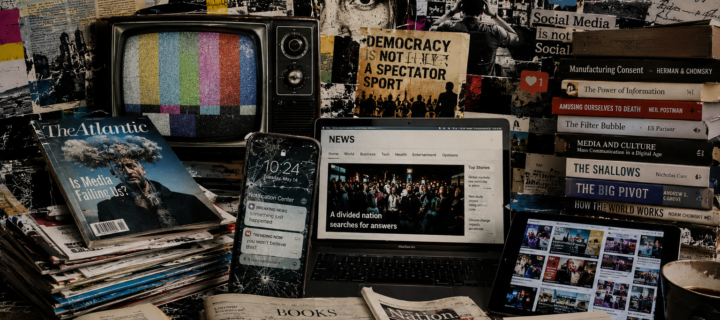
Journalism didn’t die. It’s been taken over by large and powerful forces who know that when you control the airwaves, you control the policies. Over my 40 years in media, I watched journalism slowly stop being treated as a public good and start being treated like a mechanism of control. What we are seeing now with Project 2025 didn’t suddenly appear out of nowhere. The consolidation of media, attacks on education, weakening of anti-trust laws, and concentration of wealth have been building for decades.
They have had a pretty successful run. Today, most major media is controlled by six mega conglomerates with enormous billionaire influence. Schools have been defunded, anti-trust laws weakened, and we are now watching concentrated power reshape democratic institutions themselves.
 Yet people still read and want high-touch experiences in their lives. Eighty-five percent of books sold are in print, and local bookstores are a rapidly growing market. Zines are in, and the analog wellness revolution is taking place.
At Yellow Scene, we use social media too. We post the articles we have published in print and online. Communities absolutely form there. But over the years we learned something important: likes don’t equal recall, and advertising metrics are often mistaken for meaningful engagement. We stopped boosting three years ago and have better engagement on stories now than before. That may be why print books, zines, local bookstores, record stores, and other human-scale experiences are resurging.
Even many successful streamers and independent news voices are proving the same point. Audiences still spend hours engaging with longform conversations, reporting, podcasts, interviews, books, and communities they trust. Social media often acts more like the messenger than the destination itself. The good ones are not succeeding because people suddenly love advertising interruptions or shallow engagement. In fact, 51% of audiences actively pay to avoid digital ads, with reports showing 93% now ignoring them altogether. Independent streamers succeed because people intentionally seek them out, trust their perspectives, and feel their time is being respected.
People did not stop consuming meaningful media. They stopped trusting media that stopped respecting them.
I recently interviewed a college intern who told me they got rid of their smartphone, switched to a flip phone, and eliminated social media entirely. Apparently, this isn’t unusual anymore.
Maybe there is just too much tech now to sort through it all?
It’s true most of us are not getting rid of our smartphones, computers, or Alexa, but what people need, since the beginning of humanity, is connection. They are finding that inside local bookstores, local farms, local music venues, and yes, local print journalism, when it offers something worth reading.
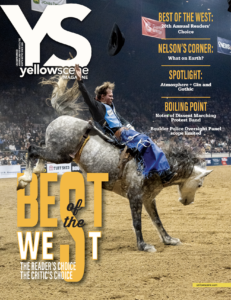
Yellow Scene’s Best of the West is just one example of authentic journalism, free from influence, while still writing about local businesses.
I do not think you will find a bigger advocate for shopping locally than the last and only locally owned news media platform serving all of Boulder County. Most other media platforms are now hedge fund-owned, corporate-owned, or franchise-operated.
We do have all the recent news nonprofit platforms starting up, some strong, but many are constrained by donor expectations to remain apolitical and nonpolarizing, avoiding the deeper “why” behind the stories.
We promote shopping local hard because we believe committing to circular economies is how we all survive the corporatization of everything by the billionaire class. Today, 75% of veterinarians and dentists are corporate-owned. This is happening to all industries, from auto repair to landscaping. Half of American homes are now owned by corporations. It used to be that 70% of businesses in America were sole proprietorships or small businesses. Today, it is down to 50%.
Local economies don’t survive on transactions alone. They survive on trust, shared information, accountability, and public participation. Local journalism is part of that infrastructure too.
At Yellow Scene, we resist that takeover.
Our press remains free. With a long 40-year career in media, I did not used to have to explain that we don’t accept quid pro quo. I did indeed drink the Seymour Hersh Kool-Aid that journalism matters. Not only are we the last locally owned publication, but we are also one of the few that do not accept sponsored content. Sponsored content is paid articles. In the old days, they said PAID ADVERTISEMENT on them, but not anymore. They are simply published as if they are independent journalism. Most people figure it out, though. When you have a full-page story on an insurance broker, it becomes obvious. Where it hits the slippery slope is when political organizations buy it while it’s presented as an actual article.
I won’t do it. I will quit before I do. I am committed to local journalism more than ever, even if it is not the pathway to riches. I think we have a lot more in common with our small local businesses than giant behemoths.
Sponsored content is a disservice to everyone, and I can’t believe after 40 years that this is what I am fighting. Not who does the better journalism, but who is still doing actual journalism. I’ve been doing this too long to spend my time putting out advertorials just to survive. We are focused on making something people actually want to read and, critically, coverage that is free of monetary influence.
That does not mean advertising itself is evil. It’s only evil if you do evil things with it. But there should be a clear line between what is editorial coverage and what is advertising, and respect should be given when people say they do not want advertising tracking them everywhere they go.
We happily help local businesses design advertisements that tell their stories in authentic and creative ways. One of the benefits of print is that advertisements exist alongside the reading experience instead of constantly interrupting it. Readers know what an ad is, and good ads can still add personality, discovery, and texture to the pages. Local businesses help make up our local community, and people often appreciate their print ads. The good streamers and independent media voices understand this too. They keep advertising separate from their coverage, or their audiences support them directly so they do not have to rely heavily on ads at all.
Do local businesses and organizations get coverage in Yellow Scene? All the time, but not for money.
We think the work local-owned shops are doing is important too. If people want to fight back against the corporate takeover of everything, shop local.
 But to provide a free press, we still have to pay our writers, artists, printers, mailing costs, and drivers to produce, print, distribute, and deliver 25,000 copies filled with award-winning journalism. We understand our local organizations’ plight, as we operate on slim margins too.
Maybe Meta is less the problem than the symptom of a very confusing advertising world. For the last 20 years, small businesses have been told print was dead, digital was the future, and journalism was going by the wayside. Somewhere along the line, likes and analytics became mistaken for meaningful engagement.
But journalism will never die. There will always be truth tellers in this world. Sometimes people just want to sit down and read something worth their time, and that they can trust.
If communities want independent journalism free from corporate or political influence, they have to participate in the same circular economy they advocate for when they say “shop local.”
People are searching for real connection more than ever in a world increasingly shaped by algorithms, corporate consolidation, and manufactured engagement.
In today’s corporate world, finding true, honest journalism is getting harder, and that includes local news, too. From corporate takeovers to the nonprofit industry, finding reporters willing to ask the hard questions seems like a thing of the past.
Which is why Yellow Scene remains fiercely independent and never, ever accepts quid pro quo. We are only beholden to our readers, not funders.
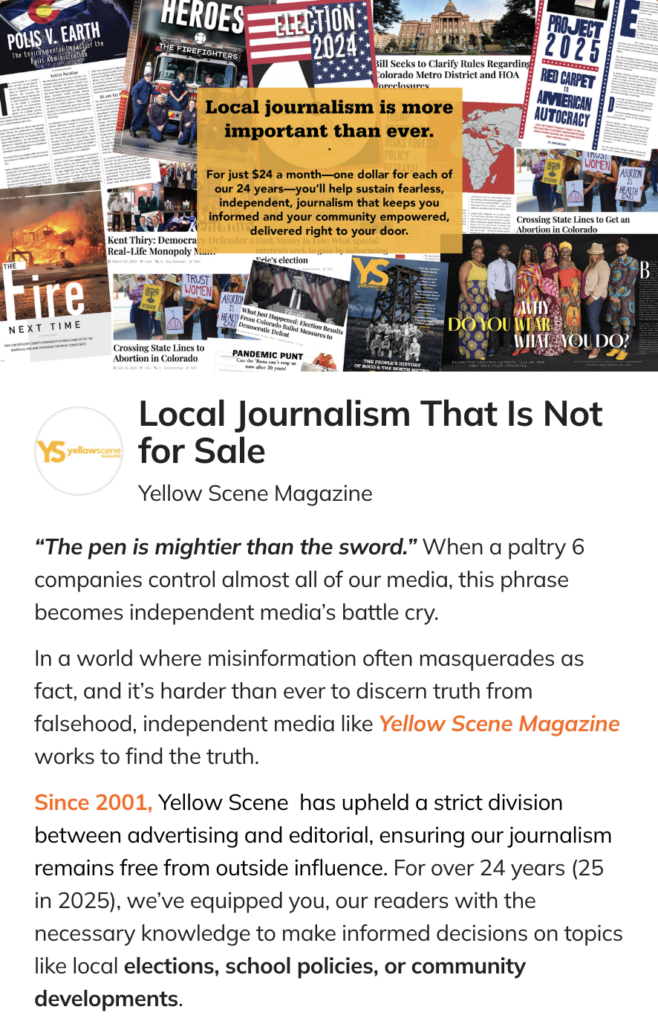
The truth is, we really cannot do this without you. If you value our journalism, become a sustaining supporter for $8 a month. Your support keeps honest reporting alive and gets the hard copy delivered to your home.