





Have you ever purchased a wonderful-looking container of strawberries from the grocery store, only to find those shiny, bright red berries are mere tasteless imposters? Or perhaps you’ve tried one of those little seedless personal watermelons on sale in February. You did all the tests—looked for the yellow “field spot,” felt its weightiness in your hand, and noted a slight softness at the stem. It’s a nice, ripe watermelon! Then you got home, cut into it, and discovered that your beautiful fruit produced what can only be described as crunchy water. How disappointing!
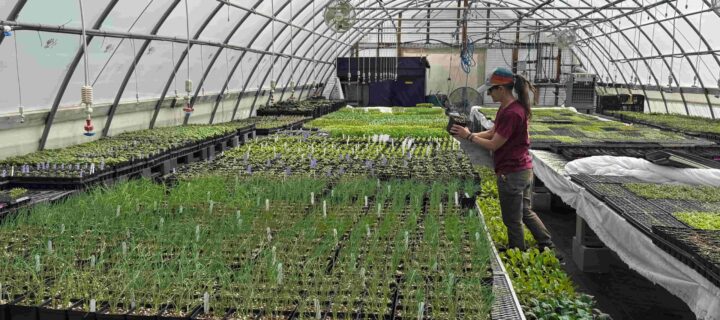
As Erin Dreistadt, owner of Aspen Moon Farm in Hygiene said, that tasteless February watermelon went through an epic and very unnatural journey to get to your local grocery store. It’s a journey that sapped that watermelon of its natural flavor and character. It was likely picked from its vine way too early and to keep it looking good on its adventure, the watermelon may have been sprayed with a protective coating to maintain its shine and color. Then, it was shipped in dark containers over great distances. After traveling thousands of miles and reaching its destination here in Colorado, it waited in a warehouse before finally making it into the produce section of a massive grocery store, where a weary 3:00 am produce stocker carefully placed it in a marketing-optimized display.
From seed to table, that watermelon had been expertly engineered and managed—not for taste or quality, but for production efficiency, distribution, and “shelf appeal”—all for the purpose of presenting the unsuspecting consumer with a picture of a manufactured idea of a “quality” watermelon, shined up and free of dirt. The fact that the watermelon tastes bad is not surprising. The fact that it even made it to the end of this voyage looking good is an impressive feat of modern commerce with one goal in mind: the final sale at the check-out counter. According to calculations by Gemini, a single two-pound seedless watermelon from Honduras requires almost a pound of carbon emissions (nearly half its own weight) to reach the Lafayette Walmart produce section.
There’s another way to go about this but it requires you, the consumer, to take ownership, put thought into your food-buying approach, and adjust your expectations. A century ago, the average Coloradan would not have been able to find a February watermelon at their local market simply because it wasn’t in season. The very idea would have been preposterous. A commitment to buying and eating local requires a “table rotation” approach that leverages the availability of locally produced foods well-suited for our ecology and climate.
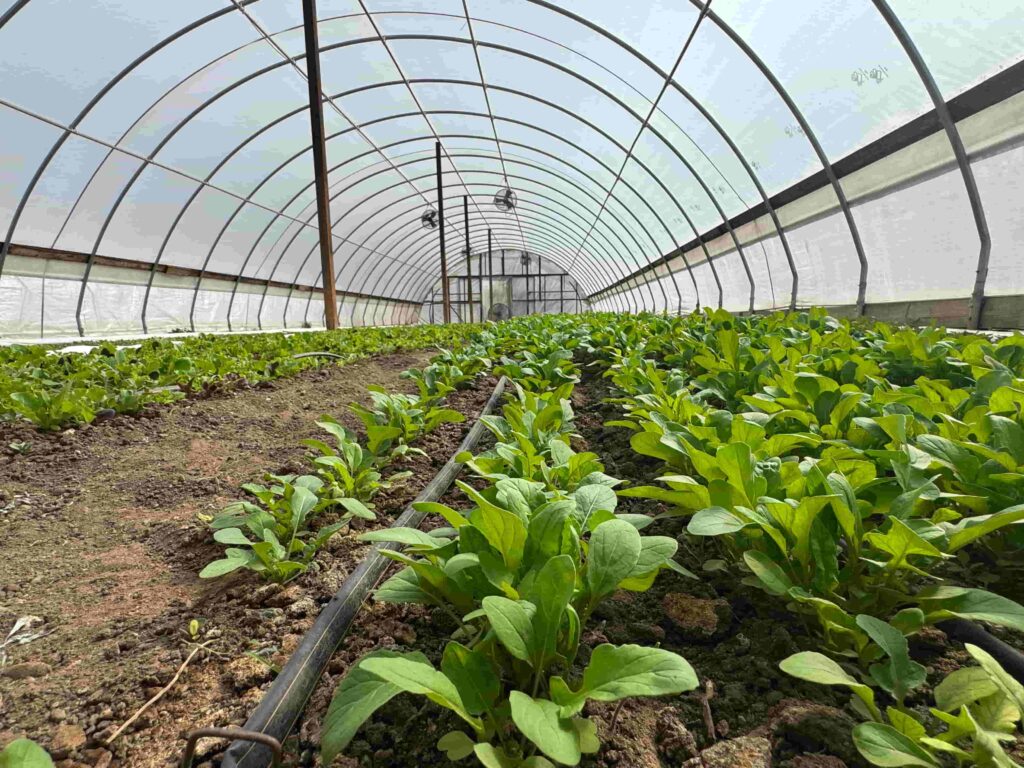
Dreistadt educated me on much of this while walking around Aspen Moon Farm on a recent 80-degree late-March day. She pulled a single radish from the ground for me—a one-step distribution network of exactly five feet from the dirt at my shoes directly to my mouth. And it was the best radish I’ve ever eaten. Starting in April each year, Aspen Moon opens their own farmstand at 7940 Hygiene Road. They can also be found at the Boulder County Farmers Market.
Sustainable, Ethical, and Local
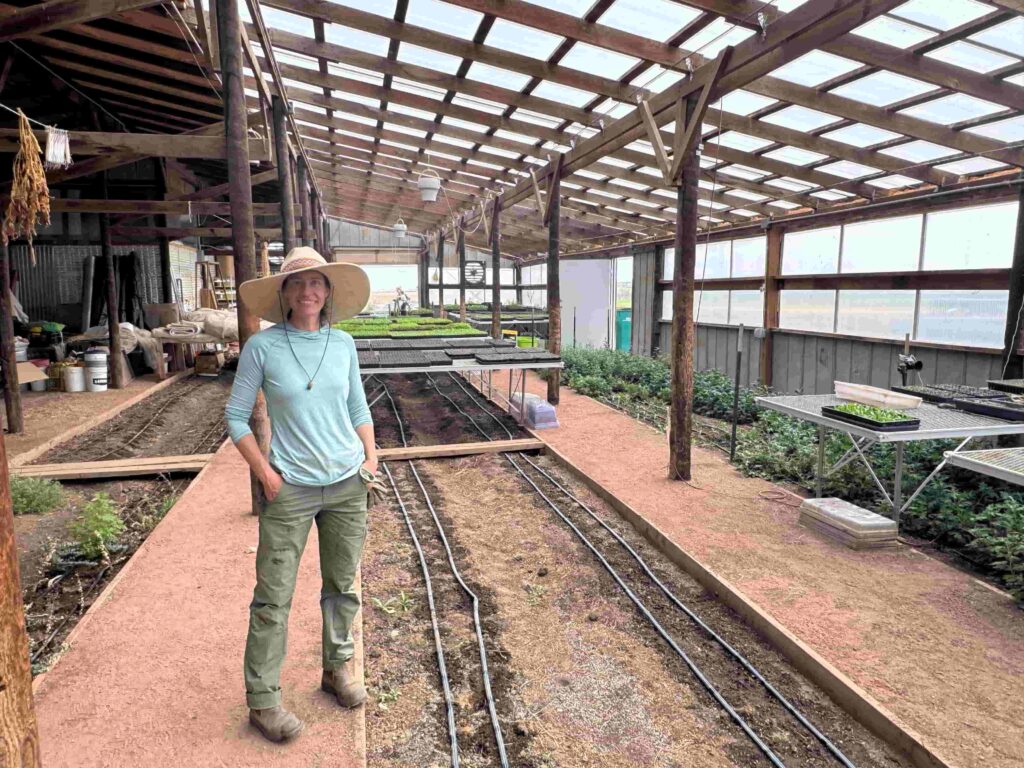
What does it mean for a producer to be sustainable, ethical, and local? For Dreistadt, who has been running Aspen Moon for seventeen years, sustainable agriculture goes a step beyond organic farming to embrace the concepts of regenerative and biodynamic farming.
“Biodynamic agriculture is a spiritual science,” said Dreistadt. “It takes into account that there’s a lot about nature that we don’t understand, and so we first observe.” As Dreistadt handed me a piece of fresh spinach to try, she explained that by utilizing an active microbial system, they grow crops that are stronger, taste better, and have more nutritional value.
According to the Aspen Moon website, biodynamic agriculture moves beyond the soil chemistry focus that drives most modern agriculture and re-incorporates ecologically natural processes into crop production. This involves the use of microbial-based compost, cover crops, and crop rotations based on a four-phase calendar revolving around “leaf, root, flower, and fruit.”
“We’ve been applying biodynamic preps to our entire property for over 14 years, and each year we continue to see an increase in the vibrancy of the land and the crops,” they state on their website.
This part of Boulder County is within what can be considered a “peri-urban” environment, which is ideal for local, sustainable, and ethical agriculture. Boulder County’s historic land zoning laws have created a mixed agricultural and open-space greenbelt surrounding the county’s communities. Combine that with a highly educated, socially and environmentally conscious community, and you have a strong—albeit high-cost—market for local farming. A drive along the back roads of northeast Boulder County reveals a healthy scattering of small working farms with their greenhouses and, oftentimes, self-serve farmstands.
Along 63rd Street, just northwest of Niwot, lies the Treehouse Farm Collective. Here, a small group of independent farmers collectively leases a beautiful piece of agricultural land surrounded on three sides by Boulder County Open Space. They combine resources here to offer the community a range of high-quality products. It represents another model of how sustainable, ethical, and local agriculture can work. Like Aspen Moon, the Treehouse Farm Collective operates its own public farmstand, open daily from April through November.
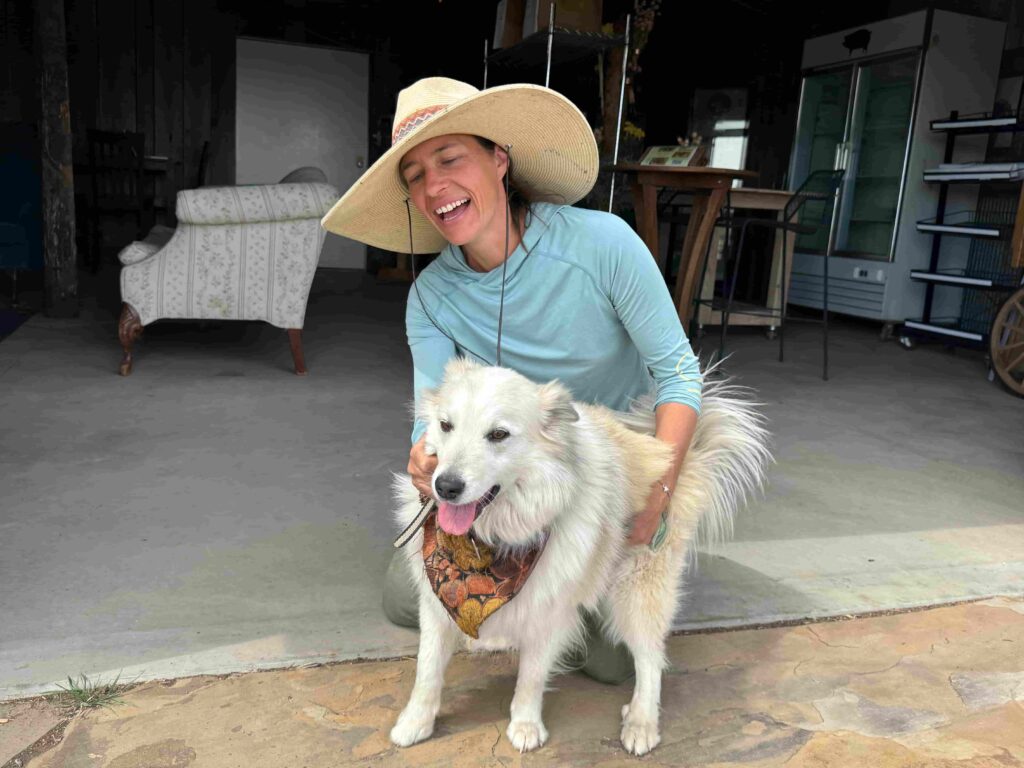
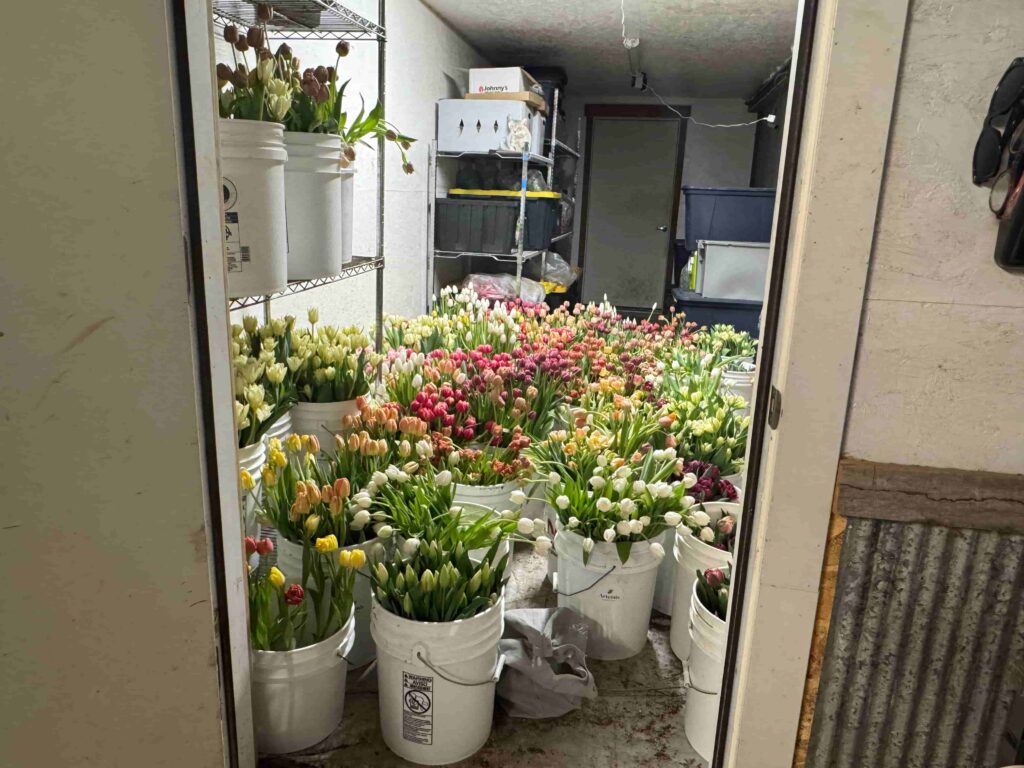
I walked the grounds with Helen Skiba, owner of Artemis Flower Farm, accompanied by “Elder,” an Icelandic Sheepdog. Skiba described an interesting background that took her from English literature and poetry to working with indigenous tea farmers in Ecuador, followed by a tenure at Aspen Moon, and finally to co-owning Artemis Flower Farm with her husband, Nelson Esseveld.
Skiba looked the part of a local cut-flower farmer in her wide-brimmed hat. She and her flower studio exude an aura of local authenticity—a refreshing reminder that such places still exist amidst the mass corporate production that surrounds us. As consumers, we still have choices if we seek them.
It’s not necessarily a dream job, however, as Skiba explained the stresses of making a business like this work. Often those stresses come in the form of financial and climate uncertainties, which are particularly concerning in this very warm and dry year. Expanding on the concept of biodynamic farming, Skiba explained the basics of cover crops and no-till practices that focus on ecosystem-based agriculture.
“We incorporate a lot of cover crops, making sure something is always growing and giving carbon back to the soil,” said Skiba. Looking out over one of her flower plots, she explained that cover cropping ensures there is always a root system in the soil, as opposed to a fallow field which is mostly devoid of organic material. “We think of our farm as a place where we learn from the creatures already here,” said Skiba.
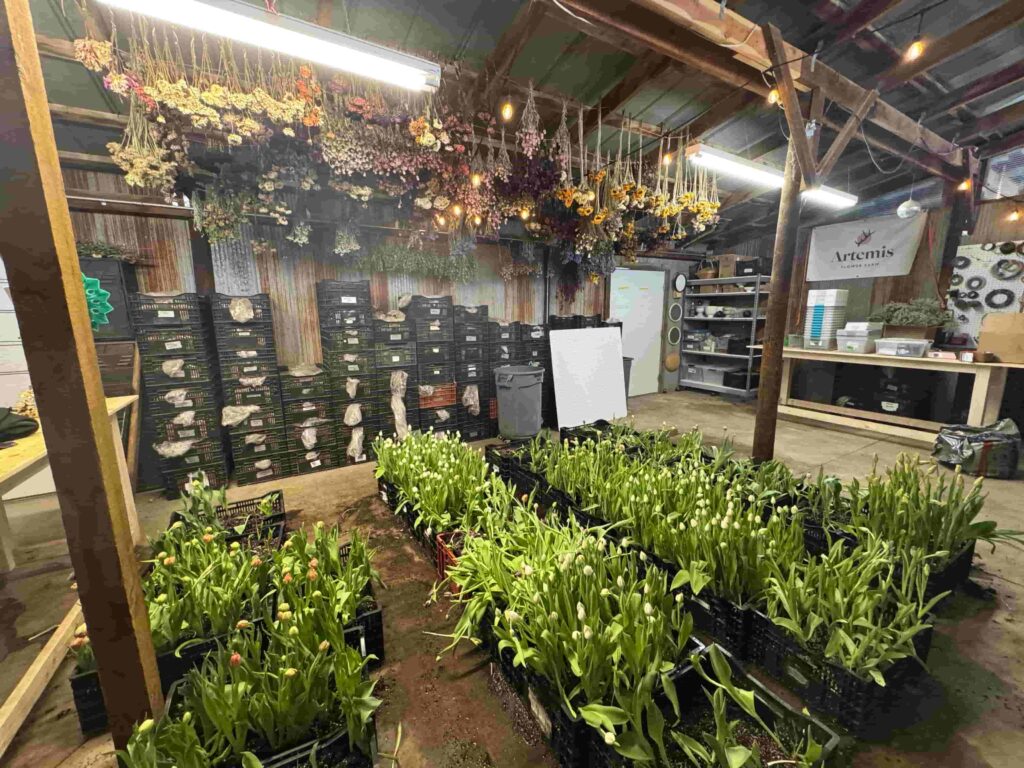
It’s the collective land-lease approach that opens the door to financial viability at Treehouse. “Just the fact of being in a collective allows us to afford organic practices,” said Skiba. “And, because we are able to afford the land by leasing, we can support a more human-sustainable business practice.”
Skiba’s statement about human-sustainable practices speaks to the ethics of the operation, especially when applied both to employees and the community. A local farm must be able to support local wages, which is a challenge but an important consideration. As for the community, Skiba’s message is simple: “I’d love for people to just know that there are local cut flowers, and people deserve to have them.”
Bypassing the Big Box Store
I mentioned to Dreistadt my suspicion that the barrier to entry for many consumers is driven by a perceived inconvenience. One major advantage of big agriculture is that their massive marketing and distribution systems make it easy for the average busy consumer to use the grocery store as a one-stop shop. Local growers can never compete with that convenience. As consumers, we must adjust our approach to meet them halfway.
Dreistadt suggested two solutions. First, start small. Don’t try to replace your entire food system all at once. Start with one thing, then another. Over time, you can convert an increasing percentage of your purchasing to local producers.
Second, embrace the seasonality. Instead of insisting on tomatoes in May, look for snap peas and spinach. In late fall, switch gears from short-term shopping to winter stocking by focusing on durable produce that can take you through the winter until those snap peas return in spring.
Looking at it another way, try to pretend you’re back in 1926 and your only option is the local farmer and what they can offer at any given time. Instead of going to the store with a recipe, go to the market with an open mind and build your meals around what’s available. After all, wouldn’t you rather eat the best radish you’ve ever had than the worst watermelon? When Colorado’s true watermelon season arrives in late summer, you’ll appreciate that delicious, local flavor more than ever.
Like journalism like this? Consider becoming a sustaining supporter — and get our print edition delivered to your home each month.
Democracy needs journalism more than ever. For 25 years, we’ve told the truth — your support helps us keep doing it for the next four and beyond. Administrations come and go. Our team stays ready to lead, no matter who’s in charge.