


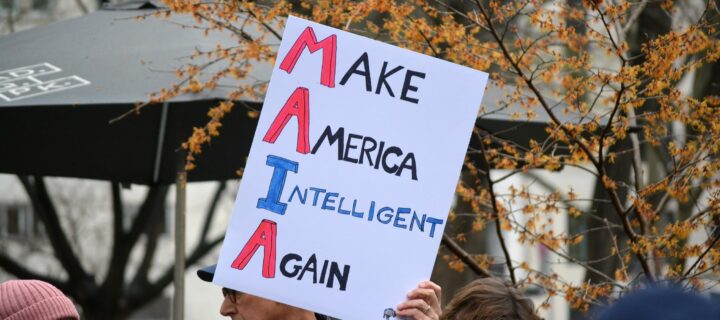

In March 2025, the Trump administration issued an executive order directing Education Secretary Linda McMahon to begin dismantling the Department of Education – a move that could severely limit the federal government’s ability to uphold educational standards and civil rights protections mandated by Congress.
Since its modern inception as a cabinet-level agency in 1979 under President Jimmy Carter, the DOE has played a critical role in promoting equity, safeguarding civil rights, and expanding access to education for all students. It has been especially important for marginalized groups, including students with disabilities, students of color, and LGBTQ+ students. The department enforces federal laws that guarantee these students the right to learn in safe, inclusive, and supportive environments.
Though the federal agency traces its roots back to 1867 – originally formed to help states collect educational data -its existence has long been a point of contention. Some Republicans have opposed the department since its creation, arguing that education policy should be controlled entirely by states and local communities rather than the federal government.
In recent years, especially following the COVID-19 pandemic, public trust in U.S. public schools has eroded among some segments of the population, particularly conservatives. For these critics, the DOE has become a symbol of what they see as federal overreach and ideological bias in school systems. The decision to dismantle the department reflects this growing distrust and aligns with a long-standing conservative goal of decentralizing educational governance.
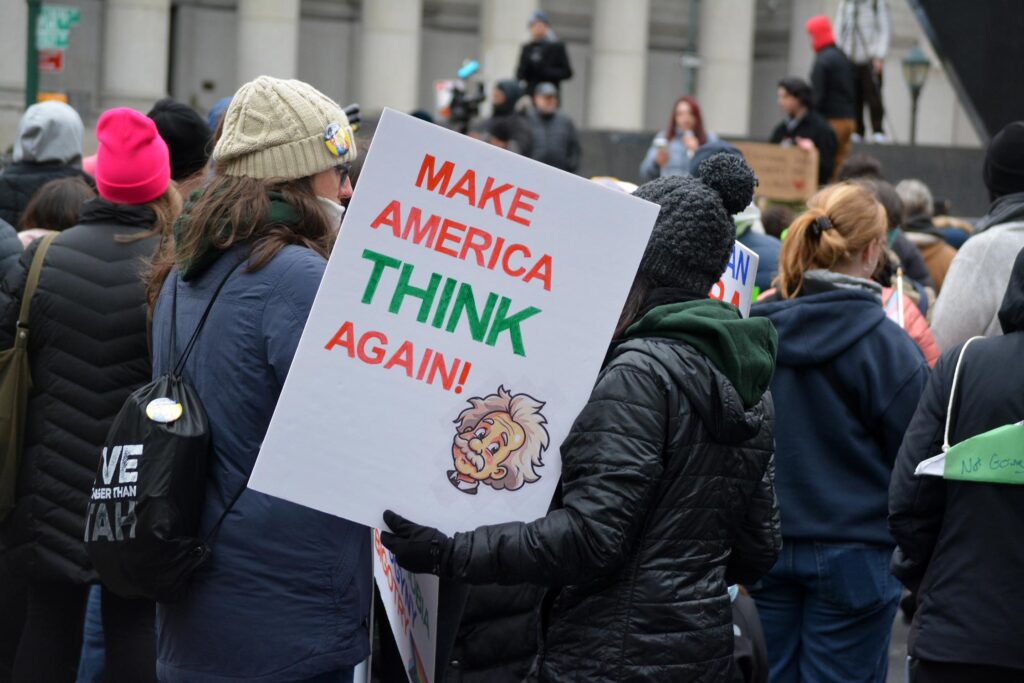
What exactly does the Department of Education do?
Beyond civil rights enforcement, the DOE plays a major role in financing education across the country — particularly for students from low-income families, students with disabilities, and those pursuing higher education.
One of the department’s main responsibilities is managing the federal student loan system. Of the department’s $229 billion budget, nearly half – over $114 billion – is allocated to the Federal Direct Student Loan Program. In addition to issuing loans, the department oversees loan forgiveness programs and income-driven repayment plans that millions of borrowers rely on.
It also administers major grant programs that support students from marginalized communities. Title I, for example, provides federal aid to K-12 schools with high numbers or percentages of low-income students. Pell Grants, which do not need to be repaid, are awarded to undergraduate students based on financial need and serve as a critical resource for those who might otherwise be unable to afford college.
These programs are designed to expand educational access, particularly for students living in concentrated poverty. Without the DOE, it remains unclear how – or whether – these programs would continue at scale.
Another vital area of federal support is special education. The department oversees the Individuals with Disabilities Education Act, a federal law that guarantees students with disabilities access to a free and appropriate public education. In 2024, Congress allocated around $15 billion to support IDEA programs across states. That funding helps pay for additional staff, individualized instruction, and specialized services that many public schools wouldn’t otherwise be able to provide.
Taken together, these programs form a core part of the department’s mission: to ensure that all students, regardless of background, ability, or income, have a fair shot at receiving a quality education.
As the Trump administration moves to dismantle the agency, education experts warn that disrupting or decentralizing these programs could jeopardize critical support for millions of students across the country.
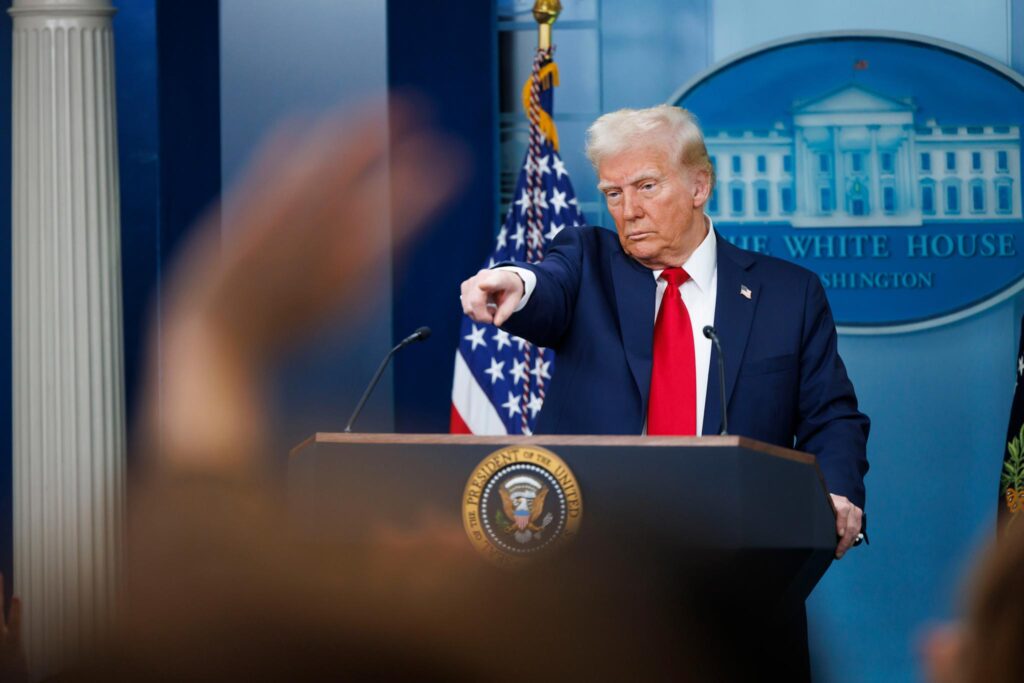
What would the end of the federal department mean for Colorado schools?
According to Kevin Welner, the director of the National Educational Policy Center and a professor in the University of Colorado Boulder School of Education, the chaos that would ensue in Colorado public schools would be felt by people in state departments of education and the people in local schools. The majority of funding that flows to Colorado school districts comes from a combination of state and local resources. Districts receive a dollar amount from the state for every student they educate, otherwise known as per-pupil funding. According to a 2024 article by the Colorado Sun the districts net just under $8500 for each of its students. Districts get additional funding for specific groups of students who need extra support, such as students from low income families.
Dismantling the DOE would be an additional blow to these schools, because many of them are already suffering due to declining student enrollments and reduced state funding. Schools in Colorado anticipated receiving around $70 million for the 2025-2026 academic year; this money was designated for essential programs like teacher training, English language learning, etc. Without this $70 million, these schools will face severe financial pressures that could result in many budget cuts.
Last year, more than $870 million in federal funds flowed to Colorado, according to data provided by the state education department. This money, according to what the Colorado Education Commissioner Susana Córdova told Colorado Sun, provides a “safety net” for all the kids; it meets the needs of some of their most vulnerable students, including kids with special needs and those living in low-income households.
The Trump administration is intent on changing how the federal government distributes funding through IDEA, which ensures that students with disabilities can access public education and receive additional needed services. The policy dictates the states to convert that funding into block grants for states.
According to what Welner told Colorado Sun, when similar changes for block grants have been made in the past, the money allocated for students with disabilities do not go to those who need it. Some of the funds will likely be diverted to a federal voucher program, which will primarily benefit students from more affluent families or private schools.
Emily Harvey is the co-director of Disability Law Colorado. She explained that when we minimize federal oversight, the states would have to hold themselves accountable. “I think we are going to see dramatic differences across states,” she said, in an interview with Yellow Scene Magazine. “Without federal oversight, there is going to be less incentive to comply with the standards set by schools, which is hard enough to follow with less funding.”
“The new policies would make it harder for disabled students and poorer students to have access to basic services. The federal government was who we looked to in order to enforce civil rights laws that people with disabilities fought very hard for. Now, the states do not need to enforce these laws; you would have to go to federal court to enforce it, which is very time consuming and costly,” Harvey mentioned.
“I am deeply concerned about the potential impact of the delay and ongoing uncertainty surrounding these critical funds on our students, educators, and schools,” Dr Susana Córdova told the Colorado Sun. She urged school districts to engage in “contingency planning” in case Colorado does not receive the required funding by the end of the federal fiscal year, which is September 30. Denver Public Schools, Colorado’s largest district, stands to lose around $10 million if the federal funds continue to be withheld, according to an article by Colorado Public Radio.
Alex Marrero, superintendent of Denver Public Schools, issued a statement demanding the release of these funds. According to the statement, the decision to delay the distribution of congressionally appropriated funds is a “dangerous overreach of executive authority and a direct affront to public education, especially for communities that rely most heavily on these supports.”
Without the DOE providing grants, individual districts must decide whether to continue or end programs powered by federal dollars. They can use the money they would have used on other programs to direct it towards the federal programs and hope that they can be reimbursed when their funding comes in.
Colorado Attorney General Phil Weiser assured the public that Colorado authorities are taking action because their educational leaders need every tool possible to support kids who are struggling with disconnectedness, loneliness, or isolation.

The administration’s broader plans as part of Project 2025
The Trump administration’s attack on the DOE represents one of the most visible threats to the U.S. public education system. It’s a key part of Project 2025 — a sweeping policy agenda developed by the Heritage Foundation and over 100 other conservative organizations to guide a future Republican administration. Among its proposals are efforts to phase out federal education funding entirely and convert programs like Title I into block grants. This would allow states to redistribute funds from historically marginalized students toward wealthier districts — deepening disparities tied to race, income, and disability. One of the most radical ideas in the plan is dismantling the DOE altogether, justified under the claim that public schools are “underperforming.” In reality, this shift would strip essential federal oversight and protections from the country’s most vulnerable students.

Democracy needs journalism more than ever. We’ve been telling the truth for 24 years. Your support helps us keep telling it for at least the next four years.
Should the federal government be involved in regulating education?
The White House has defended its push to eliminate the DOE by claiming it would “return power to the states.” However, this reflects a common Republican misconception; the federal agency doesn’t dictate educational standards or curriculum — it primarily distributes funding and supports research. In reality, states and local school districts already control curriculum, teacher selection, and education policy. The federal government’s role is to help close opportunity gaps, not to set local education agendas. In fact, only about 10% of public education funding comes from the federal level, with the rest provided by state and local taxpayers.
Importantly, federal funding is targeted to support students who are most in need, including low-income students, children with disabilities, and English language learners. Eliminating the department wouldn’t increase state control — it would strip essential resources from marginalized communities. Critics also warn that dismantling the agency would allow the administration to cut positions held by civil servants who challenge its ideological agenda, further politicizing public education.
According to an article by ACLU without the DOE, the federal government’s capacity to collect data is eviscerated, and this becomes a problem because it is an important resource for identifying and addressing disparities in education. Without this oversight, schools would not be held accountable for unjustified racial and disability disparity in academic performance or access to resources. Policies based on data, which have helped to reduce discriminatory practices, are now at risk.
In addition, the DOE recently terminated all staff in seven of the Office for Civil Rights’ 12 regional offices, significantly weakening federal enforcement of student civil rights. The OCR, which received $140 million in congressional funding in 2024, is responsible for investigating discrimination complaints and ensuring schools comply with civil rights laws. Terminating its staff not only undermines protections for millions of students — particularly those facing discrimination based on race, national origin, sex, or LGBTQ+ status — but also limits their ability to seek justice when their rights are violated. With fewer investigators, discriminatory practices are more likely to go unchecked across the country.
Harvey acknowledged the system’s flaws but emphasized its importance. “It wasn’t perfect,” she told YS, “but it was what we had — and what families depended on.” She noted that complaints could sometimes take over two years to receive a response from the OCR or the US Department of Justice, leaving students vulnerable in the meantime. Still, she believes that if the system is to be rebuilt, there’s an opportunity to make it stronger and more responsive than before, as opposed to simply laying off employees.
All these policies, part of Project 2025, encourage taxpayer funds to flow to private K-12 schools with no guarantee that the money would not be used to discriminate or prioritize some students over others. These vouchers incentivize education to become more privatized, which would undermine the value of public education.
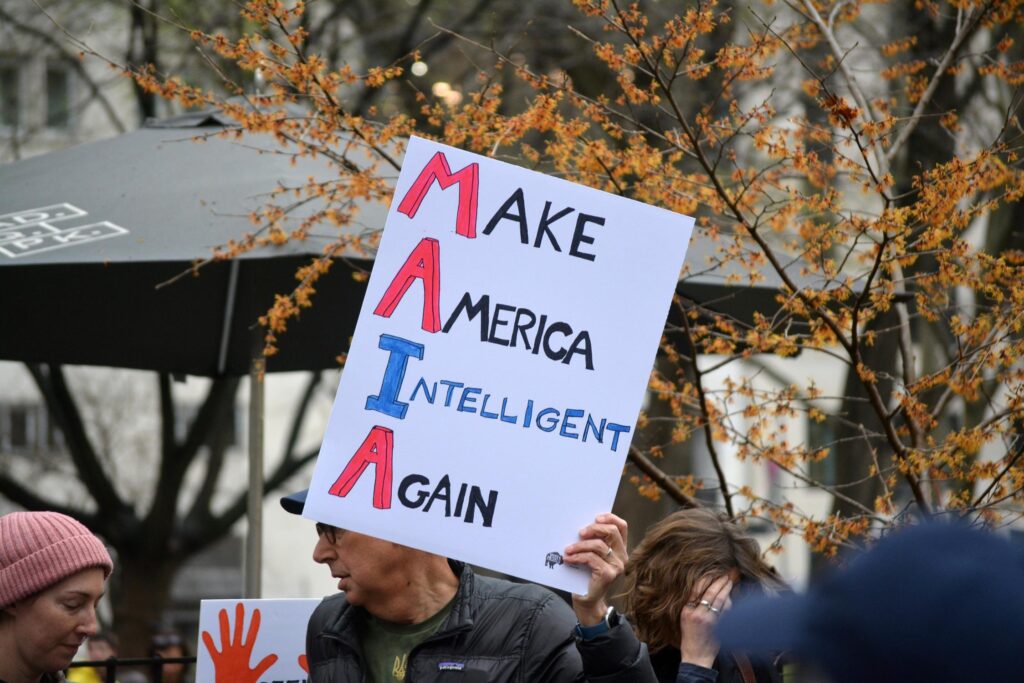
A bigger plan to exert influence across the country
Supporters of Project 2025 policies argue that the functions performed by the DOE can be performed by other departments as well. But if efficiency were the goal, there are various ways to achieve it, as opposed to such dramatic layoffs. There are many scholars and officials who feel as though the administration aims to undermine public education and get more right-wing organizations to be in charge of the education system. This is a systematic move to instill its agenda in schools across the country and discriminate against those who disagree with its ideologies.
The Trump administration appears to want to exert significant influence over education policy – not through direct legislation – but by controlling what students are taught in schools. A central part of this strategy may involve the appointment of Linda McMahon as secretary of education. McMahon, a former executive at World Wrestling Entertainment, and the wife of former WWE CEO Vince McMahon, has become a controversial figure due to serious allegations tied to her tenure at the company.
Although she is not charged with any abuse, a recent lawsuit has accused both Linda and Vince McMahon of enabling the sexual exploitation of minors — referred to as “ring boys” — by a WWE ring announcer decades ago. The suit alleges that Linda McMahon turned a blind eye to the abuse while in a leadership role at WWE. Her attorney has denied the claims. These accusations have raised widespread concerns about her ability to oversee the DOE, which is responsible for the well-being and education of more than 50 million students across approximately 98,000 public and 32,000 private schools nationwide.
This is particularly significant to note because, as the leader of the DOE, McMahon would oversee its Office for Civil Rights, which enforces critical child protection policies such as Title IX, a federal law that prevents schools from practicing sex-based discrimination.
The administration’s approach to education has also aligned closely with a network of right-wing groups, including Moms for Liberty, a conservative activist organization with growing national influence. According to an article by Mother Jones, it acknowledged working closely with members of the Trump team to “ensure that students’ needs are prioritized” in the public education system, though the group declined to confirm details.
Founded in 2021 by former Florida school board members Tiffany Justice and Tina Descovich, Moms for Liberty has led efforts to purge public school libraries of books dealing with race, gender, and LGBTQ+ issues. The group often frames its work as a defense against “woke indoctrination,” pushing unproven claims that schools are sexualizing children or promoting Marxist ideologies.
“The policies highlighted in Project 2025 would give Trump unprecedented powers to undo many of the protections the LGBTQ+ community have spent decades fighting to gain,” Cathryn Oakley, Senior Director of Legal Policy at the Human Rights Campaign, told the National Education Association (NEA). It plans to scrap the policies implemented during the Biden administration and other Title IX regulations; the implications of this could have a devastating impact on these communities.
According to a Truthout interview with Jon Valant, the director of the Brown Center on Education Policy at the Brookings Institution, where his research specializes in K-12 education policy, the administration seems to be twisting and redefining the department’s priorities with respect to civil rights. Until now, its focus was to protect vulnerable groups of students; now, the focus seems to be on weaponizing civil rights enforcement to threaten school districts and universities that do not align with its positions on culture-war issues like LGBTQ+ rights or disability rights.
Harvey, during the YS interview, made it clear that she has not given up; she has been talking with other advocates to continue fighting for people with disabilities. “The Americans with Disabilities Act wasn’t handed down from above – it was fought for. It came only after activists left their wheelchairs and crawled up the steps of the U.S. Capitol, forcing the country to see just how inaccessible its government truly was.” Laws like the ADA and Title IX exist because people demanded better – not just for themselves but for the generations that would follow.
“We have to stay focused on what’s best for the kids,” Harvey said. “Here in Colorado, there are people who care — people deeply committed to ensuring every child has the chance to learn and grow. We’re going to keep moving in that direction. I truly believe we can come together to strengthen civil rights protections for our students, so we don’t lose the progress that so many people have fought for.”
Like journalism like this? Support the local press that’s been telling the truth for 25 years. Become a sustaining member
and get our monthly print edition at home. We’ve weathered 9/11, floods, fires, economic crashes—and some deeply chaotic years. With your support, we’ll keep going. Because democracy still depends on journalism.

Democracy needs journalism more than ever. We’ve been telling the truth for 24 years. Your support helps us keep telling it for at least the next four years.