




This piece is part of Yellow Scene Magazine’s Opinion section. The views expressed here are those of the author, and do not represent a reported news position. At Yellow Scene, opinion pieces speak freely, challenge assumptions, and say the quiet parts out loud.
“Hello, how are you?”
My mind’s eye can’t erase the image from a recent newscast. A piece of heavy machinery with a gaping steel claw was crunching, lifting, and depositing an entire “homeless encampment,” as the newscast termed it, into a waiting dump truck. This, in our nation’s capital, where a National Guardsman also scolded a Black man smoking on his stoop. “President Trump doesn’t like that!”
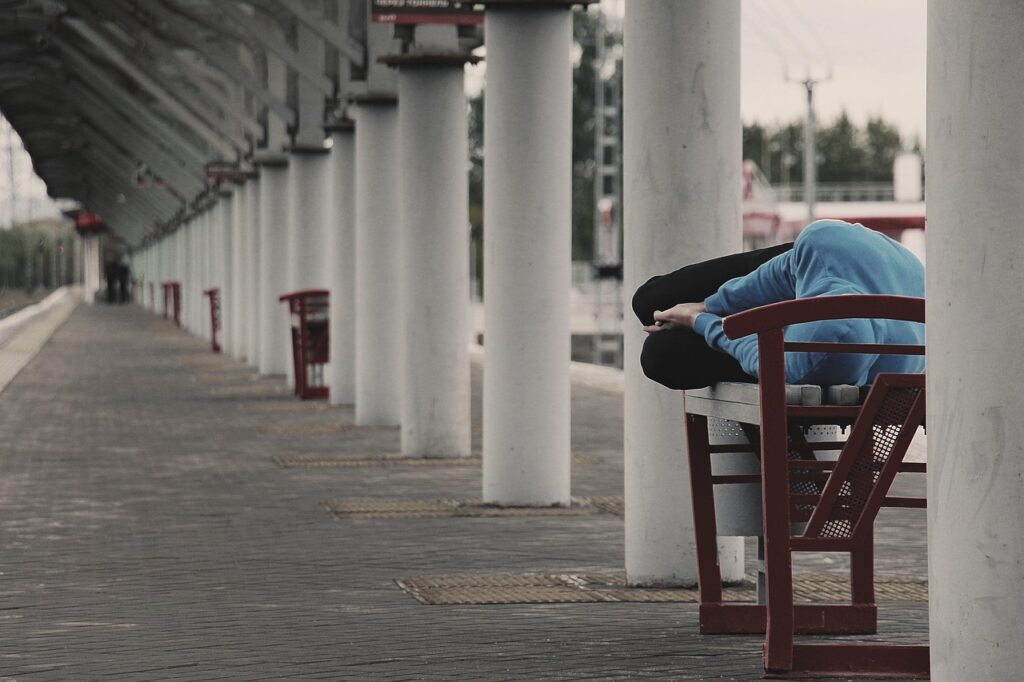
“Quality of life,” they call it.
In 19 years of living in New York City, unhoused folks were part of the general ambiance. I use that phrase because most New Yorkers strode past on their important missions without so much as a sidelong glance. Not once in 19 years did an unhoused person present a threat, although prudence suggested a slightly wider berth given to one in a clearly manic state.
For most of these years, one man frequented the corner of 80th and Broadway, site of the famous Zabar’s. He never asked for anything. His psychosis inhibited interaction. I passed the corner several times almost every day and always said, “Hello, how are you?” I can’t know if my greeting registered, although, on better days, he made fleeting eye contact.
This was my wife’s and my practice as we moved through the city, accompanied by a dollar or two when asked. The practice was not noble. It was the easiest sort of kindness. The lowest level of human expectation is to be noticed. At least we noticed.
The crunching of the encampment saddened and infuriated me. “Homeless encampment” is a telling oxymoron. An encampment is a home, as surely as Trump’s garish 5th Avenue apartment is a home. Such a home may house a family, or companions in desperate straits, along with whatever artifacts of a former life might remain. Humans eat and sleep there, and in more cases than one might think, dress small children and send them to school. Crunched, lifted and gone.
Since moving to Colorado in 2017, the unhoused remain in our consciousness. Our son and his partner worked with unhoused youth for most of these years. Being adjacent to this work further acquainted us with the sad realities of youth who find themselves alone and desperate. Loving them is sometimes hard, but always necessary.
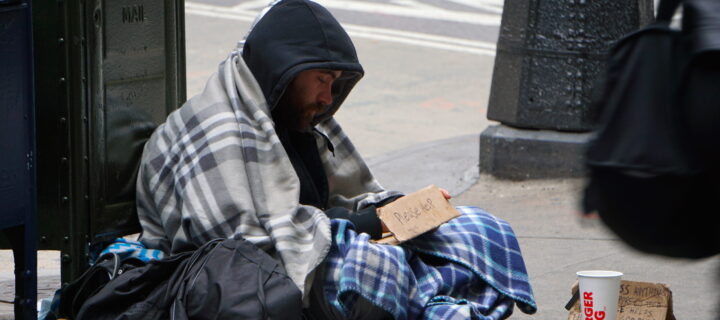
We see the man in a wheelchair at the entrance to Whole Foods on Pearl Street, head covered as meager protection from the blistering heat. Or the woman with several children at 29th and Walnut, hoping to elicit a small offering from Target or Lululemon shoppers. Few cars come to a full stop. Fewer still slip a bill or coin through a window. One family created a home beneath a few trees by the Safeway at Arapahoe and 287.
Root causes are manyfold: Unemployment, eviction, domestic violence, mental and/or physical illness, racism, homophobia, addiction . . . or some compounding combination thereof. The steady erosion of energy and spirit that afflicts the unhoused makes recovery much more difficult over time.
This has never been a particularly kind society. The mythical attribute of rugged individualism distorts our social policy. Victim-blaming, bootstrap-pulling, and lies about equal opportunity give permission to think we deserve what we get and get what we deserve, Neither phrase is true. While hard work is a virtue, it plays second fiddle to the duet of inherited privilege and whiteness. Places like Boulder County are filled with folks who were born on third base and think they hit triples.
The Trump administration has enshrined cruelty as national policy. Such policies create the very pockets of despair that they then crunch in the steel jaws of authoritarianism. Escaping these jaws will require organized resistance, policy initiatives and political strength.
But along with these macro efforts, every person can counter cruelty with kindness.
My wife and I spend a great deal of time driving our grandchildren here and there, Uber-grandparents in the several meanings of that phrase. If we slip into a Boulder County version of Manhattanites in an important hurry, one or both of them will implore us to go back so that they can get out of the car with a dollar or two.
“Hello, how are you?” may have a greater impact than you will ever know.
Support the local press that’s been telling the truth for 25 years. Become a sustaining member and get our monthly print edition at home. We’ve weathered 9/11, floods, fires, economic crashes—and some deeply chaotic years. With your support, we’ll keep going. Because democracy still depends on journalism.