





Young artists who are opting for a nine-to-five while making their art the side-gig
A journalist, a musician, a poet: the storytellers keeping our oral history alive, as they have for generations, but forced to work in corporate America. The current job market is brutal. In a study published by The Wall Street Journal, it has taken 1.6 million unemployed workers an average of six months to find a job. Americans are struggling to land jobs; in times like these, many are feeling daunted with choosing between a career they love and the arts. In 2022, another study found that since the 1970s, there had been a consistent decline in people choosing to work in the arts, picking up the descent since the pandemic.
What is the price of doing the work one loves? Is it worth it? From corporate jobs that require sacrifice of a social life or family to the arts that may not have the financial pay-out, dedicated professionals are throwing caution to the wind and committing themselves to what they love. But even in corporate America, love prevails. There are professionals who clock out of their nine-to-five in order to pursue their passions in their precious free time. These working professionals in different industries understand the currency of the market, the demands, and the sacrifices people must make to survive. They also follow their heart; integrity must be more valuable than making as much money as possible.

What is the Price of Financial Freedom?
Logan Garcia is a market analyst and journalist with 10 years of professional writing experience. When he was younger, he had aspirations to work in film, focusing his austere self-described and less creative personality on documentary filmmaking. His appreciation for portraying non-fiction storytelling led him to pursue a career in reporting and what he describes as the “information” industry.
He validated that people make sacrifices to pursue more profitable work. Perennially, the American cultural experience, in particular, dismisses “dreamer” culture as unrealistic, according to the current application of a Western capitalist economic model. He admits that as a salaried business journalist and marketing specialist, “When your big customers are Fortune 100 companies, you can afford to pay your guys a bit more. It’s not idealistically what I wanted to do.” He supposed that he had to stop following certain morals to be a podcaster or journalist for local sources, so he could pursue jobs that are “less morally rewarding but more financially rewarding.” Garcia states that his career is still “fairly respected,” but he began to follow a path other than his youthful ideals of being a documentarian. The benefit of all this to him is that he does what he enjoys; he has more freedom because of his stable, financially in-demand career and salary.
His stable money-making career significantly enhances his quality of life than if he were struggling to pursue his younger ideals. He has the financial freedom and plenty of work-life balance peace of mind to do what makes him happy. Advising employers are cognizant and respectful of the reality that many highly skilled professionals demand their freedom and happiness to not only enjoy the work they do, but live their lives to the fullest because of what their professions provide. In his own words, “to enhance my off-hours in my personal life.”
He believes the solutions to any problems we face in general are to stay optimistic. Without that, life is too sad. If we take responsibility and learn to be appreciative of our situation with the nice things we have going for ourselves, that won’t hurt anybody. Gratitude is a valuable ability.
Molding Young Minds and Making Music

Jesse San Rosier (pronounced rosie-aye) runs Plot Line Records, a lo-fi indie label based in Fort Collins, Colorado. He also works as a high school English Teacher at GOAL Academy, mostly working with at-risk youth, or, as “we like to call them, ‘at-promise youth’”. He sees himself as more of a musician than a business manager. He is also an audio engineer.
He feels he has sacrificed much to understand the professional position he is in now, working some “dead-end” jobs, such as building cabinets. He also feels that having a stable career gives him the freedom to pursue what he is more passionate about in his free time, even if that is not necessarily what makes money. “I would say most people fall into a camp,” San Rosier states, “of they kind of abandon, or kind of compartmentalize what they love, and they learn to love what they need to do.” He explained that staying true to a positive perspective and learning to “see the good” in the work he does is responsible for much of his success in life. He feels he is able to “compartmentalize” his “work hat on” and not be bitter about it, so that he can go home and put his “musician cap on”. He doesn’t believe everyone should work that way because some people are willing to take the risk of putting their security on the line to pursue their musical ambitions and make it. Finding a work-life balance that is authentic to the individual’s needs is crucial for living.
San Rosier discussed the music industry in particular, noting that it has been oversaturated by AI, in particular, and the accessibility of modern technology for recording and releasing songs. “It’s a crabs in a barrel situation.” He states, “We have 1000 crabs in a barrel and no one’s listening to each other. I have to say, concert venues have just totally gutted artists. Now, to make money as a musician, what you likely have to do is suffer; you have to sacrifice something in terms of, like, your artistic integrity. As a record label manager and artist, he realized his love for music is likely not the most realistic way to make a living. “Instead of something we fight, it’s just like, ‘oh yeah, that’s what I should expect. I should expect to sleep in my van on tour and barely make any money. And, you know, hopefully I’ll get more followers.’ It’s like you’re gonna make money, it’s gonna be like sitting in your cubicle, or it’s gonna be the mentality of, nothing is sacred in America. You made this album that you love, that’s about, you know, your grandpa passing away. It’s a concept album. You need to commoditize it; you need to, you know, put it on ads. You need to be on TikTok and be like, ‘My face when grandpa dies.’ And like, here’s my new song.’ It’s terrible. Capitalism can help me get my music out. But have I lost the initial goal of what music is for?”
Jesse also believes that his morals changed due to the actions he took to survive. “My entire kind of family lineage, everyone either became a teacher or went to the army. And growing up as a kid, I was like, ‘I am never joining the army, and I will never become a teacher. I’m going to be different.’ And I guess that was a sacrifice I made, because I saw the opportunity (through a contact to become an English teacher), and it was a way out of where I was, but it went against kind of this principle I had for my life that I was going to not necessarily do better, but do something different than my parents — add a different branch on the tree. But it was a really good job, a good opportunity, and I took it, and I’m glad I did. The spirit of wanting to be different was from just a teenage ‘I want to be different.’ It wasn’t really thought out, because I’m really made to be a teacher and, like, it’s great.” 
Poetry by Night, Accounting by Day
Hannah Benson is an accountant by day and poet by night. She enjoys writing poetry, learning various instruments, such as the banjo, and macrame. She understands and respects a clear boundary between her accounting work and something financially in-demand. She earns a stable income, allowing her to have the peace of mind to focus on her passion for creativity.
Currently, her accounting job is in financial technology (fintech). Because fintech, well, is “a little bit like the Wild West sometimes”, due to the nature of “it being an emerging industry.”
The American economy and job demand are leaning into a corporate superiority complex. That means people have to pursue what generates money, even if the work is not authentic. Instead, the American economy is leaning into what generates profits for the sake of profits, even if their true colors are not profitable. Of course, that has scary implications for the future of our economy. If all jobs become part of a hierarchical capitalist structure, then where does work that creates inherently livable and valuable products go? What would happen to the value of services that don’t make much money? It is clear that what generates the most revenue is not necessarily essential for the function or well-being of society.
More than anything, what she likes about her job as an accountant she sums up in a joke she started when people would ask her if she likes to count, that no, her favorite part is she likes “to bring companies accountability”. That explains another common theme of all these interviews, and what many Americans feel: They might have met the demands of what makes money in the job market, but they can still apply their morals, without compromising, in novel ways. The conversation continued with a more positive tone as she explained that a “great thing” about accountants is that they have an ethical code, much like lawyers would. She is a certified public accountant (CPA) and would lose her license if she violated her integrity.
If Benson could do the work she loved, while still doing what is necessary, if she had it her way, so to speak, she would open a tea shop. However, she admits, some of the reasons why she doesn’t start her own business are the risk and the extra grind involved; even if she could bolster a stable income with something as practical as operating a tea shop, she’d rather not deal with the added stress of running a business.
Her personality is responsible for pursuing a stable career, when she knows many people “make it” pursuing their “dreams” (as people’s more idealistic ambitions some people commonly describe as.) She knows that she always has the power to make the right decision, even if that means getting fired. This accountability pendulum swings both ways, as smart businesses don’t want to lose their employees, reputation, and profits by having employees leave and hinder the stream of new hires when they inevitably choose not to sacrifice common decency and ethics for financial gain. It harms companies when they choose exploitative strategies, such as scamming others or multi-level marketing schemes (MLMs), because those models often fail, and usually do so brutally.
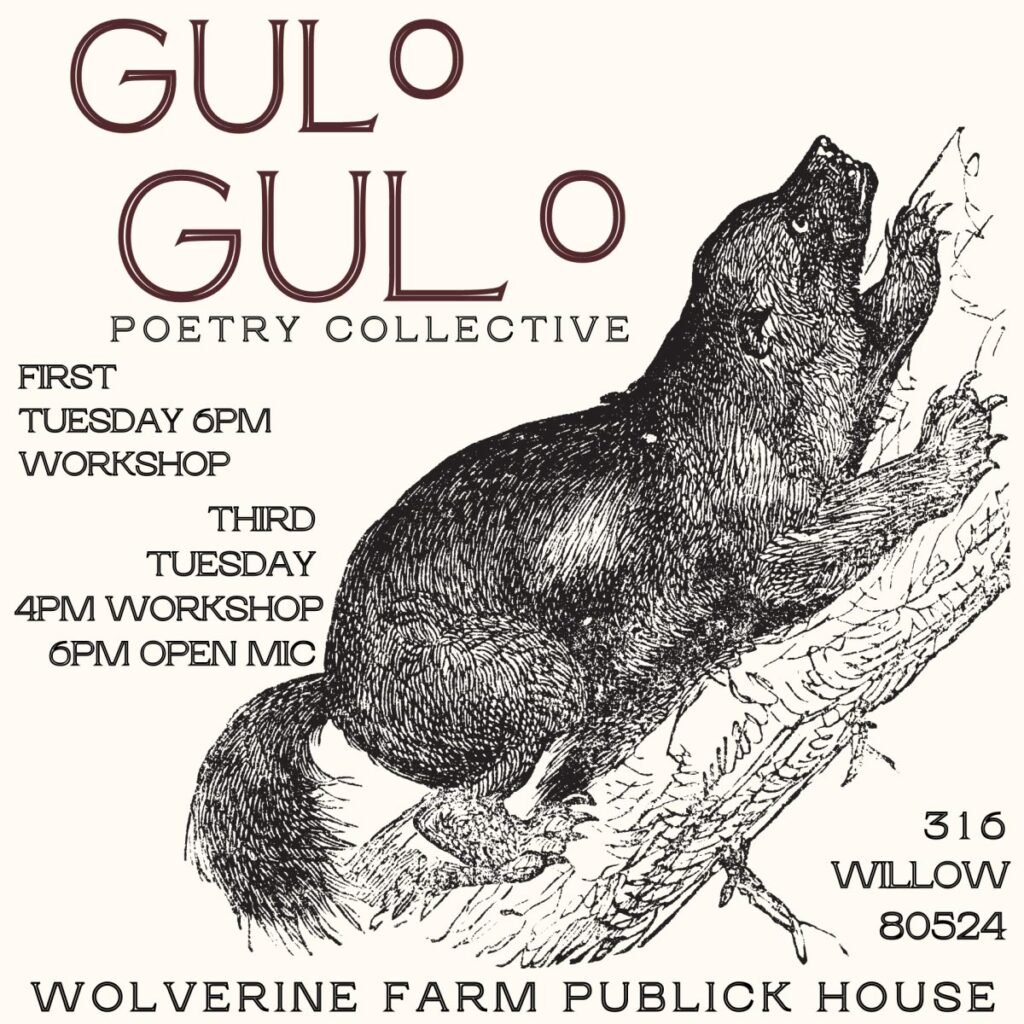
She says, “You probably won’t find me in my later life being an accountant. And if I am, maybe I’m doing it for a non-profit or something.” Already, Benson does work with Gulo Gulo Poetry Collective, which helps burgeoning poets find their strength and voice through workshops. She wants to retire one day with sufficient financial independence to dedicate her life to pursuing her passions.
She does admit there is value in having financial and security incentives to motivate people to do the work that is less glamorous or more “boring” compared to what people might assume are “fun” jobs. She admits the systems of global operation do need accountants, and fewer people might become accountants if there weren’t certain economic protections in place to ensure people do the work that causes the world to function correctly.
Benson has found purpose and a revitalized will to live through her work with the Gulo Gulo Poetry Collective and other groups, which allow her to bond over creativity and share her love for connectivity, people, and relationships. For her, she is inspired to continue working a full-time accounting job because of its social duties. Without any profitable intentions muddying the waters, people unveil their credibly angelic wings. Ultimately, love and benevolence for our fellow humans are how we have survived with the longevity we have. If we need the future generations to build significantly, too, we must rely on integrity and trust. It might be hard to believe, but understanding the value of bridging gaps is what will get us wherever we need to go.
The market is cold. The economy is tanking; inflation is frightening. People are moving on from work they “love” to focus on what makes money. However, the dedicated artist, humanitarian, storyteller can still find a way to shine in the world. People may not have to sacrifice authenticity entirely, but many are sacrificing part of what they love to do to generate security. Finding ways to nourish the soul while financially surviving the work week may be the new American Dream.
Like Journalism Like this? Consider becoming a Sustaining Supporter, and we can cover even more.
Democracy needs journalism more than ever. For 25 years, we’ve told the truth — your support helps us keep doing it for the next four and beyond. Administrations come and go. Our team stays, ready to lead no matter who’s in charge.
Plus you get the hard copy delivered to your home—reading is good.

Democracy needs journalism more than ever. We’ve been telling the truth for 25 years. Your support helps us keep telling it for at least the next four years.