






The American Dream May Exist, but Not in Boulder
Skyrocketing home prices, limited affordable options, and rising student debt are forcing young residents to rethink what “home” really means in Boulder — and if the American Dream is anything more than a chapter in a history book.
You graduate from college — now what? Historically, the “success sequence” toward achieving the American Dream went something like this: find a stable job, get married, buy a home with a white picket fence, have a couple of kids, and maybe adopt a golden retriever. But in 2025, the American Dream is a pipe dream for many. In Boulder, young people are forced to consider alternative paths as the idea of traditional homeownership slips further out of reach.
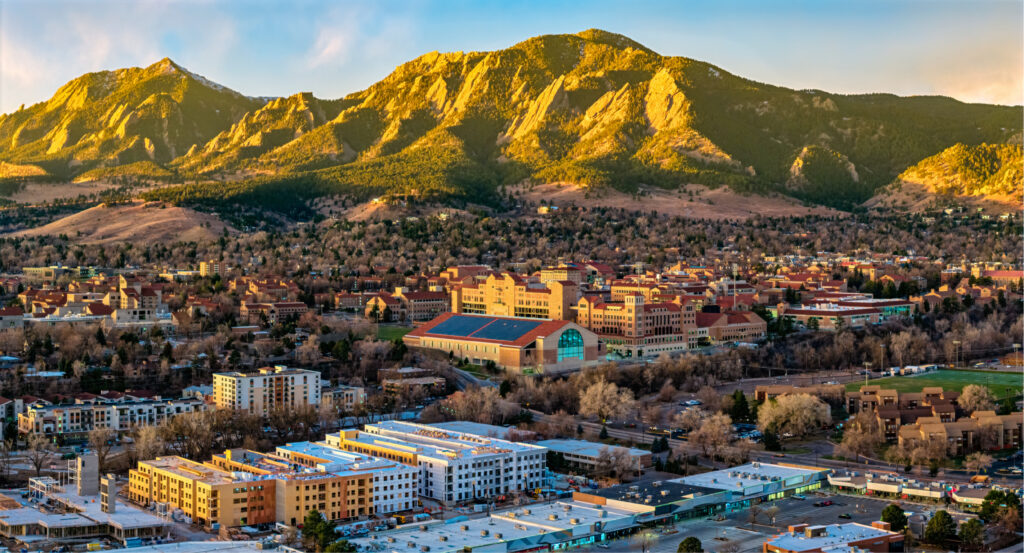 Emilie Espinosa, a full-time student at the University of Colorado Boulder, defines “home” as wherever her friends and family are. Though she hasn’t solidified a post-graduation plan, the question of buying a house looms.
“I do see myself owning a home someday, but that’s pretty far down the line,” Espinosa said. “The hardest thing about planning for long-term investments is the unpredictability of the economy right now.”
Housing prices in Boulder have risen consistently over the past decade, bringing in an influx of high-income buyers from outside the state. Zillow reports that from 2017 to 2025, the median home price in Boulder has increased by nearly $300,000, creating a barrier for first-time buyers.
Eileen Kennedy, another CU Boulder student, is also rethinking the American Dream. Kennedy works part-time as an after-school counselor and sees home as “a safe space” to return to after long days. She plans to stay in Boulder after graduating and then move to Fort Collins to pursue further education at Colorado State University. Owning a home is on the list, but nowhere near the top.
“I don’t know that owning a home is as big of a goal for me as it once was,” Kennedy said. “There are benefits to owning, and there are benefits to renting. At this point, it wouldn’t make sense to lock down, like, ‘I’m going to live in Boulder County for 50 years.’ I can’t predict that. Maybe I’ll be better about that when I’m older and have a long-term job or kids but not right now.”
Recently, the White House proposed backing 50-year mortgages to help alleviate the affordability crisis. With 30-year mortgages still the standard, the idea of extending the timeline can feel like the clock is ticking even faster for young people.
“I think, as a kid, it was just expected that you’d have a home when you’re older,” Kennedy said. “That’s what you saw mirrored in previous generations. Get married, buy a home, have kids. But with the economy and the way things are going, renting looks like a safer long-term option.”
The desire to own a home is strong, but for many, it simply isn’t practical.
“Homeownership is one of the best ways to accumulate wealth in this country,” she said. “It kind of always has been.”
Who can still afford to dream?
The numbers tell a clear story: The average cost of a home in the city of Boulder sits around $935,000. With prices that high, the gap between wages and housing costs continues to widen. Statewide, 60% of Colorado households did not earn enough in 2023 to afford the average home, up from 47% in 2010. That means the majority of families can no longer afford to buy where they live.
For Boulder, this high cost is driven by limited land availability, strict zoning laws, and the city’s popularity among both remote workers and tech professionals relocating from other states. Even middle-income households face challenges as their incomes often fall short of covering mortgage payments, property taxes, and insurance on the average home. The U.S. homeownership rate for those under 35 has had a significant drop from previous generations. High student debt and stagnant wages contribute heavily to this decline.
Historically, homeownership rates peaked around the early 2000s, then declined after the housing crisis of 2008. In Boulder and across the nation, younger generations face tighter lending standards, higher rents, and stagnant wage growth, making this iconic milestone harder to achieve. Since the COVID-19 pandemic and 2020 housing boom, secondary housing has made a grand entrance in Boulder.
 Jill Grano, a Boulder Housing Partners commissioner, graduate student, real estate agent, and homeowner, writes about her research as a self-proclaimed “housing nerd.” In an article titled, “Changing Patterns of Ownership in the City of Boulder,” Grano dives deep into the effect of second homes:
“The COVID-19 pandemic fundamentally altered urban landscapes in ways that we are only beginning to study and understand. At the start of the pandemic, the U.S. federal government slashed interest rates to all-time lows to avoid recession as businesses were forced to shutter overnight. At the same time, millions of people were unchained from the geographic boundaries of their offices and schools, yet unable to enjoy traditional travel and entertainment. As a result, the home became the epicenter of life. For affluent Americans, second homes quickly emerged as the commodity of choice, offering new spaces to ride out the pandemic.”
Boulder’s appeal — the university, employment, the Flatirons, access to outdoor recreation — has contributed to the rise of second homes and investments. Properties sit empty for much of the year while local workers struggle to secure housing. Neighborhoods are becoming increasingly desolate.
“Our single-family neighborhoods are really turning into second-home neighborhoods,” said Grano. “If you look at Boulder’s population between 2015 and 2025, it’s the exact same number, and yet we’ve built thousands of new multifamily units. That alone speaks to the rise of second homes.”
The impact of these trends is broader than just affordability. Small business owners, educators, and essential workers find themselves priced out of the community they serve. Many resort to commuting from distant towns, which contributes to traffic congestion and strains regional infrastructure. Boulder’s challenge reflects a national pattern: investment-driven buyers in desirable urban and suburban areas placing intense pressure on residents who are simply trying to make a home for themselves.
When it comes to renters and homeowners, many are still struggling to pay off student loans. U.S. student load debt is around $1.8?trillion — and it’s only getting higher. The average resident undergraduate student debt upon graduation at CU Boulder is $26,952, compared to the state average of $25,190 (2022 financial aid is the most recent available published data from CDHE as of June 2025). It’s important to note that in the past decade, growth in student aid awarded to CU Boulder students has outpaced loans obtained. It’s progress, but not perfection.
The number of 4-year college graduates over the age of 25 in the U.S. increased by 40 million or 90% from 2000 to 2022, yet people aged 35 to 49 carry the largest share of total student loan debt. This data shows that many current homeowners still carry student loan debt but choose to tack it onto their mortgage.
That being said, student loan debt will become an increasingly larger obstacle as the numbers get higher. Student loans affect debt-to-income ratios, credit scores, and delaying savings — all factors considered by lenders. Additionally, many young people are choosing to shift their priorities to prevent taking on more debt.
How does this affect future homebuying?
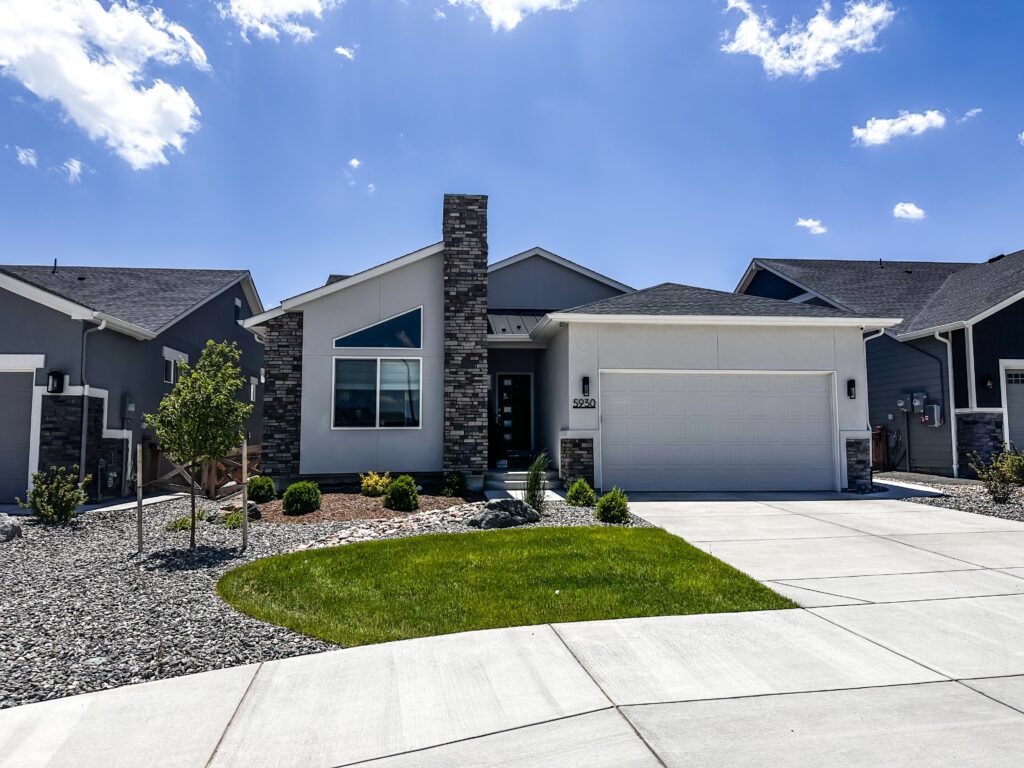 Home prices, cost of living, student debt, and high interest rates are locking many potential buyers out. As a result, the cultural meaning of homeownership is shifting. Living with parents into adulthood, once the norm, became stigmatized. Then owning a home became a marker of stability. Today, with prices rising faster than wages, younger generations are redefining what “home” means altogether.
Some residents are getting creative.
Amber Atkins, a 40-year-old consultant and Boulder resident, bought her first home in 2022 — but she doesn’t live in it.
“Home means investment in financial roots and stability,” Atkins said. “I wish it meant a roof over my head, but I can only afford to rent, even though I own a home.”
Atkins purchased a property in North Carolina after receiving a small inheritance following her father’s death. Colorado’s home prices were too high for her to buy locally, so she thought outside the box.
“Colorado is insane, rates were insane at that time,” she said. “The only way I could afford a home was to turn it into a vacation rental. Occupancy has been growing at a steady state of 30%, and I’m currently occupied 61% of the time.”
Her plan is to use Airbnb income to pay off her 30-year mortgage in less than half that time.
“Once I get to 75% occupancy and if rates fall and I refinance, I will pay it off in 12 years,” she said. “When that happens, I will be able to afford buying my own home — the ‘roof over my head’ that I’ve dreamed about since growing up with a single mom in a trailer for most of my young life.”
Across the U.S., co-living and cooperative housing models are gaining popularity as a way to make ownership accessible. These arrangements allow multiple buyers to pool resources, share costs, and collectively manage properties, offering an alternative to high-cost single-family homes. Atkins encourages younger buyers to think collaboratively.
“Buy a multifamily unit with friends or family,” she said. “Make it a co-op. Put it in a trust. Don’t do it the traditional way. Act like a millionaire, get a good accountant and financial advisor and put as much cash down as you can. We need to follow the 1% approach. If you do that, yes, you can have the dream that this country ‘promises.’”
Is there a solution?

In Boulder, one idea resurfaced repeatedly: the municipal airport.
“The airport is one of the [research] projects I’ve worked on for years,” Grano said. “It’s 174 acres of city-owned land. But what I’ve found is the community is largely against it. Unfortunately, that airport serves roughly 200 people, and increasingly it’s wealthy private jets, but the community really loves it and wants to keep it.”
To achieve the middle-income housing that’s the size and form that families traditionally want, such as townhomes with a garage and a nice backyard, the city would need to own more land — say hundreds of acres — to assume that project. The airport is the obvious option.
“If we had 174 acres of city land and it wasn’t an airport, and we asked the community, ‘What should this be?’ no one would say an airport,” Grano said. “But no one wants to get rid of it.”
Next time you drive the Diagonal and see airplanes overhead, consider how many people fit in that small plane — then consider how many people could be housed if that airport land were repurposed.
An easier solution, Grano said, requires expanding the definition of home. Condos, often the overlooked entry points, may be the most realistic path for first-time buyers.
“I could rent the same condo I own for less than my mortgage, but I chose to own because, over time, I’m feeding equity back to myself.”
According to the city of Boulder, the number of affordable housing units increased from fewer than 1,000 in 1991 to 4,098 as of December 2024, marking progress toward the city’s 15% affordable housing goal.
With the voter-approved Affordable and Attainable Housing Tax now in effect, the county expects to generate $16.7 million in its first year for affordable housing development, maintenance, supportive services, and innovative solutions.
Reimagining the American Dream
Many people struggling to afford homes have already adopted their own version of the American Dream — one no longer centered around the white picket fence.
“Get rid of people that own 500 homes and do nothing with them,” Eileen Kennedy said. “We can fight all day about minor things, but it’s the rich ….”
 Across the U.S., there is growing discussion about whether the traditional markers of success—homeownership, marriage, and a stable career—should remain the primary measure of achievement. Without the safety net of a substantial inheritance, younger generations are prioritizing mobility, flexibility, and experiences over a single investment in real estate, though the financial benefits of property ownership remain strong.
The American Dream reimagined may involve cooperative housing, mixed-income developments, and creative financing solutions that allow more people to access the long-term benefits of homeownership. While no single policy or plan will solve the affordability crisis, combining multiple strategies, while also shifting mindsets, could help ensure that future generations see homeownership not as a distant dream but as a realistic goal.
“We need to rethink the American Dream,” Grano said. “The idea that we’re a meritocracy is ridiculous. It’s a pipe dream. The new American Dream should be rooted in collective action to create a future that works for all of us.”
Like journalism like this? Consider becoming a sustaining supporter — and get our print edition delivered to your home each month.
Democracy needs journalism more than ever. For 25 years, we’ve told the truth — your support helps us keep doing it for the next four and beyond. Administrations come and go. Our team stays, ready to lead no matter who’s in charge.