




Why run clubs matter in competitive Boulder County
In a region already defined by outdoor culture, run clubs do something more specific than trails or terrain, they add rhythm and connection. They turn movement into a habit. Strangers into training partners. And weekly runs into something people plan their lives around.
Whether it’s a relaxed brewery jog, a structured interval workout, or a long-standing community like LoLa, the goal is the same: help people show up. And once they do, something simple tends to happen.
They come back.
Local running culture in Boulder County has grown into something bigger than training plans or weekend mileage. It’s become a kind of social fabric, one that connects people across Lafayette, Erie, Louisville, and Boulder through shared routes, routines, and post-run coffee tables. And while the formats vary, the message underneath is surprisingly consistent, running is easier and more meaningful when you don’t do it alone.
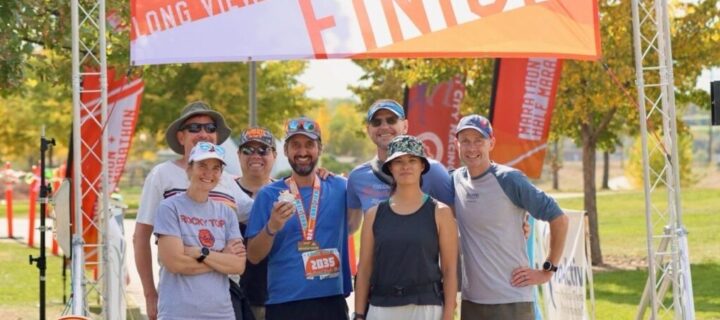
Three local leaders, Ziranda Dominguez, Doug Croft, and Leslie Hoffmann, each describe run clubs in Boulder in their own way. One is rooted in breweries and casual connection. One is built around structured coaching and accountability. And one lives somewhere in between, where performance and community overlap on the same training calendar.
Running that starts casually and stays that way on purpose
For Ziranda Dominguez, running was never something formal.
She grew up running trails like the Old Creek Trail in Lafayette, never part of a team, never chasing races, just moving because it was there. Even now, she describes herself as a “very casual runner.”
That mindset shaped the run club she helped build, one intentionally designed to feel low pressure and social, with a strong local twist — breweries.
Instead of centering around pace or performance, her group organizes Friday runs that rotate between local breweries. The run itself is simple. The real anchor is what happens after — people lingering, talking, and building community over a shared drink.
“We have no expectations,” she said. “It’s super casual, super fun.”
The group tends to be small but mixed in experience; beginners, former athletes, and people who just want a reason to get outside on a Friday night. The common thread isn’t ability, it’s a willingness to show up.
And that’s part of something important that all three leaders touched on in different ways, running doesn’t have to feel like something you already “like” to do. In the right setting, it can become something people actually enjoy, even people who start out thinking they won’t.
Structure, accountability, and making running feel doable
If Ziranda’s group is about keeping things light, Doug Croft represents the more structured side of Boulder County’s running culture, though still grounded in accessibility.
Doug didn’t come into running through tradition. He came into it through experimentation, then endurance, then community. What started as a personal effort to get healthier eventually turned into marathons, coaching certification, and years of building local running groups.
But his philosophy isn’t built on intensity, it’s built on inclusion.
His club combines coached weekday workouts with open Saturday runs. The weekday sessions are structured with intervals, tempo runs, hills, and progression work designed to help runners improve in a guided environment. Saturdays, by contrast, are completely open. Anyone can show up, run or walk any distance, and join others afterward for coffee. “It doesn’t have to be intimidating,” he said. “Walking is perfectly fine. Just get out and try things.”
That message shows up often across his groups, people who think they “hate running” are often really reacting to running alone, or running without support. Add structure, people, and consistency, and the experience changes. Sometimes dramatically. Because in the right environment, even running, arguably one of the simplest, most stripped down forms of exercise, can shift from something people avoid into something they actually look forward to.
LoLa Runners, where effort and community meet
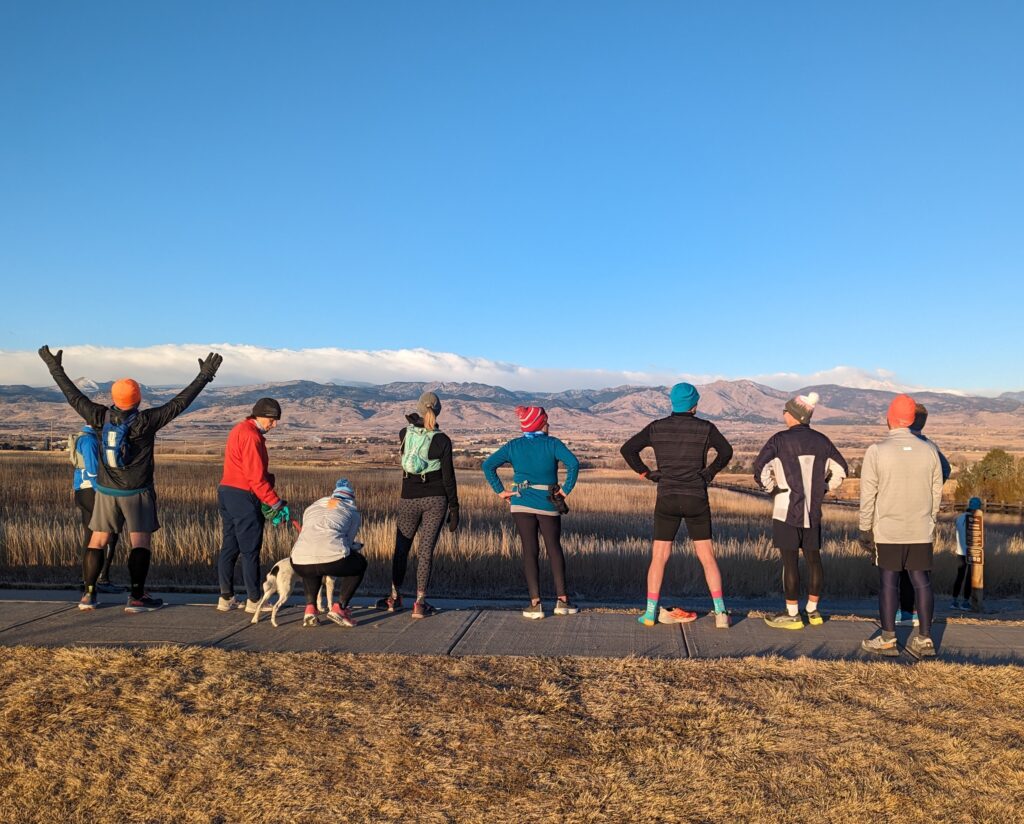
In Louisville and Lafayette, Leslie Hoffmann leads one of the most established groups in the region, LoLa Runners. Her own path mirrors many in the local running scene, starting young, stepping away, and then returning through community. What began as Loco Fit eventually evolved into LoLa Runners, a structured yet welcoming club that blends coached training with a strong social core.
The schedule is intentional. Weekday workouts are coached and focused with intervals, tempo runs, hill work, and time trials built to help runners improve together. Saturdays are open community runs where people choose their own distances and regroup afterward at coffee shops. But what stands out most in Leslie’s description isn’t the structure, it’s the culture.
“We’re just such a welcoming group,” she said. “It feels like family.” That sense of belonging extends beyond workouts. Members travel together for races, form book clubs, and organize social events that have nothing to do with running at all. Over time, the group becomes less about training logs and more about shared life rhythms.
And like Doug’s group, LoLa also reinforces something subtle but important, consistency beats motivation. People don’t always feel like showing up, but they usually leave glad they did.
Different styles, same discovery
Ziranda Dominguez’s group is built around brewery runs and casual social connection. Doug Croft’s group centers on structured coaching and accountability. Leslie Hoffmann’s LoLa Runners blends both, with a clear training structure anchored by a strong community identity.
But the overlap is where the story lives. All three approaches are, in their own way, solving the same problem, how to make running something people stick with, and maybe even enjoy. And that last part matters more than it sounds.
Because one of the quiet truths that comes up again and again in run clubs is this, a lot of people start running thinking they don’t like it. They associate it with discomfort, boredom, or pressure. But in a group setting, whether it’s a brewery run, a coached workout, or a Saturday coffee meetup, that perception often shifts.
Running doesn’t become easier because the miles change. It becomes easier because the experience changes. Or, as these groups show in different ways, running can actually be fun, even for people who are pretty sure they hate it.
Yellow Scene’s 2026 Summer Support Drive is underway with a goal of 1,000 Sustaining Supporters by summer’s end.
For 26 years, we have remained fiercely independent, free from sponsored content and outside editorial influence.
Reader-driven support keeps local journalism unbossed, unbought, and our journalists fed. Become a sustaining supporter for $8/month and get Yellow Scene delivered to your home.
Join the Summer Support Drive and keep local journalism strong.