




More than 100 Erie residents are now asking Colorado Attorney General Phil Weiser to review the town’s controversial mineral rights process, and a Boulder attorney has formally challenged the town’s handling of consultant contracts and procurement procedures.
The twin actions come less than a week before Erie Town Council is scheduled to vote on a proposed mineral rights agreement with SM Energy, a deal that a minority of supporters say would provide significant financial benefits and operational protections for the town.
For many residents, however, the debate is no longer focused solely on the merits of the proposed agreement. Instead, concerns have shifted toward the process used to negotiate it.
Over the past several months, residents have raised questions about the town’s selection of Alameda Mineral Advisors, the extensive use of executive sessions during negotiations and the role of consultant Matthew Owens, who acknowledged during a June 2 study session that he did not complete the competitive bid solicitation process outlined in his contract with the town. Owens later said he had been instructed not to do so.
When asked who provided that instruction, Owens said it came from “the people that hired me.” Because Owens was hired specifically to evaluate and market the town’s mineral assets, his admission became central to the legal and ethical criticism against the process.
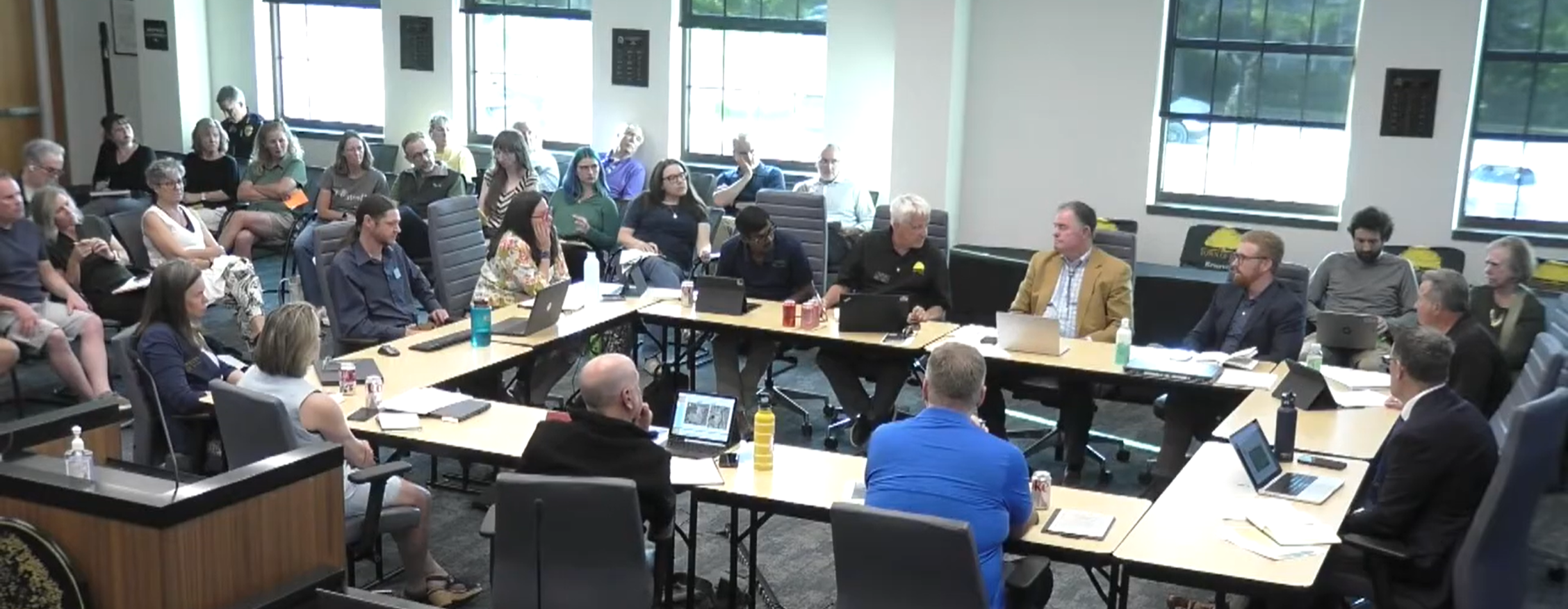
Pictured Owens being questioned regarding competitive bidding process
Town officials have acknowledged that discussions surrounding the proposed mineral rights transaction began as early as September 2025. However, details of those negotiations remained largely out of public view until February 2026, when the issue first came to broader public attention through Yellow Scene reporting on an offer for the town’s mineral rights.
Those unanswered questions (and the months-long gap between private discussions and public disclosure) prompted Erie resident Steven Drew to seek outside review.
Drew said he spent months attending meetings, reviewing contracts and attempting to obtain information about the mineral rights negotiations before concluding that residents had exhausted their options at the local level.
“The short answer from the town was we had no rights in this process,” Drew said.
“So where I ended up was in a void where this behavior had no recourse except for those two areas, and that is the attorney general and the civil process.”
On June 11, Drew and more than 100 residents signed a letter asking the Colorado Attorney General’s Office to review the mineral rights process before council votes on the proposed agreement. The signatories include current and former Erie residents, former public officials and professionals with backgrounds in transportation, environmental protection and public administration. The letter alleges that town officials bypassed competitive procurement requirements, failed to conduct required bid solicitations and relied heavily on executive-session discussions during negotiations.
Drew said the goal is not to prevent council from making a decision, but to ensure residents can trust the process that produced it. If the Attorney General’s Office chooses to review the allegations, it could provide the first outside examination of the mineral rights process.
The same day, Louisville attorney Darren O’Connor, representing Drew, sent a formal demand letter to the town seeking records and explanations related to the mineral rights negotiations. The letter challenges both the consultant procurement process and Owens’ failure to perform the bid solicitation work described in his contract. It also requests documentation showing who instructed Owens not to complete that work and asks the town to delay final action on the proposed agreement until those questions are resolved.
The issue surfaced publicly again during Tuesday night’s council meeting when a motion to enter executive session failed on a 4-3 vote. Councilmembers Emily Baer, Dan Hoback and Anil Pesamarelli voted against entering the closed-door session, citing concerns about transparency and the amount of public business being discussed outside public view. The disagreement led to a tense exchange among council members over issues that have emerged throughout the mineral rights debate. In an interview with Yellow Scene following the meeting, Councilmember Dan Hoback said he was unaware of any public vote, council consensus or contract amendment authorizing a change to Owens’ responsibilities.
“We never went to a straw vote or a poll … certainly not consensus,” Hoback said. “I’m quite sure [council as a whole] never consented to anything of that nature.”
Hoback said that if Owens was instructed not to complete the competitive solicitation process required by his contract, he does not know who gave that instruction.
“If we went behind those doors and modified that contract, well, we broke the law”,Hoback said.
Hoback added that he was unaware of any communication authorizing such a change. “I was not a part of any emails and texts,” he said. “I’m wondering where [Moore] got that.”
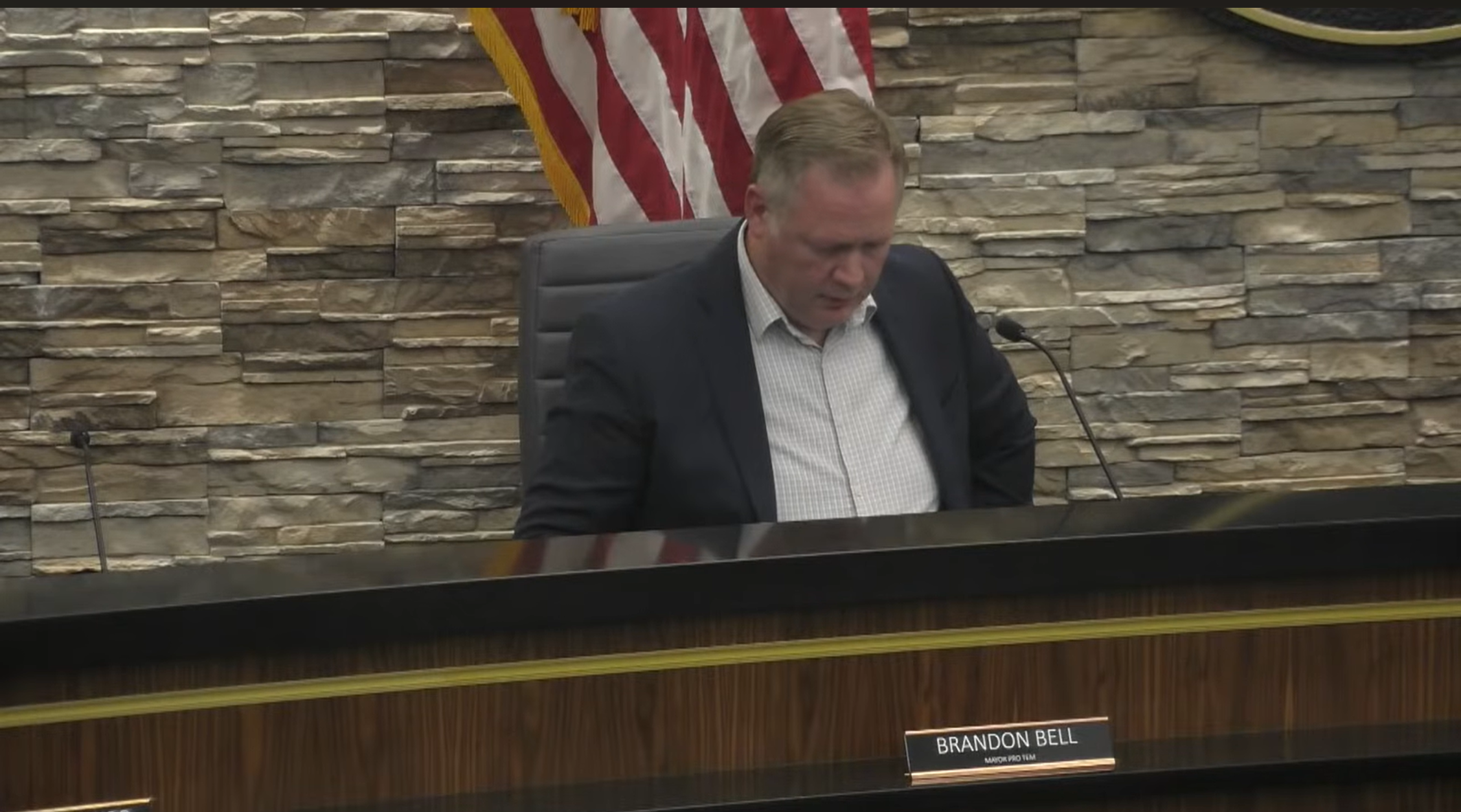
Mayor Andrew Moore and Mayor Pro Tem Brandon Bell have defended the use of executive sessions, arguing that certain negotiations and real-estate matters cannot be conducted publicly without undermining the town’s position. A few supporters of the SM Energy agreement have also argued that the deal secures valuable concessions, protections and financial benefits for Erie.
Whether the Attorney General’s Office takes action before the June 16 vote remains unclear. What is clear is that the controversy has expanded beyond the proposed agreement itself. For a growing number of residents, the central question is no longer whether the deal is good or bad, but whether the process used to reach it followed the town’s own rules.
Yellow Scene reached out to each town council member for comment and did not receive a response.
Yellow Scene’s 2026 Summer Support Drive is underway with a goal of 1,000 Sustaining Supporters by summer’s end.
For 26 years, we have remained fiercely independent, free from sponsored content and outside editorial influence.
Reader-driven support keeps local journalism unbossed, unbought, and our journalists fed. Become a sustaining supporter for $8/month and get Yellow Scene delivered to your home.
Join the Summer Support Drive and keep local journalism strong.