



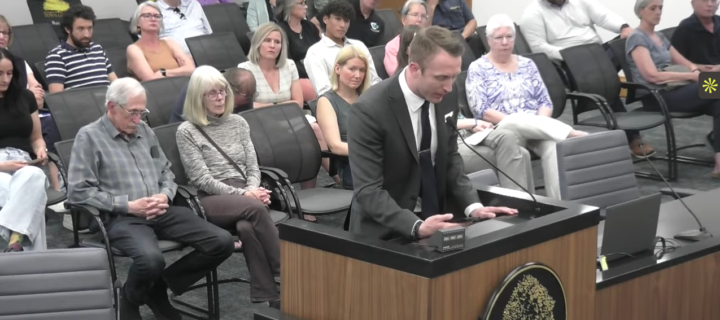

The Town of Erie Colorado is weighing whether to sell or lease a portion of its mineral rights tied to the state-approved Draco oil and gas project, a decision that has exposed divisions on council, raised questions about the town’s negotiating process, and highlighted uncertainty about how much authority Erie actually has.
At a special meeting on April 21, town staff emphasized that no final agreement has been reached and no vote has been scheduled. Council questioning made clear that key aspects of the proposal, including how it originated, how consultants were selected, and what the town actually owns,remain unresolved.
Erie Environmental Services Director David Frank
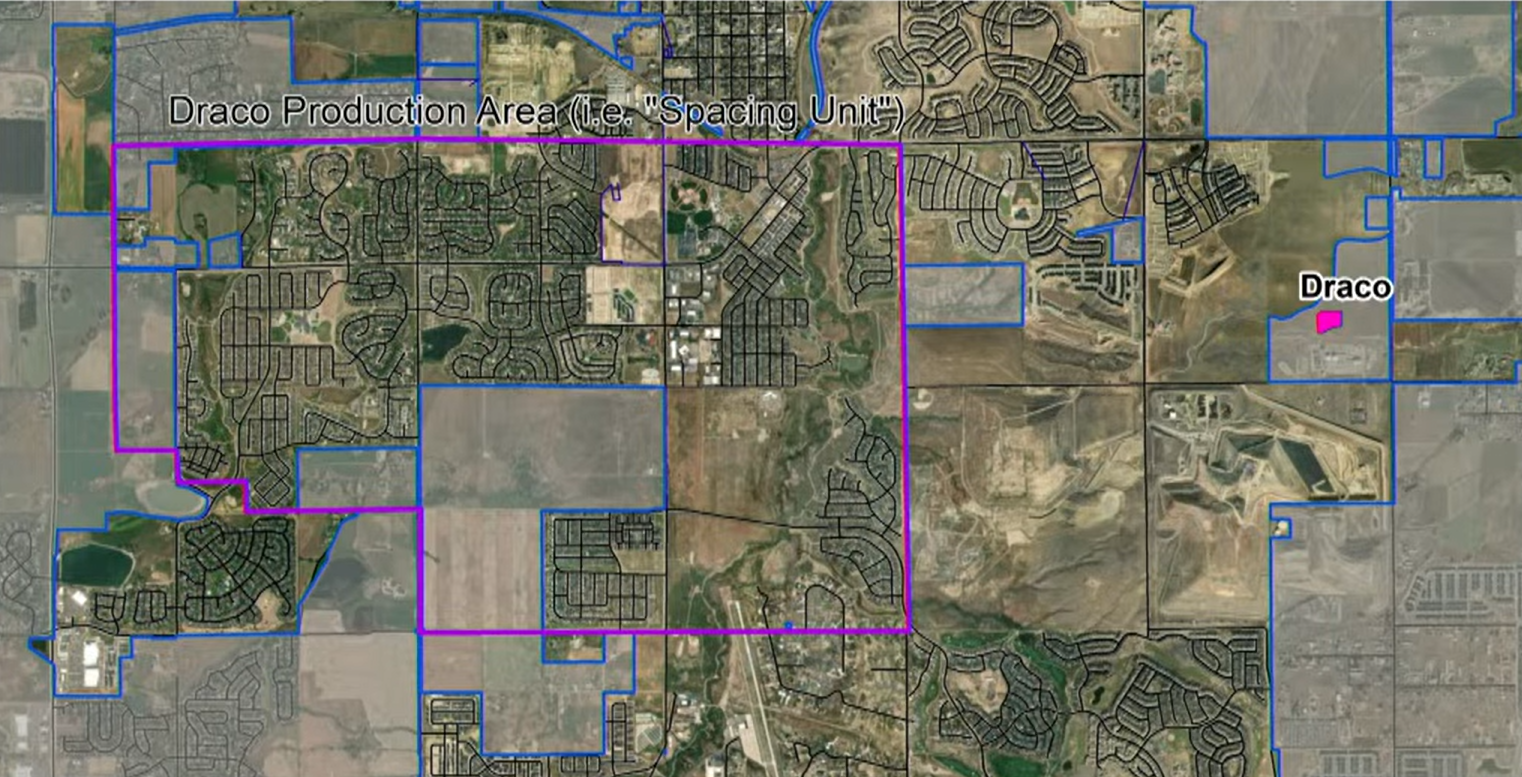
The Draco project, approved in March 2025 by the Energy and Carbon Management Commission (ECMC), allows for up to 26 wells to be drilled from a site in unincorporated Weld County, extending horizontally beneath portions of Erie. Town officials reiterated that the project is expected to move forward regardless of local action. “I would fully expect, no matter what action the town takes, that 26 wells will be drilled,” Erie Environmental Services Director David Frank said.
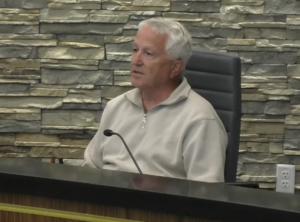
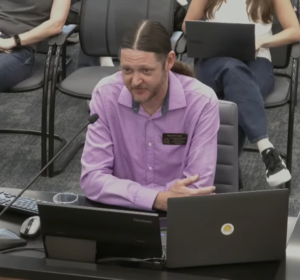
Town of Erie Councilmember, Dan Hoback
Early in the meeting, Early in the meeting, Councilmember Dan Hoback began pressing staff on the fundamentals of the deal: when the town was first approached, how negotiations began, and why Alameda Minerals was selected without a competitive process. When asked about this piece of the process, Frank said, “I’m not aware of any other companies that do this exact work.”
By the end of the meeting, those questions had evolved into a broader challenge to both the process and the assumptions underlying it.
“I have serious concerns about conflict of interest,” Hoback said. The consultant, Alameda Minerals, is led by a former oil and gas executive with ties to the industry involved in the project, a connection that drew scrutiny during the meeting. He also warned that the absence of a formal request-for-proposals process could expose the town to legal and audit risks.
More significantly, Hoback disagreed with the idea that Erie lacks leverage. While town staff and some council members emphasized the town’s relatively small percentage of mineral ownership, Hoback emphasized that without permission to drill through town-owned minerals, operators may not be able to reach large portions of the approved drilling area. “The inability to drill through Erie land without owning its mineral rights can be a major, major impediment to the ability of Draco to drill much of its planned area, currently approved or not,” Hoback said.
Town officials declined to provide additional documentation or answer detailed questions about the procurement process, citing the ongoing nature of negotiations.
Those competing interpretations of the town’s authority sit at the center of the debate. Erie’s leverage stems from Colorado SB24-185, which prevents operators from forcing municipalities into pooling agreements. But how that law will function in practice, and particularly whether operators can drill through or around municipal minerals, remains untested.
Public comment reflected both that uncertainty and a sharp divide over how the town should respond. Sixteen residents and stakeholders spoke at the meeting, with the majority opposing a sale or urging alternatives such as delaying action or retaining the town’s mineral rights. Five supported moving forward with a sale or lease, including three who identified themselves as representing business or industry interests, such as mineral rights owners and energy companies.
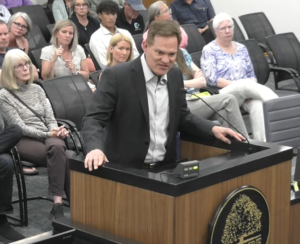
Former state senator and attorney, Mike Foote
Former state senator Mike Foote, who worked on oil and gas legislation for years, described the current moment as the result of a long effort to give local governments control over their mineral rights. He recalled earlier policies that allowed a single mineral owner to force others into leasing, calling it something he “couldn’t believe” when he first encountered it.
The 2024 law, he said, was designed to change that dynamic. “This was a hard-fought provision,” Foote told council, urging them to “take advantage of it” and follow the will of the community. “There’s nothing in the law anymore that says that you have to say yes.” He warned that approving a deal would entangle the town with the oil and gas industry for decades. “This puts Erie in business with oil and gas for a long, long time,” he said. “I would urge you [… ] to say no.”
Other residents raised concerns about long-term environmental and infrastructure risks. Steve Hochgesang pointed to the lifespan of plugged wells and containment systems, warning that decisions made now could create long-term liabilities, particularly for groundwater and waste disposal.
In contrast, speakers aligned with mineral interests emphasized financial realities and potential legal consequences. Kole Kelley, an oil and gas attorney at Fennemore Law, argued that development is already approved and that refusing to participate would not stop drilling but would result in forgoing compensation. He warned that the town could face litigation if it interferes with mineral owners’ ability to realize value from their assets.
Those competing perspectives were reflected in the council’s closing statements.
Hoback remained the most openly critical, raising concerns about procurement, transparency, and conflicts of interest, while also emphasizing the town’s decision-making power in this moment. “Other companies cannot drill through our land to reach other people’s mineral rights. So I’ll be a bit of the voice of the wilderness and say, yeah, we can impact Draco, despite the narrative that’s been making its way through social media and tonight’s presentation. um The initial approval of the Draco pad was not a rollover and play dead moment. In fact, we should be fighting harder than ever,” Hoback said.
Councilmember Anil Pesaramelli aligned more directly with residents opposing the deal. “I am for health and safety,” he said. “I urge everyone to stop this sale.”
Councilmember Brian O’Connor took a more cautious position, expressing frustration with the process and emphasizing the need for more information before any decision is made.
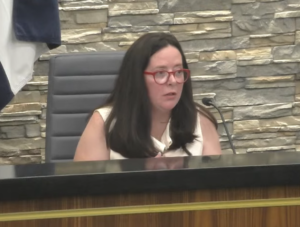
Town of Erie Councilmember, Emily Baer
Councilmember Emily Baer delivered one of the most detailed and forceful closing statements, drawing on years of work in oil and gas regulation.
She pushed back on the idea that selling mineral rights would improve safety, noting that many of the cited protections are already required by the state regardless of any deal. “To imply there are safety regulations that will go unenforced unless Erie sells its minerals is misleading,” she said.
Baer also argued that the town retains meaningful authority under current law, including the ability to deny subsurface access. She framed the decision as a question of values and long-term governance. “My principles are not up for purchase,” she said, reiterating her opposition to selling the town’s mineral rights.
Councilmember John Mortellaro took a more logistical tone, emphasizing that the project has already been approved and suggesting the town should consider whether it can secure benefits from an outcome it cannot prevent.
Mayor Pro Tem Brandon Bell and Mayor Andrew J. Moore both framed the decision in similar terms, emphasizing inevitability and the potential to capture value. Moore rejected claims that the town could significantly alter the project, calling that idea “100% false,” and stressed the importance of protecting negotiations.
Bell drew a direct comparison to a past landfill decision, where the town chose to accept development in exchange for compensation rather than oppose it without leverage. “If you’re going to dump trash in my backyard, you’re going to pay me for it,” he said, describing the philosophy guiding his position. His remarks made clear that he views the mineral rights as a negotiating tool rather than a mechanism to stop drilling.
To some council members, the project is unavoidable and selling the mineral rights are a means of extracting value and oversight. Others view those same rights as one of the town’s only remaining tools to challenge or constrain development.
No vote has been scheduled, and officials said any agreement would be subject to a future public hearing. Until then, core questions remain unresolved, including the exact location and value of Erie’s mineral rights, whether the town followed standard procurement practices, and how much influence Erie ultimately has over a project already approved by the state.
For now, the debate in Erie is not just about oil and gas. It is about whether a town that fought for the authority to say no will use it.
Like journalism like this? Consider becoming a sustaining supporter — and get our print edition delivered to your home each month.
Democracy needs journalism more than ever. For 25 years, we’ve told the truth — your support helps us keep doing it for the next four and beyond. Administrations come and go. Our team stays ready to lead, no matter who’s in charge.