




Press releases are provided to Yellow Scene Magazine. In an effort to keep our community informed, we publish some press releases in whole.
For Immediate Release
Date: July 16, 2026
Contact: [email protected]
Photo credit: Nathan Vargas/USFWS
U.S. Fish and Wildlife Service Finalizes Rule Downlisting the Razorback Sucker
This recovery milestone reflects more than 30 years of collaborative conservation across basin-wide recovery programs and partners.
DENVER –The U.S. Fish and Wildlife Service has finalized a rule downlisting the razorback sucker from an endangered to a threatened species under the Endangered Species Act. The action is accompanied by a 4(d) rule that allows limited take of the fish for actions associated with the species’ conservation.
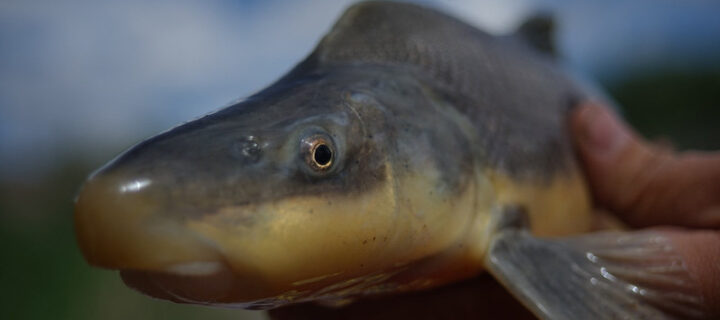
Listed as endangered in 1991, the razorback sucker is one of the largest suckers in North America. It is a unique freshwater fish native to warm-water portions of the Colorado River basin in the western United States. Recognizable by a bony keel behind its head, the razorback sucker can grow to more than three feet long and weigh up to ten pounds. The fish tolerates wide-ranging temperatures and flow conditions and is most common in low-velocity habitats such as backwaters, floodplains, flatwater river reaches, and reservoirs. It is found in Arizona, California, Colorado, Nevada, New Mexico, and Utah. Historically it was also found in Wyoming and the Mexican states of Baja and Sonora.
This recovery milestone is the result of more than three decades of cooperative work among the Upper Colorado River Endangered Fish Recovery Program, San Juan River Basin Recovery Implementation Program, and Lower Colorado River Multi-Species Conservation Program. It also reflects the contributions of many partners at state, regional, tribal, and federal organizations, as well as the private and nonprofit sectors.
Conservation measures, such as propagation and stocking, nonnative fish control, instream flow, research and monitoring, and habitat restoration, have improved conditions in many areas of the Colorado River basin that have historically supported populations. Razorback suckers are now found in eight populations; four of those populations can migrate and spawn in multiple locations. The largest population, located in the Green River of the upper Colorado River basin, now includes about 36,000 adults, up from roughly 100 wild fish in the late 1990s.
The accompanying final rule under section 4(d) of the ESA provides tailored protections for the razorback sucker and regulatory flexibility for activities associated with its conservation. Activities covered by the 4(d) rule include maintenance of refuge populations, exhibition for educational purposes, creation of nursery habitats, removal of nonnative fish, and development of catch-and-release fishing opportunities.
Despite the substantial progress, the razorback sucker faces several challenges in the foreseeable future and remains threatened under the Act. Ongoing threats to the species include altered river flows that limit nursery habitat, changes in water quality and quantity, persistent drought, and predation by nonnative species.
The final rule will publish in the Federal Register on July 17 at www.federalregister.gov. The proposed and final rules, post-delisting monitoring plan, supporting documents and public comments are available at https://www.regulations.gov under docket number FWS–R6–ES–2020–0057.
-FWS-
The U.S. Fish and Wildlife Service works with others to conserve, protect, and enhance fish, wildlife, plants, and their habitats for the continuing benefit of the American people. For more information, visit www.fws.gov and connect with us on social media: Facebook, Instagram, X (formerly known as Twitter), LinkedIn, Flickr, and YouTube.
###