





When I first heard “Shakespeare” and “prevent youth violence” in the same sentence, I did a double take. The two aren’t exactly synonymous. Shakespeare’s plays often end in tragedy, so how could they possibly serve as tools for preventing violence?
A few days before her event at the Boulder Bookstore, I called Dr. Amanda Giguere to find out. Over the course of our conversation, she described the origins of her new book, Shakespeare & Violence Prevention: A Practical Handbook for Educators, the years of research behind it, and the personal stakes she feels in the work. Her enthusiasm came through in every sentence.
Giguere holds both an MA and PhD in theatre history and criticism from the University of Colorado Boulder, where she is now Director of Outreach for the Colorado Shakespeare Festival (CSF). She works closely with the Center for the Study and Prevention of Violence (CSPV) and its director, Dr. Beverly Kingston, on the festival’s “Shakespeare in the Schools Tour: Shakespeare and Violence Prevention,” launched in 2011.

A CSF Perfomance of Twelfth Night
The tour began during a peak in national attention to bullying. Over time, it has evolved alongside rising concerns about school violence in Colorado. According to Safe2Tell, the number of reports made in April 2025 increased by 15% compared to the previous school year.
CSF’s research identifies five key themes in violence prevention, all focused on strategies to prevent youth violence:
-
Violence is preventable
-
Explore root causes
-
Address risk and protective factors
-
Build a positive school climate
-
Upstanders make a difference
“Live and deal with others better,” Giguere said, summarizing the program’s mission.
In roleplay activities, students speak directly to Shakespeare’s characters, practicing how to intervene when they witness harm. Research shows that when a peer intervenes, bullying stops within 10 seconds about 57% of the time. Giguere describes the program as “solution-focused and student-generated,” a combination she believes drives its impact. Since 2011, the tour has reached more than 140,000 Colorado students, about 10,000 per year, and now she hopes to share its approach more widely.
The accessibility to Shakespeare’s work in schools was what led her to gear the book toward educators. His plays are already being taught in the classroom, so why not take it a step further and begin a conversation about how violence could have been prevented in his work?
“It’s about translating research into practice and putting the cutting-edge research about violence prevention into the hands of the people who are going to have the most impact. Those are teachers. They’re working directly with the next generation,” she explained.
Still, I asked, why Shakespeare specifically?
“In Shakespeare’s plays, we see ups and downs, highs and lows. We see people mistreating one another. We see how harm can escalate and lead to war and violence, and brutality, and it can ultimately lead to dehumanization. I think we can use the plays, and maybe any art form, as tools to understand our own time, our own world, our own place.”
Giguere continued, “In theatre, transformation is always possible. Just as we see an actor put on a role and become a king in one moment and then change their bodies and costumes and become a commoner in the next, we know that that same kind of change that happens in the theatre is possible in the violence prevention world.”
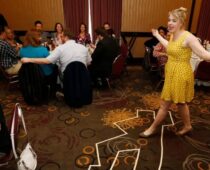
A few days later, I saw that transformation in action. At the Boulder Bookstore, every chair was filled before Giguere began her first-ever author event. She sat in a black chair at the front of the room, fielding questions with warmth, inviting the audience to use their “Shakespeare voices,” and weaving her deep knowledge of theatre and prevention into each answer. Many in the audience were students, colleagues, or longtime friends but all shared a love for theatre.
Her book reflects that connection, with a prologue, interludes, and an epilogue framing examinations of eight plays: three tragedies and five comedies. Each chapter pairs a plot synopsis with an exploration of how violence prevention themes emerge in the text, moving from the overt brutality of Macbeth to the subtler tensions of The Tempest.
“Violence is a spectrum, but in any form, it is preventable,” she emphasized.
While the included practical roleplay exercises make the book a resource for educators, Giguere hopes it reaches parents, community leaders, and anyone interested in helping to prevent youth violence.
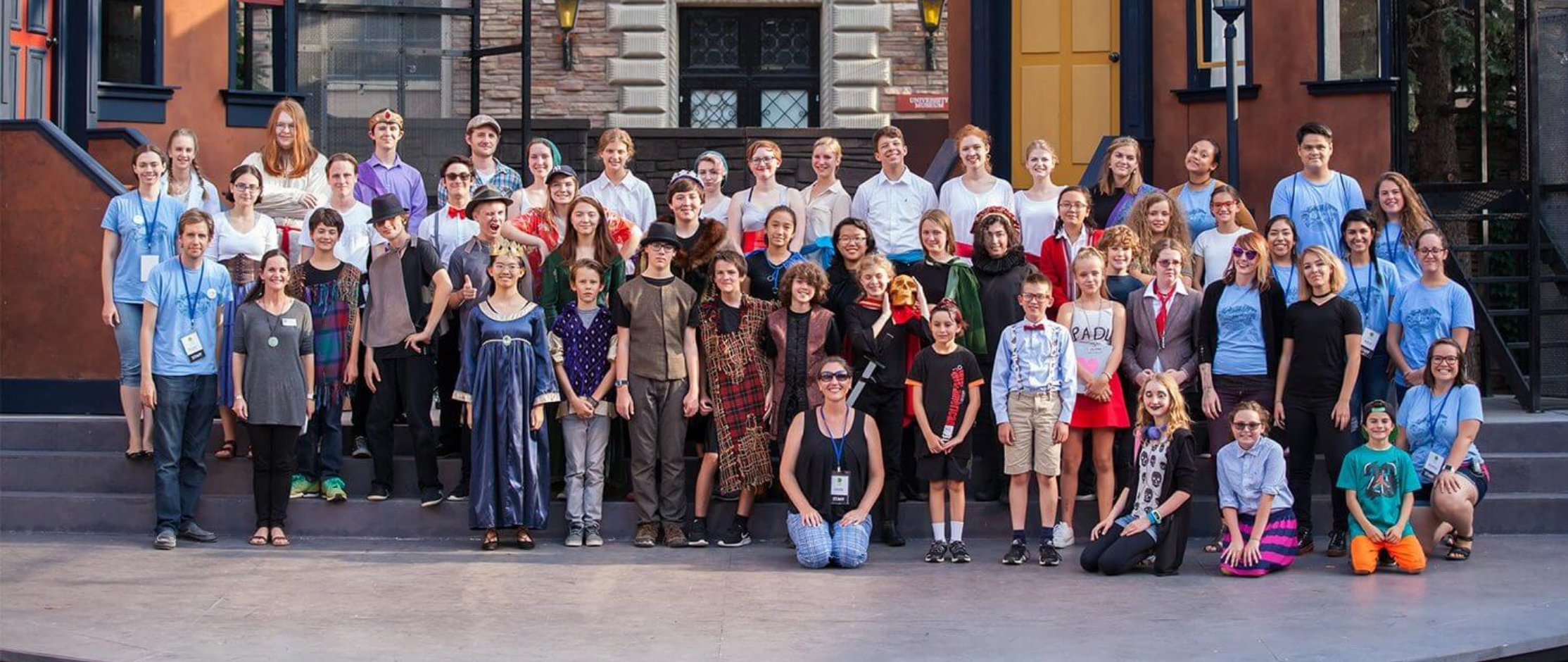
Photo from CU
“As a mom, […] I want my kids to grow up knowing how to speak up for others, knowing how to advocate for themselves, knowing how to understand what’s making their communities tick, and knowing how to care for others.” Giguere shared.
Now that the program’s ideas exist in book form, she believes their reach can extend far beyond the classroom.
“As long as we continue to examine the root causes of violence and the roles that we play in preventing it, we can encourage forward motion in violence prevention.”
Shakespeare & Violence Prevention: A Practical Handbook for Educators is available in paperback and e-book. More about Amanda Giguere can be found on her website.

Democracy needs journalism more than ever. We’ve been telling the truth for 24 years. Your support helps us keep telling it for at least the next four years.