





On the morning of September 24, 2025, at approximately 7:30 a.m. EST, the National Aeronautics and Space Administration (NASA) launched the Interstellar Mapping and Acceleration Probe (IMAP). This launch kicks off a three-year prime mission to learn how the heliosphere, a solar wind-formed region that surrounds our solar system, interacts with interstellar space.
The IMAP spacecraft launched with 10 instruments developed to chart and collect data on magnetic fields, star remnants, and other solar system materials. One of those instruments came from the University of Colorado Boulder.
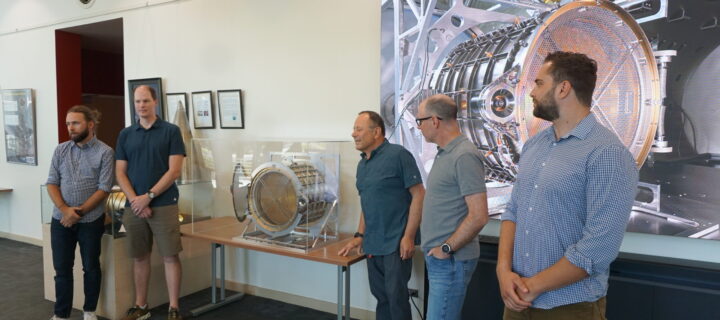
Over the last five years, a team from the Laboratory for Atmospheric and Space Physics (LASP) has developed the Interstellar Dust Experiment (IDEX). The 47-pound instrument will capture and analyze interstellar particles as they travel through space at an average speed of 26 kilometers per second (approximately 16.1 miles per second).
Dust particles that hit an impact target coated in ultra-pure gold will be analyzed using mass spectrometry to determine what each particle contains. During the initial design process in the spring of 2020, LASP tested 5,000 different configurations of the instrument.
LASP chose the final configuration of IDEX to optimize both its collection efficiency, and its mass resolution, allowing for higher-detailed analysis of the isotopes that compose each particle.
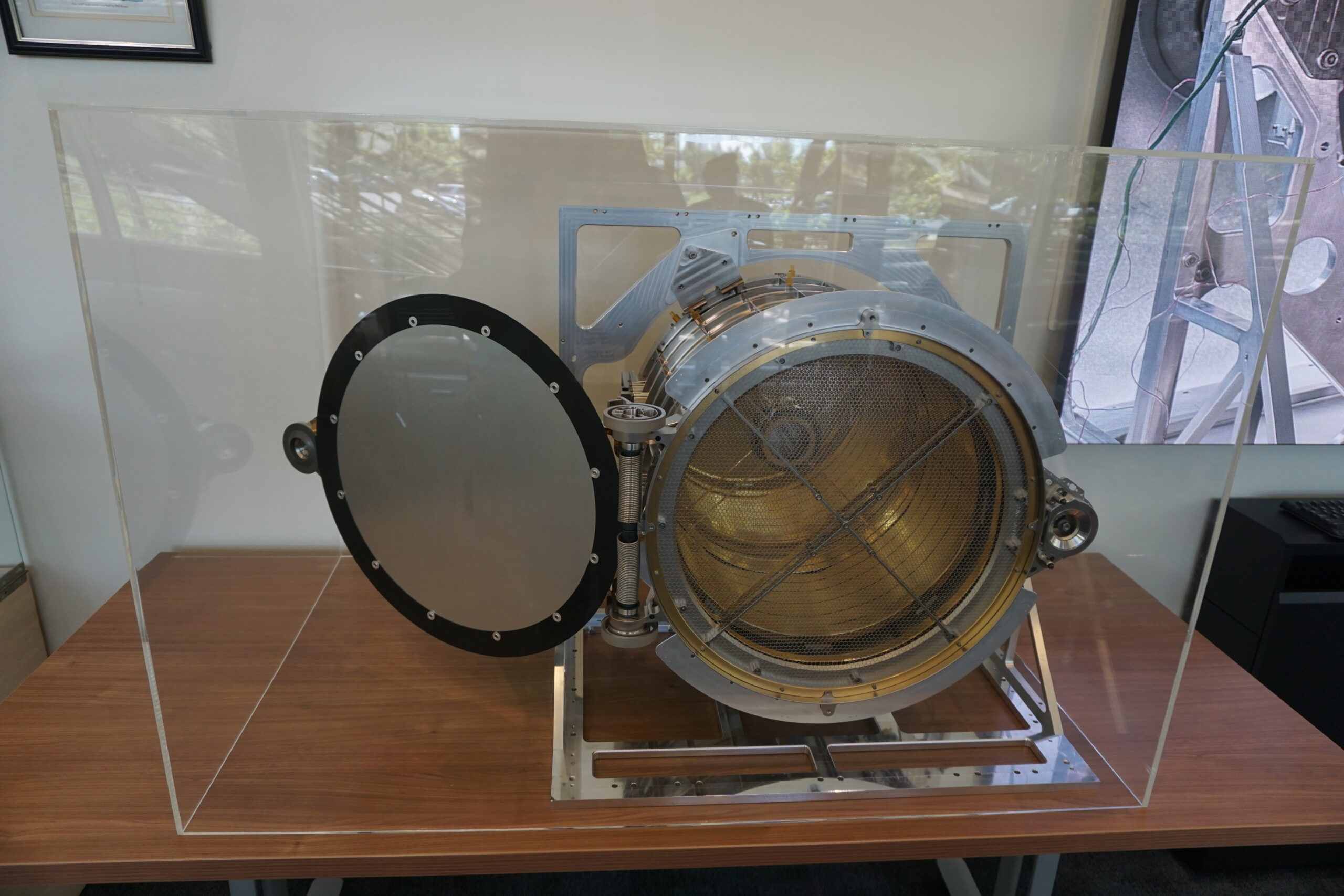
The inside of the instrument also contains engravings of Ralphie, CU Boulder’s bison mascot, and 87 names of the scientists, engineers, and students involved in IDEX’s development.
Only 43 grains of interstellar material, and a handful of grains embedded in meteorites, have ever been detected and analyzed. IDEX aims to detect and analyze 100 grains a year during IMAP’s mission.
“The dust that we measure today from interstellar space is probably the closest you can get to the original building blocks of the solar system,” said LASP scientist and CU professor Mihály Horányi, the project’s lead.
By capturing particles entering our solar system and those shed by comets and asteroids within it, IMAP’s data will help scientists piece together the story of how our solar system formed, and how it continues to evolve.