




This piece is part of Yellow Scene Magazine’s Opinion section. The views expressed here are those of the author, and do not represent a reported news position. At Yellow Scene, opinion pieces speak freely, challenge assumptions, and say the quiet parts out loud.
Some news out of Texas A&M reminded of a similar dark moment in Colorado’s history, and the leadership that met that moment.
First, the present. Earlier this month, Texas A&M president Matt Welsh III fired senior lecturer
Melissa McCoul. McCoul was giving a lecture on children’s literature, and mentioned that there were more than two genders. In an exchange recorded on video, a student objected to this statement, warning that it ran contrary to an executive order from President Trump, and her own religious beliefs.
Initially, Welsh defended McCoul in a conversation with the student who had complained. When this conversation was leaked to Texas state representative Brian Harrison, the pressure was turned up. Harrison called for the government to investigate. Texas’ elected Board of Regents promised audits of the entire Texas A&M system, the largest university in America.
Welsh fired McCoul, claiming she had taught material different from what was on the posted course curriculum. He also fired the head of the English department, and demoted the dean of the College of Arts and Sciences. Texas Governor Greg Abbott said the dean’s removal was “good”, and then said that Welsh must “also be fired.”
Just last week, and effective September 25, Welsh announced his own resignation, saying it was “the right moment for change.”
And now from present, to past.
In the late 1920s, the state of Colorado was run by the Ku Klux Klan. Their control extended from Governor Clarence Morley, a Klansman who banned sacramental wine to undermine Catholic churches, all the way down to the local level. In my hometown of Lafayette, more than one mayor was a Klansman, as were members of the city council. The city of Denver has had to reckon with this Klan past, as the Stapleton neighborhood changed its name to dissociate from its namesake KKK mayor.
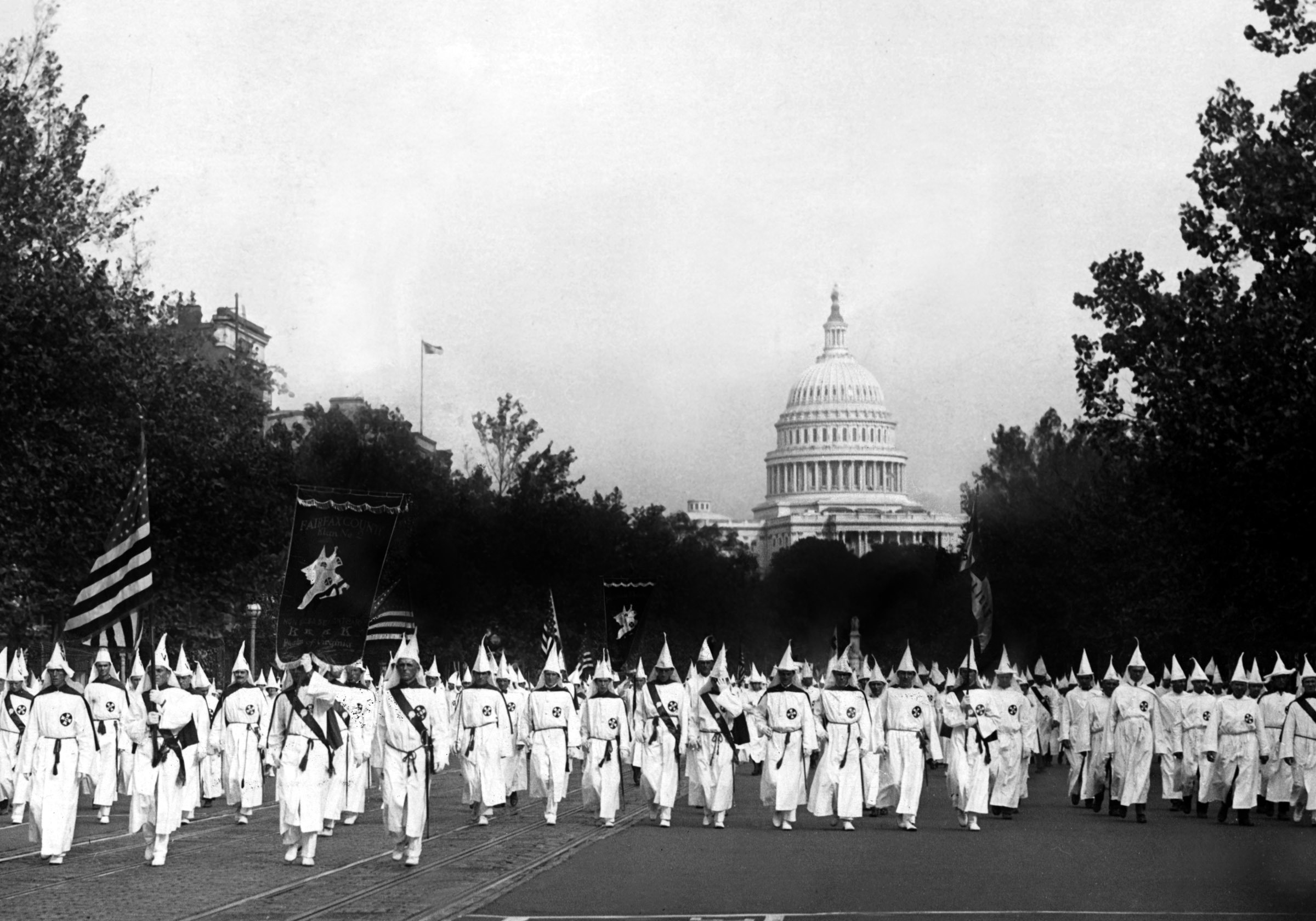
Within Colorado, the Pillar of Fire Church, which still operates the radio station KPOF, was the Klan’s most prominent religious ally. Its founder Alma White, a former resident of Erie, helped organize Klan marches and proclaimed the Klan “a liberator of white Protestant women.” Many cross burnings were given a prominent venue at Crown Hill in Westminster, the highest point in Adams County.
In the mid-1920s, Governor Morley told Norlin that the state legislature would receive its budget for the year if it expelled its Jewish and Catholic students and faculty.
Writer and philosopher C.S. Lewis wrote that “Courage is… the form of every virtue at the testing point,” and this is where George Norlin and Matt Welsh III differ. The Klan had the power to bring the University of Colorado to its knees. I’m sure Norlin had boosters meet with him, saying it wasn’t worth ruining good ol’ CU for those Jews and Catholics. He had the state legislature, one of the state’s largest Protestant churches, against him.
George Norlin was tested that year, and he told the Governor no. He did not betray his principles, or the Jewish and Catholic members of the university.

There were consequences. The university’s budget was cut off. Defending the university’s freedom had a very real financial cost. CU had to survive off a property tax written into the state constitution. These lean times would be a foreshadowing of the Great Depression that was to come. Still, for Norlin, a university where a student or teacher could be kicked out because of their religion was against everything a university stood for. The 1926 election saw the Klan lose power in state government, and the university budget was restored.
In 1932, Norlin accepted a position from Columbia University as Professor of American Life at the University of Berlin. In Berlin, he saw the decline of a flawed republic into “Hitlerism”, as he called it. His memoir of those years, Facism and Citizenship, is, as nonfiction, more instructive than Sinclair Lewis’ It Can’t Happen Here. I would encourage people to read it.
It may not be tomorrow, in a month, or in a year, but everyone in this country will know soon enough how much George Norlin they have within them. We know Matt Welsh III at Texas A&M didn’t have any. As for me, when that time comes, I hope I’ll have enough of Norlin in me to count for something.