



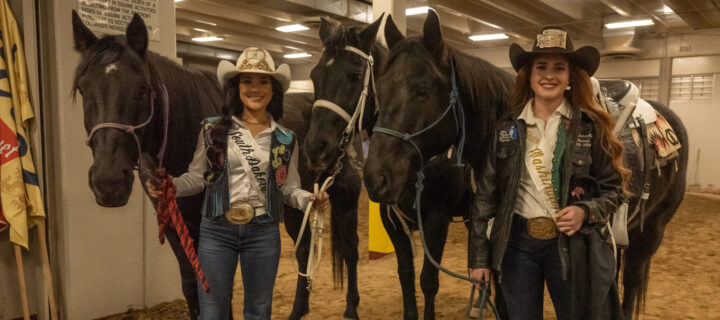

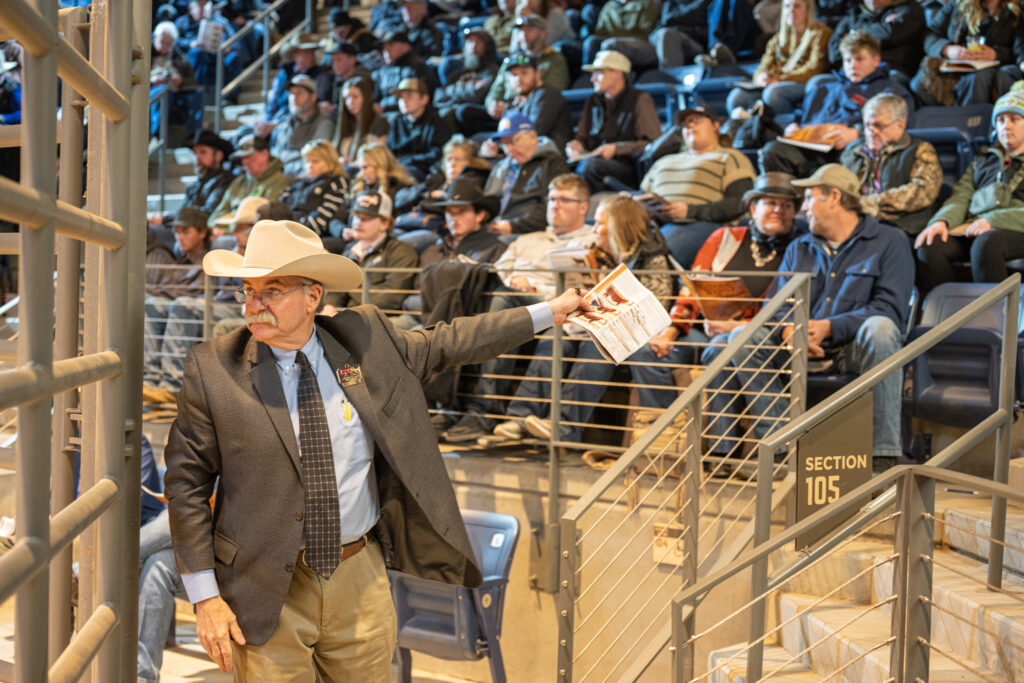
National Western Stock Show, Photo credit: Dosko Photo, Dustin Doskocil
Colorado’s Wild Roots are Growing Towards Inclusion
Cowboy hats, belt buckles, leather, and spurs, the bleachers of the Denver Coliseum give a taste of Colorado’s Wild West history. Booming voices welcome us to the 120th National Western Stock Show as the people settle. The dusty track before us, the nucleus of our attention, explodes with streams of sparklers and flooding fireworks before we are all immersed in darkness. In comes one rider, visible only by the LEDs lining her clothes, the mane of her galloping horse, and the American flag she bears. She is followed by her fellow Westernaires, a Colorado organization whose mission is to get young folks into saddles, all aglow in red, white, and blue as they run the perimeter of the stadium, the crush of hooves, jingle of saddles, and spray of dust on the brims of delighted front-rowers. The riders converge at the center, lines spinning like the blades of a windmill around the epicenter of the glowing American flag, displaying the Westernaires’ impressive precision mounted drill specialty, and with exact, unspoken coordination, stampede out the exit to the roar of the audience. The pyrotechnics, loud rock music, and general spectacle are proof that while Colorado may still hold on to its history, the state and the cowboy are evolving.
It’s January of 2026, but the traditions that permeate this evening’s rodeo trace back hundreds of years. There is a storied past of western ranch culture in the Centennial State. Horses were imported by the Spanish with fervor in the 1700s, though there are Indigenous histories reporting their presence as early as the 1600s. Livestock became a cornerstone in exploring and working the land. Western settlers also became enamored with the herding and roping mastery of Mesoamerican Indigenous horsemen known as the Vaquero. These techniques are still demonstrated with lasso work and calf roping. The freedom of the Western plains and peaks also gave opportunity for liberation for emancipated slaves, like the legendary bulldogging Bill Pickett, and Buffalo Bill’s dazzling showcases of cowfolk talents touring the nation, endearing Americans to the heroic cowboy lifestyle. While there might be a bias of white-man machismo at the rodeo, the event was born from diversity and freedom.
Sebastian Matthews, a board member of CGRA, said, “Being a cowboy isn’t just wearing the hat and riding a tractor. It’s an attitude: mind your business, don’t be aggressive, honor your word, do more, talk less.”
There are many cowfolk like Matthews who seek to keep the cowboy tradition alive in Colorado.
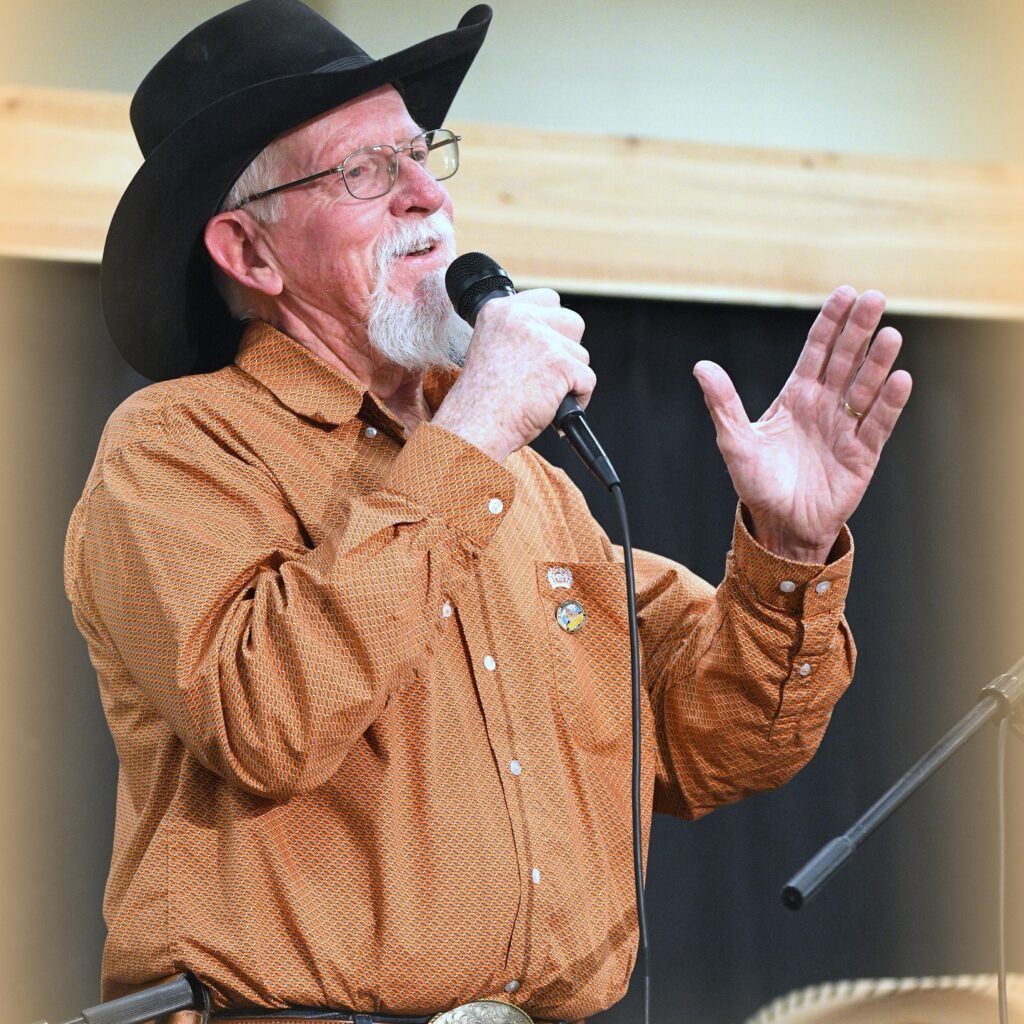
Terry Nash
The Cowboy Poet
Terry Nash, originally from the agriculture-heavy eastern slope of Colorado, is a cowman, beef producer, and cowboy poet residing in the western range of Loma. Agriculture has always been a part of his life, but it wasn’t until his trucking job took him to the mountains of Loma, where he fell in love with the woman who would become his wife, that he took up raising livestock.
Nash adores the cows he tends in the mountains. “Peace comes on the back of a horse […] following cows on trails.” There are some cows he’s shared a quiet respect with for fifteen years, and others bred for beef, slaughtered every June. Nash takes pride in the 32 families he and his wife provide quality beef for year-round.
“I love being around people, and I love being away from people,” Nash chuckled. “There was an old cowboy poet, Badger Clark, who said, ‘I loved my fellow man the best when he was scattered some.’”
Since 1990, Nash has faced his share of challenges as a steward of the land and cowhand. He noted the Colorado reintroduction of wolves, although a nuanced issue, as being a challenge for cattle keepers. “There are some that kill for sport […] The problem isn’t just that they are killing livestock, but that they stress out the herds. So much so that the heifers can’t breed.”
According to Nash, the Western range has been under drought for roughly the last ten years. “One day I was riding my horse over the hill looking for a cow and my horse took a step onto some dry grass that sounded like stepping on potato chips.” Creeks and streams that his and his fellow ranchers’ herds once relied upon have dried up, limiting areas for grazing. On July 10 of last year, a dry lightning storm set Turner Gulch in Mesa County ablaze. While most of the cattle were not harmed, over 30,000 acres were destroyed, and the herds, along with their tenders, were displaced.
Nash’s reverence for the peace and hard work of the cowboy lifestyle is apparent in his poem “A Cowman’s Lot,” about a heifer giving birth:
“The first flakes to fall were wet and wide spaced
But a warning, for soon they fell quicker
Wind and dark were neck and neck as they raced
And the cowboy pulled on his vicar,
Thought about supper, the wife who’d worry.
She’d watch for his truck at the gate,
And he with a heifer no man could hurry,
And decided supper could wait.”
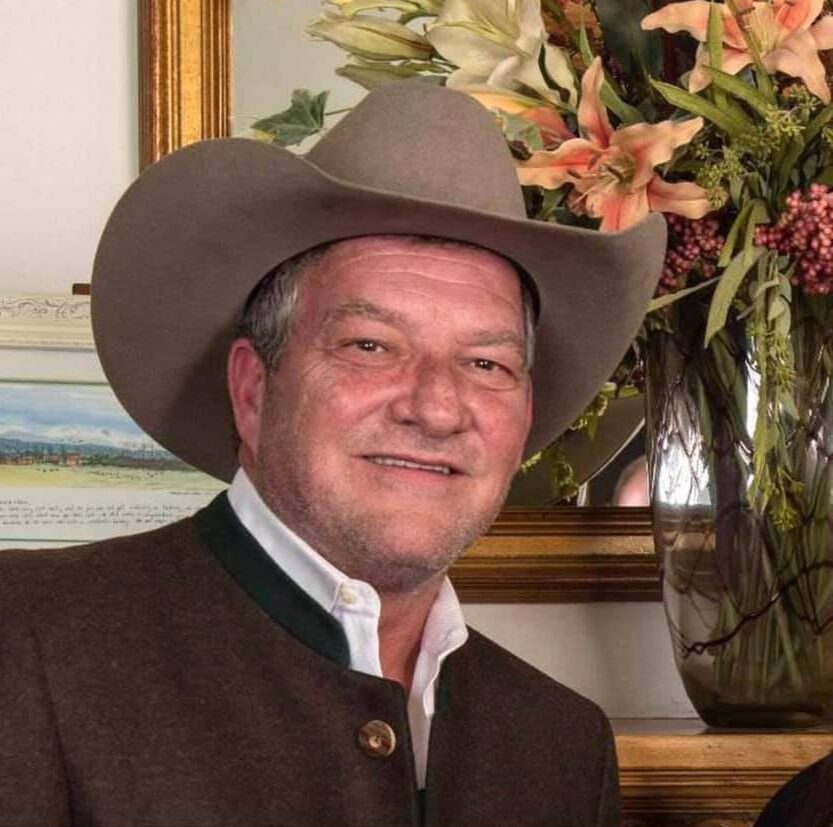
Carl Schmidt
A Modern Cowboy
Carl Schmidt is a longtime friend of Yellow Scene Magazine, but his love of livestock goes even further back, to his high school days doing 4-H and riding horses in Corpus Christi, Texas. For the last 24 years, Schmidt has been working with rodeos in Denver and runs his own bed and breakfast, the Capitol Hill Mansion. Schmidt is well known for his roughstock management and chute coordination for the International Gay Rodeo Association (IGRA), an amateur rodeo welcoming to all, regardless of sexual orientation or gender identity.
A novice might wonder, with trepidation, about the danger of rodeo. As with most sports and other hazardous lines of work, Schmidt said safety precautions have improved over the decades he’s worked the job, thanks to the convention held yearly to review and improve IGRA’s protocols. “My whole job is the welfare of those animals and the safety of those contestants,” Schmidt explained.
The safety of gay people at rodeos like the National Western Stock Show is a different story. “[Being in the LGBTQ+ community] is a lot more common or a lot more known in the wider rodeo community than it was when I was growing up,” Schmidt assessed positively. “But if I go to the Stock Show, they don’t know I’m gay. I don’t think they’re very supportive of that.” When asked how many gay rodeo contestants compete at wider rodeos, Schmidt said, “There isn’t really any crossover from the gay rodeo to places like the National Stock Show. If gay people are there, they aren’t out.”
Schmidt continued, “They might not feel safe at places like the National Stock Show, and that’s why the gay rodeo exists.” Although general acceptance of the LGBTQ+ community has improved since cowboys like Carl Schmidt were younger, it can be hard for potential rodeo-goers to forget how bad things once were, or to overlook the present-day threats and disdain for the LGBTQ+ community on display in the current U.S. administration.
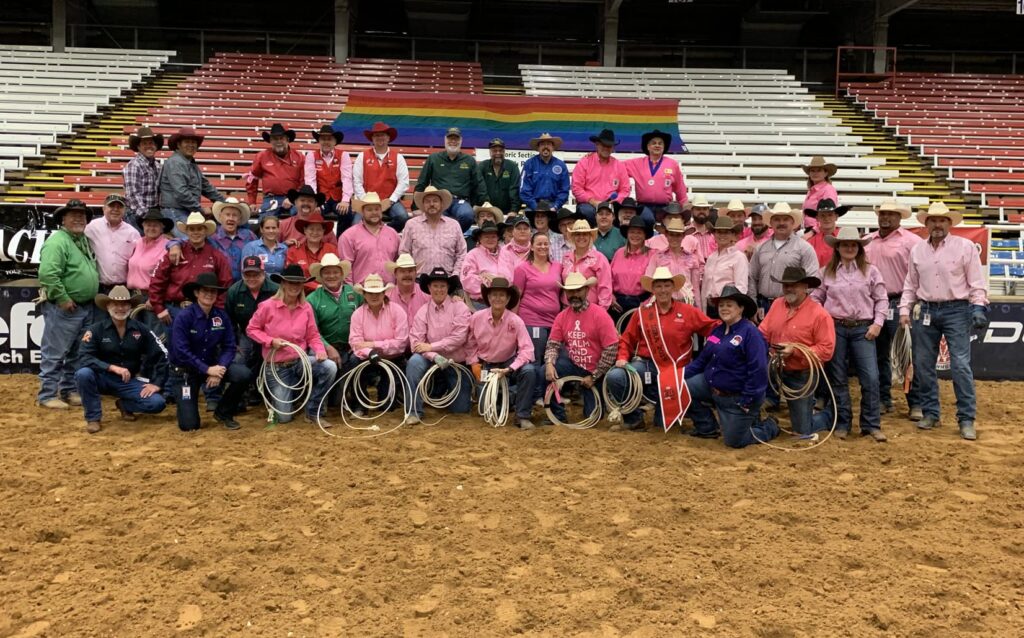
International Gay Rodeo, Colorado members
Living Legacy
John Beck is a highly awarded Hall of Famer for the IGRA. He has competed in all thirteen rodeo events for twenty-six years and, at 76 years old, still competes. Beck has competed in every IGRA finals, excluding 2006, and won several All-Around titles. Born smack-dab in the middle of Nebraska, he’s been riding horses just about as long as he could walk. “My dad used to say, ‘If you don’t ride, you won’t eat for a week.’ So that will get you pretty motivated.”
By the early 1980s, Beck had made it to Denver and was in the basement of Charlie’s gay bar, dreaming up events for the International Gay Rodeo, like the Wild Milking Competition. “It’s too crazy to be done now,” Sebastian Matthews, Beck’s younger counterpart, laughed. The contest included a team chasing around a lactating cow separated from its calf, trying to milk her, and consequently getting kicked in the face a lot. Needless to say, the event did not last long.
Reflecting on what he called his “nothing serious” injuries from over the years—two broken collarbones, four broken ribs, one broken ankle, and one broken leg—Beck joked, “I never wore a vest or helmet; they said there was nothing upstairs anyway, so why protect it?”
Beck and Matthews have similar beliefs about LGBTQ+ acceptance in rodeo culture as Carl Schmidt. However, Matthews sees the lack of acceptance of the LGBTQ+ community as not exclusive to rodeo. “How many male athletes of any sport do you see out as gay? There was one hockey player [Luke Prokop] a few years ago who came out, the first one in the NHL, and now he plays in Canada for the Raiders.”
Although the level of acceptance is not ideal, Beck noted how far the community has come. “In the 1970s in Nebraska, I was spending time with a guy, and the KKK tried to kill me.” Beck elaborated that when he was still farming in Nebraska and going through a divorce, his ex-wife’s sister ran to town and told his secret. When he drove to the town gas station to fill up his tank, he was told by an attendant, “We don’t serve faggots.” Around the same time, Beck had a border collie puppy who always wore a bandana. One night, the puppy came back inside with a note slipped under its bandana that said, “Move or die.” The next day, his puppy was killed.
In November of 1981, after years of threats, Beck flipped a quarter at 2:00 in the morning to decide where he would go: heads was Denver, and tails was Florida. When he returned to Nebraska the following fall for harvesting, the shed he built mysteriously caught on fire. For the next seven years, his father told him not to come home, afraid that he and his mother would “catch AIDS” from him.
With a history like that, it’s hard not to be grateful for the progress made in rodeo and other rural spaces, even if it is acceptance through silence. Beck eventually reconnected with his parents at the price of never discussing that he was gay.
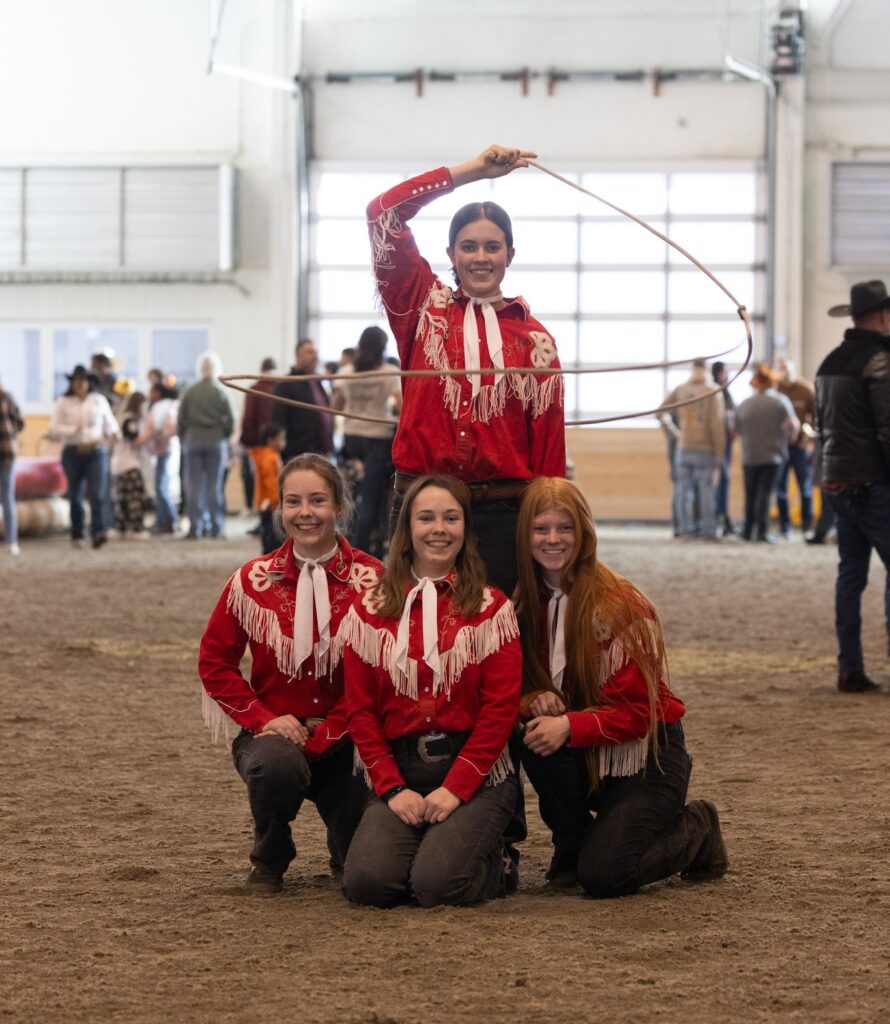
Women’s Professional Rodeo Assoc.
The Past and The Future
Karen Kronauge, president of the Alumni Association and wearer of many hats at the Westernaires, said in regard to changes in participation, “It’s a natural progression—kids who grow up on farms filtering out into the cities as they get older—but Westernaires created a pipeline of urban and suburban kids back into rural spaces.” Founded in 1949, the Westernaires is an organization aimed at getting Colorado kids on horses and living the Western lifestyle. Serving over a thousand members ages 9–19, Westernaires runs a precision-mounted drill program tended to with care and diligence.
The camaraderie among participants was apparent as they warmed up their horses in circles in the dirt backstage lots. Most participants in the practice area were young women, a rarity for wider rodeo events. Women competitors are typically restricted to categories like trick roping or speed barrel racing, but Kronauge posited that this was not always the case.
In 1904, it was actually a Colorado cowgirl, Bertha Kaepernick, who paved the way for women competitors to follow. “Before the 1920s, cowgirls could ride horses and steers just as well, if not better, than cowboys,” Kronauge said.
Author Cindy Herschel of American Cowboy magazine wrote in her article “Ride Like a Girl: The Original Rodeo Cowgirls,” “Starting in the 1930s, women in rodeo faced some serious challenges to continued participation. They eventually had to form their own association to organize women’s rodeo events. Roughstock riding rose again as a result, but barrel racing was coming on fast and furious and soon eclipsed it.”
Rodeo leaders of the time claimed that the restrictions resulted from the tragic death of saddle bronc riding, steer riding, and trick-riding cowgirl Bonnie McCarroll, but Herschel noted that “Gail Woerner, author of six books on rodeo history, says that bronc riding didn’t stop because of Bonnie McCarroll. Prior to her death, women already had been killed riding broncs as early as 1915, and by the early 1930s, rodeo promoters were hiring ‘ranch girls’ instead of allowing women competitors. These pretty Western women would drum up buzz for the shows via publicity appearances and did not compete.”
Historian Mary Lou LeCompte said of actor and producer Gene Autry’s leadership in banning women’s participation in 1941, “The end of women’s rodeo was Gene Autry. He put women in their ‘place,’ in the square dances and out of competition.”
Steve Wursta’s 2021 documentary film From Cheyenne to Pendleton follows the rise and fall of the rodeo cowgirl from 1904 to 1929. “He cites social and economic trends for a backlash against women’s athletic accomplishments, including the sour outlook related to the post–World War I recession in the farm belt.” Wursta gathered that “people were saying, ‘We’re in a depression, and we don’t need it rubbed in our faces that women are better than men.’”
However, as other groups not accepted in wider rodeo did, cowgirls created their own association in 1941, which still exists today as the Women’s Professional Rodeo Association. The WPRA yielded cowgirl greats like Jan Youren and Jonnie Jonckowski.
The unanimous voice from the interviewed cowfolk said, “Join us!” When asked what he wants the general public to know about his profession, Schmidt answered, “Let’s rodeo!” He went on to say encouragingly, “The gay rodeo is all about inclusion and equality. Come and join, participate in a rodeo, and live that western lifestyle you wanna live!”
Schmidt assured, “IGRA is dedicated to fostering a welcoming and inclusive environment for everyone regardless of their sexual orientation, gender identity, ethnicity, race, religion, or ability. We want everyone to feel valued, respected, and empowered within the community—to know that they can learn and participate and that rodeo is for them, too.”
While wider rodeo and cowfolk spaces have historically been viewed and acted as more socially conservative than their urban counterparts, there are pockets like the Bill Pickett Black Rodeo, International Gay Rodeo, and Women’s Professional Rodeo that have sought to and continue to change the narrative. Spaces like the National Western Stock Show show inclusion through special events like the Mexican Rodeo and the MLK Jr. Rodeo, but as racial, gender, and sexual identities are increasingly politicized in the United States, the wide-open arms offered by the National Western Stock Show bear some specificity for outsiders to feel safe. After all, cowboys and cowgirls are outsiders themselves—those who choose a life outside the office, in quiet companionship with nature, alone out on the ranges where there’s no one to judge or condemn them for being who they are.
Like journalism like this? Consider becoming a sustaining supporter — and get our print edition delivered to your home each month.
Democracy needs journalism more than ever. For 25 years, we’ve told the truth — your support helps us keep doing it for the next four and beyond. Administrations come and go. Our team stays, ready to lead no matter who’s in charge.