






Key Lime Air, boasted as the #1 air charter in the world, is based out of Colorado’s very own Centennial Airport in Englewood. What was once a point of pride for Coloradans took a sour turn for many in September 2025, when organizations Human Rights First and Colorado Newsline confirmed that Key Lime Air is part of a loose network of deportation contractors called ICE Air. Data from the Federal Aviation Administration (FAA) shows that Key Lime Air has been running flights for deportation and detention transfers, accounting for 11% of ICE’s total. This knowledge sparked an uproar at Colorado University of Boulder, as the university has held a contract with Key Lime Air since 2011 for transporting their men’s and women’s basketball teams. Protestors have been putting pressure on CU to take a stance against ICE and cut the contract with Key Lime. At their March 17th meeting, students and outraged community members rallied for change, but CU’s board of regents ultimately declined to end their contract. During a conversation with Yellow Scene Magazine, an active member of the overall resistance of ICE activity in Colorado conveyed strongly that the fight at CU is far from over. In fact, it is continuing with a tailored approach: from the angle of airline safety.
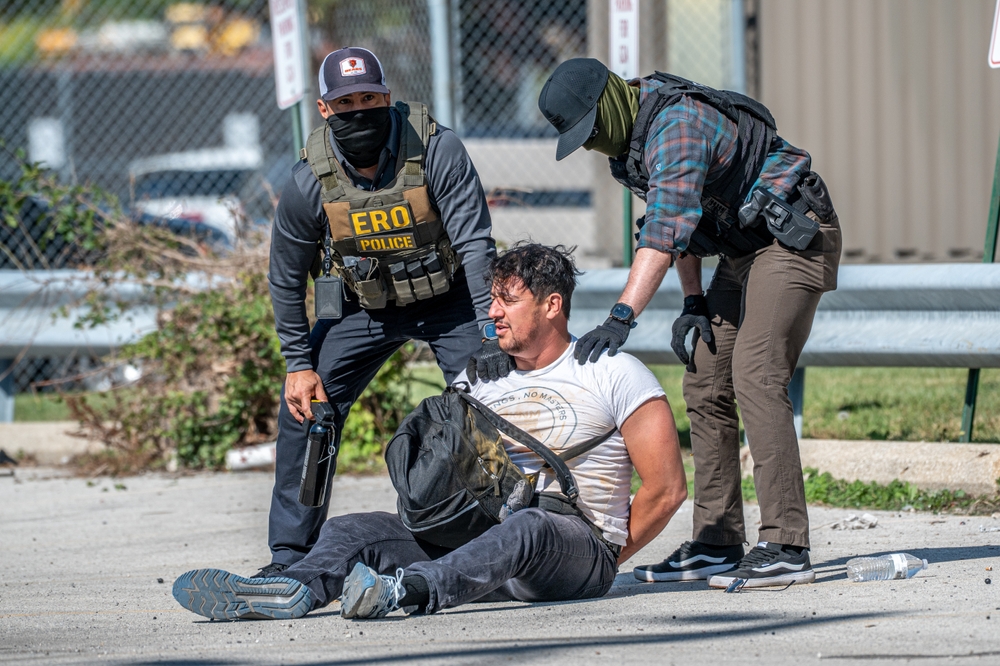
The White House has depicted deportations as highly militaristic affairs, with social media posts showing deportees filing into Air Force C-17s. However, the reality is that 85% of flights transporting detainees as of March 21 have been on charter planes like Key Lime. Dana Miller, a former flight attendant for almost 30 years, now co-lead of Denver Immigrants Partnership Team has joined the fight at CU
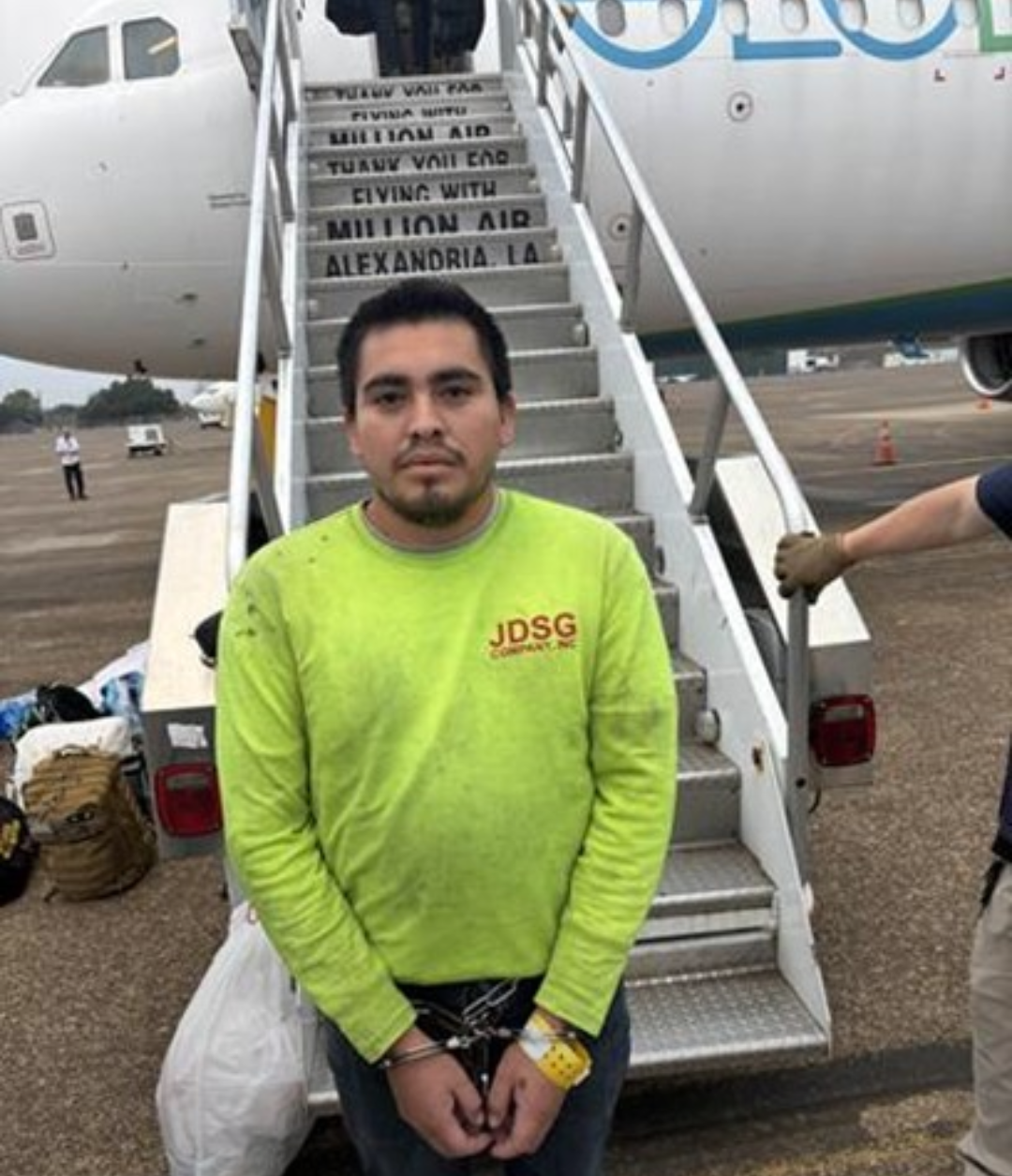
“Flight attendants are trained to evacuate a certain way in case of emergencies,” Miller shared, “but how do you safely evacuate an airplane where everyone on ICE Air flights are shackled at the waist, hands, and feet?”
It’s standard that full shackles and chains are used to restrain individuals being deported or relocated to another ICE prison.
Miller said, “Flights like this existed before the Trump administration, but the difference now is there is no due process. Everyone is assumed guilty.”
Aside from the visceral display of dehumanization, the shackles are a safety concern for several reasons. One reason is their hindrance to evacuations. The FAA has a “90 second rule” for emergency evacuations, and the majority of recorded ICE flights have exceeded that time limit, one of which took over 7 minutes to evacuate 115 passengers.
Miller explained , “Seven minutes may not seem like a lot of time, but think about if the plane was on fire […] It’s a disaster waiting to happen.”
Another safety concern expressed by Miller was cabin decompressions. “If a plane loses altitude, oxygen masks are supposed to drop from the ceiling for passengers to put on, but the detainees were not able to reach their oxygen masks because their hands were restrained.” Cabin decompressions result in the thinning of breathable air, and even 30 seconds in this atmospheric condition struggling against chains to reach for a mask can cause hypoxia.
Flagging the health and safety of detainees on ICE flights will not convince those who do not view detainees as human. Trump has long used racist and animalizing language when talking about immigrants, convincing his followers that the majority are dangerous criminals. Upon the launch of his first presidential bid in 2015, Trump claimed, “They’re bringing drugs, they’re bringing crime, they’re rapists, and some, I assume, are good people. But I speak to border guards and they’re telling us what we’re getting,” and in 2024 he stated that Mexican migrants “are not humans. They’re animals.” Pivoting from morals to include public safety concerns – with specific airline industry knowledge – was a strategic choice made by the ICE opposition at CU.
Dana Miller said, “My organization [Denver IPT] has a three page document of safety concerns with Key Lime, including those for staff.”
Former pilots and other staff have also expressed safety concerns for Key Lime at large.
“There seems to be quite a bit of disrespect for Key Lime in public pilot forums, often referring to them as ‘Key Slime’.”
This sentiment was echoed by five pilots who had quit Key Lime in 2025. The pilots told 13 Investigates that they’ve “experienced problems with landing gear, GPS, or the autopilot system that should have kept Key Lime Airplanes on the ground, but didn’t.” Documentation shows that one pilot was told to “reset circuit breakers on an airplane mid-flight to resolve a critical issue with the autopilot function.” The company responded to these and several other claims of Key Lime compromising both staff and customer safety with the following statement:
“Key Lime Air has an impeccable safety record during its 27 years serving destinations throughout Colorado, the United States, and Canada. The company is dedicated to safety as its single highest priority, including strict pilot training and stringent operational and maintenance programs. The allegations recently raised by some pilots are an attempt to avoid their contracts with Key Lime Air. Key Lime Air looks forward to proving its case in court against these pilots.”
Miller explained the resistance to ICE at CU is made up of two arms – one dedicated to convincing CU’s board of regents to end the contract and the other dedicated to Key Lime’s accountability. Aurora Unidos CSO, a grassroots organization fighting for immigrant rights and Chicano liberation, have led the efforts of the latter arm, including a car rally at Centennial Airport with Colorado Immigrant Rights Coalition to apply pressure on Key Lime. Miller, from the contract side of the fight said, “Every week I sent the board of regents emails and each week they were about different things: what actually goes on on ICE charters, documented safety concerns at Key Lime, corporate culture at the airline, what’s happening to CU’s reputation in the community, and so on.” Denver Immigrant Partnership additionally compiled a four page safety analysis, including fatal and non-fatal incidents upon Key Lime Air.
In a February 24th letter, however, the board of regents dismissed the public’s concerns:
“(We) spent additional time gathering information on that issue and are satisfied that the airline has a strong safety record for its passenger division, which is the arm of the airline that flies people to and from destinations.”
Additionally, the CEO of Key Lime Air, Cliff Honeycutt, has refused requests for conversation with movement leaders, and Key Lime has provided only the following statement in response:
“Key Lime Air respects the right of all individuals to peacefully protest and share their opinions. As a matter of policy, we are unable to discuss our charter operations. Our focus remains on conducting ALL Key Lime Air flights in accordance with the highest federally mandated safety standards. We kindly ask that any demonstrations remain peaceful and that the safety of all participants, employees, and members of the public be maintained at all times.”
Key Lime Air has confirmed that they work under a subcontract for CSI Aviation, one of the largest federal contractors for ICE flights. CSI Aviation holds an approximately $563 million contract with the U.S. Department of Homeland Security.
As of now, CU’s board of regents plan to see their agreement with Key Lime through to the end of 2028, but Miller and other protestors are not deterred.
“In the 1980s, CU divested from apartheid in South Africa. It took a year or two of consistent effort to get them to move, but eventually they did.” Miller also felt there was reason to believe that “a couple members” of the nine-seated board are on the movement’s side, and that there is sway occurring behind the confidential doors of executive sessions.
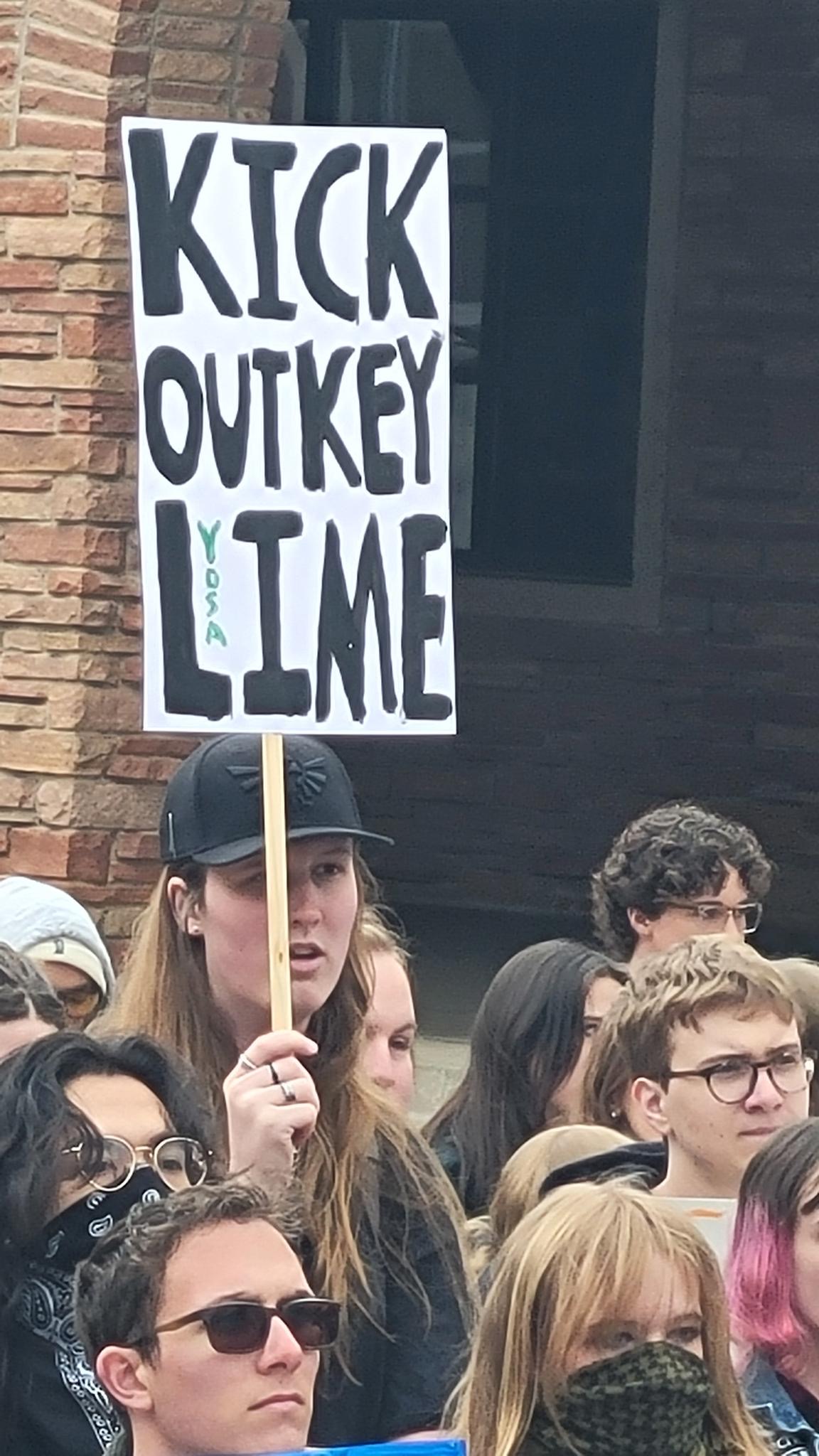
In the call to end the litany of horrors being inflicted upon immigrants, those suspected of immigrant status, and dissenters alike, pleas for humanity have not changed the direction of some Colorado leaders. As demonstrated by CU’s protestors illuminating the hazardous faults in Key Lime and ICE Air’s safety practices, when the emotional facts are not enough to change hearts or minds, resistance can adapt and take a more precise aim.
To find out more about CU’s contract with Key Lime and the efforts to end it, email organizers at [email protected].
Like journalism like this? Consider becoming a sustaining supporter — and get our print edition delivered to your home each month.
Democracy needs journalism more than ever. For 25 years, we’ve told the truth without ever accepting quid pro quo. Your support helps us keep holding truth to power.