







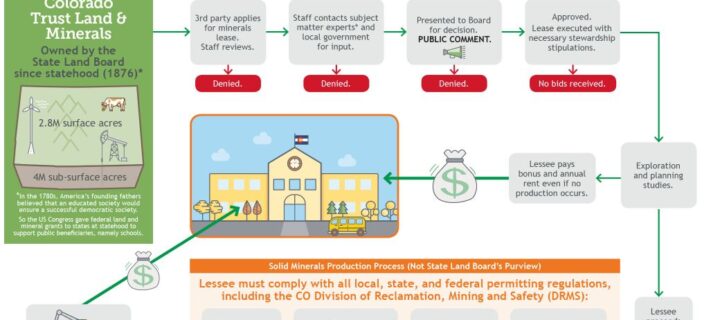

In late 2025, a proposal from Civitas Resources brought an often-overlooked asset to the center of one of Erie’s most consequential policy debates: the town’s mineral rights.
Since then, key elements of the discussion have unfolded largely out of public view. Town officials approved a contract with Alameda Mineral Advisors to help evaluate and negotiate the potential sale, while substantive deliberations about the deal have taken place in executive session. The limited transparency has drawn criticism from residents who say the decision could shape the town’s future for decades.
The proposal remains under consideration. But experiences from other Colorado communities suggest that once mineral rights are transferred, the ability to influence what happens next can narrow significantly.
Mineral rights determine ownership of the oil and gas beneath the ground. This is a legal framework that is separate from surface land ownership.
State law allows companies to access underground resources through mechanisms such as forced pooling, meaning drilling can proceed even when surface owners or nearby residents object. For municipalities, retaining mineral rights can provide leverage in negotiating the location, scale and conditions of development. Selling those rights generally transfers that leverage to private operators, reducing a local government’s ability to shape future activity.
That distinction has become central to the debate in Erie, where the question is not only how much the rights might be worth, but what control the town would be giving up in exchange.
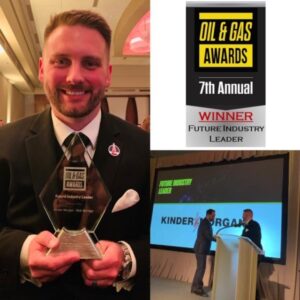
Matt Owens receiving an Oil and Gas award, courtesy of LinkedIn
The town’s decision to hire Alameda Mineral Advisors has intensified scrutiny of the process, particularly because of the background of the firm’s founder, Matthew Owens.
Owens previously held leadership roles at Extraction Oil & Gas, which grew into a major Front Range operator before filing for bankruptcy in 2020. Following that restructuring, the company’s assets became part of Civitas Resources. Owens later served as a Chief Operations Officer at Civitas until his departure in 2023, and founded Alameda Mineral Advisors the following year.
In 2025, Erie retained Alameda to help evaluate and negotiate a potential mineral rights transaction, including with Civitas. Extraction Oil & Gas, as a subsidiary of Civitas, operates the Draco Pad, a large-scale drilling project near Erie that has already generated public concern.
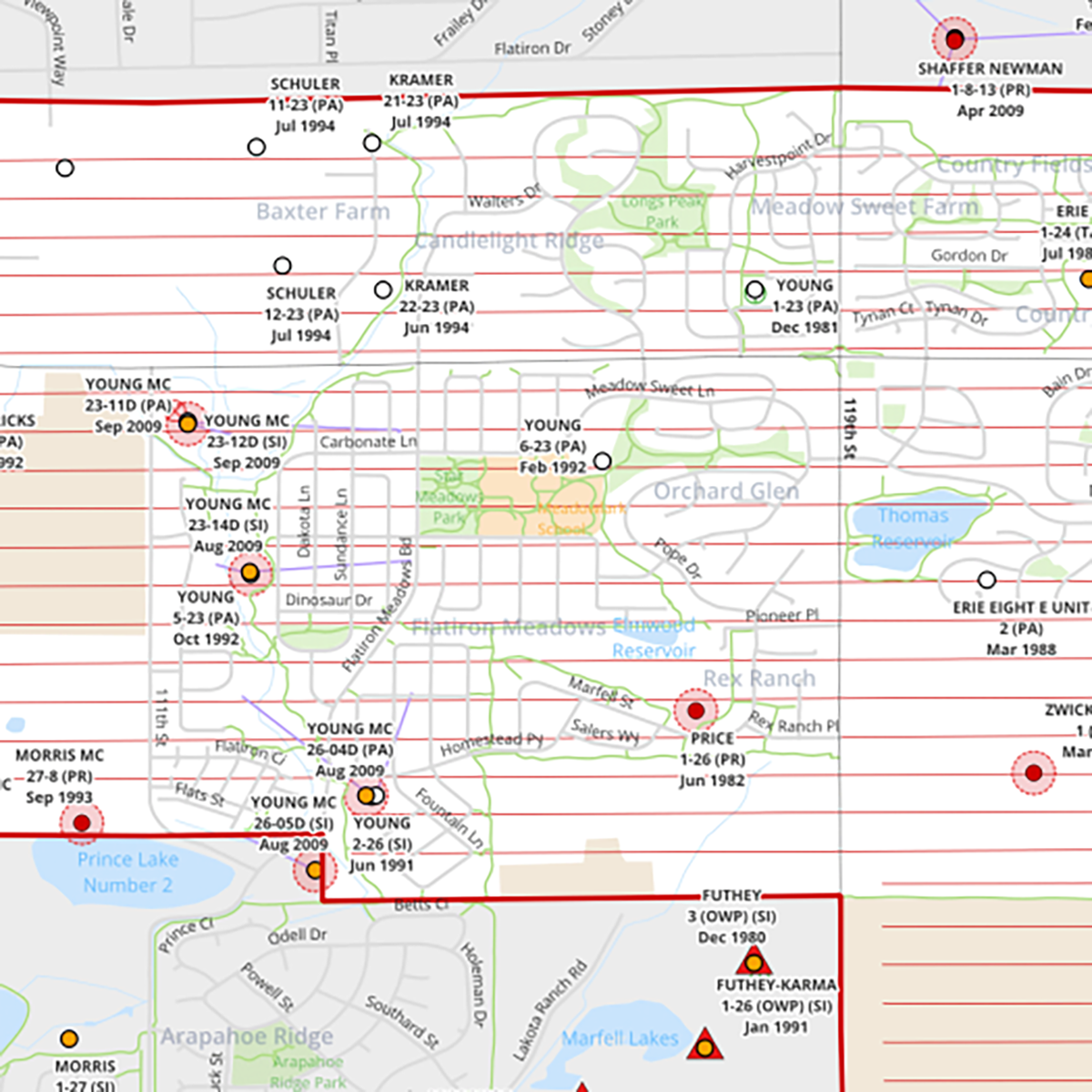
Oil and Gas wellsites, Erie, Colorado, courtesy of Erie Protectors
The overlap does not, on its own, establish a conflict of interest. However, it places a former Civitas executive in the role of advising the town on a potential transaction involving that company. Residents have highlighted that relationship in calling for additional disclosure and independent review of the process.
Examples of municipalities explicitly selling mineral rights in Colorado are less common than leasing or inheriting split estates, but where they do occur, the outcomes illustrate the same underlying tradeoff: immediate financial return in exchange for long-term control.
One recent example comes from Berthoud, where town officials approved the sale of a portion of municipally owned mineral rights tied to land near a wastewater treatment facility. According to town documents, the transaction severed the mineral estate from the surface property, meaning the town would receive an upfront payment but would no longer collect royalties or retain authority over how those minerals are developed.
Berthoud’s case is notable because it demonstrates the effect of these deals. Instead of acting as an owner with negotiating leverage, the town becomes one stakeholder among many, with limited influence over how extraction occurs.
More broadly, statewide data shows that dozens of Colorado municipalities receive revenue tied to mineral development, often through leases, legacy agreements or federal mineral distributions. Cities including Greeley, Rifle, Commerce City and even Erie itself receive funds connected to mineral activity.
In many of those cases, however, the rights were not recently sold but separated decades earlier, leaving current officials to manage the consequences.
That long tale of past decisions is visible across the Front Range and Western Slope. Municipalities that no longer control their mineral estates often retain limited tools to influence development, even when public opposition emerges. Because mineral rights can be sold, leased or severed entirely from surface ownership, control over subsurface resources frequently rests with private entities rather than local governments.
The result is a consistent pattern. Communities that have transferred or lost control of their mineral rights tend to move from deciding whether development happens to negotiating how it happens. Financial benefits, including lease payments or distributions, are often realized early, while land use conflicts, citing disputes and mitigation efforts play out over a much longer timeline.
Erie is part of a shrinking category of communities that still has ownership of its mineral rights, and the implication of losing them poses a fork in the road for what Erie’s future will look like. At the same time, the limits of local control are well established in Colorado. Even if a municipality retains mineral rights, it cannot fully override state authority over oil and gas development. What it can do is influence where and how development occurs, and under what conditions.
Communities across Colorado have faced similar tensions between local control and oil and gas development, often with comparable outcomes.
In Lafayette and Boulder County, longstanding mineral leases and development rights have limited what local governments can prevent, even amid sustained public opposition. Legal challenges and public pressure can influence setbacks, mitigation measures and site design, but rarely eliminate development entirely.
Because Erie has not yet finalized a sale, the outcome is still subject to local decision-making. Residents seeking to influence that outcome are not without options, though those options are shaped by both procedural realities and state law.
Public engagement remains one of the most immediate avenues. Attendance and comment at council meetings can shape how elected officials assess both the political and practical implications of moving forward. Requests for public records under the Colorado Open Records Act can also bring greater visibility to contracts, communications and financial analyses that have so far been discussed largely behind closed doors.
Residents can also press for independent evaluation of the proposed deal, including third-party analysis of valuation, environmental impact and long-term fiscal trade-offs. In situations where a consultant has prior ties to industry, such requests can carry additional weight.
Erie officials have a choice between short-term financial gain or long-term leverage over fracking in their community. Other Colorado communities offer a preview of what can happen once that authority is diminished.
Erie has not reached that point. But the window to decide which path to take may not remain open indefinitely.
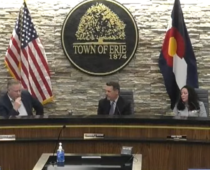
The Erie Council is hosting a public forum on April 21st. A large turnout is expected.
Council to Host Public Meeting on Draco Well Pad and Mineral Rights: April 21st, 2026
Like journalism like this? Consider becoming a sustaining supporter — and get our print edition delivered to your home each month.
Democracy needs journalism more than ever. For 25 years, we’ve told the truth — your support helps us keep doing it for the next four and beyond. Administrations come and go. Our team stays ready to lead, no matter who’s in charge.













I’m much more concerned with the potential for self dealing than I am fracking.
Hiring a company run by a former official for the company that would gain by any sale is extremely suspect, and I wonder how much it cost us to have some guy tell us everything is ok dokee. Need another opinion, an outside opinion.
Also I don’t see why Erie has to give up it’s mineral rights. I still get royalties from my mineral rights, why can’t the town do the same.