




How game designer Rasheed Abueideh took Playdead’s Limbo and elevated it into a call for action.
The following article contains spoilers for the games Limbo and Liyla and the Shadow of War.
Shakespeare didn’t name Romeo and Juliet. He didn’t even come up with the overall plot. What he did was add layered characterization and elevated poetry to the dialogue. The adage amongst creatives when desiring to make something meaningful is “don’t borrow, steal.” Rasheed Abueidah, who developed Liyla and the Shadow of War, adopted this approach when he heavily aped from Playdead’s critically acclaimed Limbo and created a powerful experience, conveying what it feels like to live in wartime Palestine.
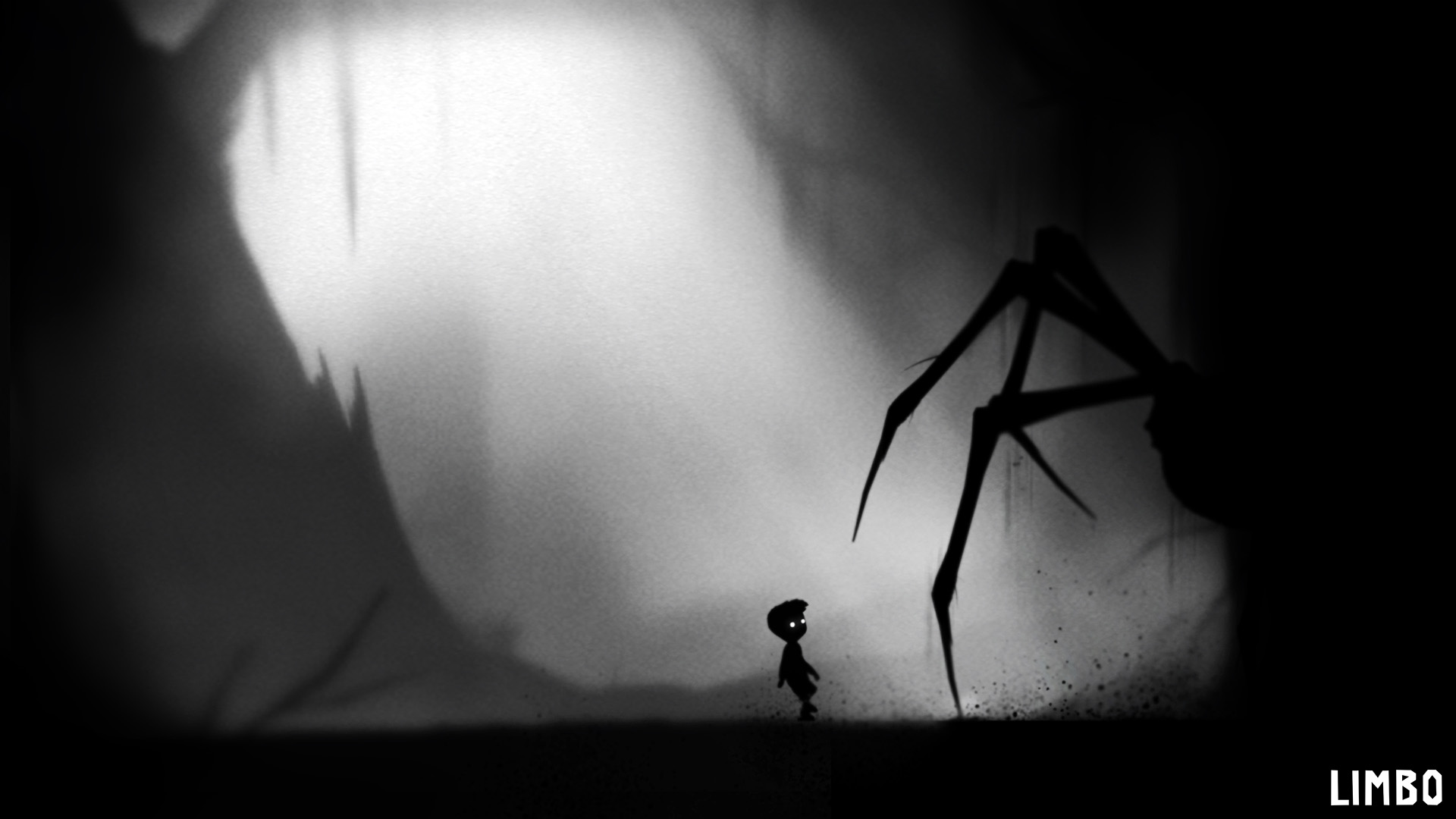
For the uninitiated, Limbo is simply a 2D, side-scrolling platform puzzler with a film grain noir aesthetic. Think Mario, but in black and white. However, instead of a beloved plumber, we follow the journey of the “Boy.” Further, the upbeat music of a Mario game is replaced with tones reminiscent of a horror series like Silent Hill, while real-world sounds—trains rolling across tracks, the leaking drip of pipes, whirring cicadas, and industrious whistles help bring life to this “other” world.
The game opens to this black-and-white color palette with the Boy rising to his feet in a field of grass. His figure matches much of the world around him, as he is more shadow than person. The only sign of personality is his tiny blinking white eyes. As he pushes forward, he must sneak past giant spiders, empty pits, water pits, pits full of jagged sticks created by ill-meaning humans—it’s in the title, Limbo, as in there might be one place worse than this, but only one. To further this idea, much of the background of Limbo appears war-torn: hollowed buildings in disrepair, teetering neon signs with flickering letters.
When the game ends, the Boy is upon a grassland that eerily resembles the game’s beginning, only this time there is a treehouse with a little girl picking flowers beneath it. Then, without warning, the screen fades to black. When the image lights back into frame, the treehouse has been decimated; the two children are nowhere to be seen. However, in their place are two small heaps of loosened dirt with two distinct and separate swarms of flies circling what many interpret to be their graves.
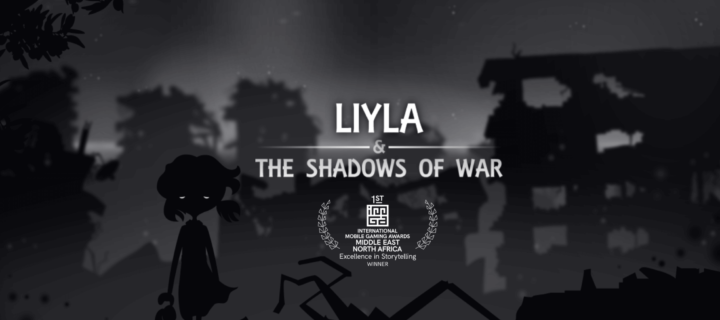
When Rasheed Abueideh created Liyla and the Shadow of War, he took many of the elements established by Playdead’s work—monochromatic film grain aesthetic, silhouette player characters, war-torn settings full of perilous traps. Where Liyla becomes its own game is that it narrows the scope to say this: Palestine in 2014 is simply a lived Limbo. You begin Liyla as a father looking for his daughter across a backdrop of dilapidated houses. Instead of giant spiders presenting themselves as obstacles, it’s abandoned excavators and husks of flaming cars. Instead of kids setting traps off in a distance, it’s men with rifles firing wildly in the player’s direction, bombs igniting mere feet away from where the player and Liyla attempt to flee. The most tragic theme, however, is still exactly the same: there is no escape.
Both games end in hopeless death. Liyla will often give the player the illusion of choice: as the player and Liyla dash across the Gaza Strip, you’re given the option to hide in a school you come across—but the school is struck by a rocket moments after you choose to go that way. Another choice has you deciding if you should take four brothers playing soccer on the beach with you as you try to escape the carnage—the result is that the debris from an explosion will take out the four boys, the only thing that changes is whether or not you are with them. The game ends with an ambulance offering to take Liyla to the hospital, where she’ll be safe, only to be hit by a rocket. Game over. Everybody lost.
After playing both games, one could make the shallow argument that Liyla is a truncated, unrefined interpretation of Limbo because of the substantial overlap in aesthetic and design choices. But the only art worth stealing is that which haunts you.
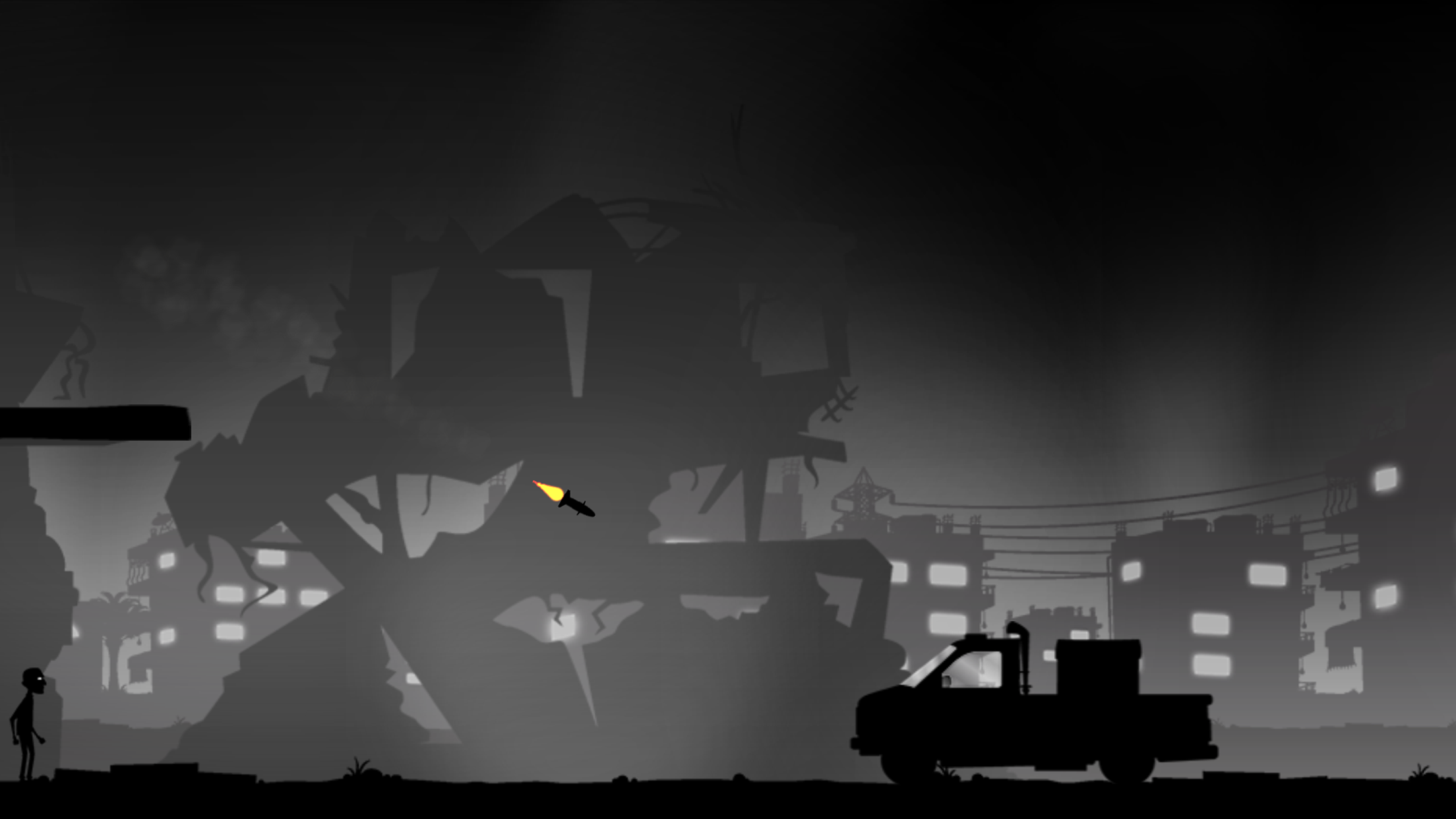
Abueideh saw something in that shadow of a boy presented in Limbo and extended that metaphor—the shadows of war, forgotten, left behind things that were once fully human. He uses Limbo’s contrast to show the humanity lost in Gaza during the military strikes in 2014. When Abueideh lists the number of deaths of Palestinians at game’s end, it impacts the player because we’ve interacted with them. We’ve seen the school explode and witnessed the deaths of four boys playing soccer. Four boys who shared a last name. A whole generation wiped from the earth in an instant. In fifteen short minutes, Abueideh distills all the trauma from Limbo and grounds it within real-world experience. The game marks you, indelibly making you want to be an agent for meaningful change. The way good art should.