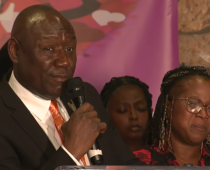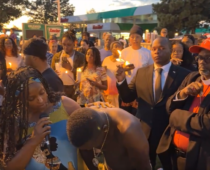





For the past several months, the family of Kilyn Lewis and their supporters have been a regular presence at Aurora City Council meetings—protesting, speaking out, and demanding accountability after the officer who shot and killed Lewis was cleared of criminal charges.
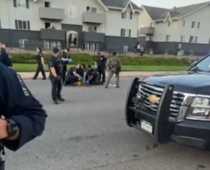
The calls for justice were sparked by the events of May 23, 2024, when Lewis was fatally shot by a member of the Aurora Police Department’s SWAT team in the parking lot of an apartment complex. Body camera footage shows officers confronting Lewis and issuing multiple commands as they approach with rifles drawn. Lewis appears to reach into one pocket, then another, ultimately revealing a cell phone. A single shot is fired. Lewis can be heard saying, “I don’t have nothing,” before collapsing. He died in the hospital two days later.
Attorney Ed Hopkins, representing the Lewis family, called the commands “unclear and confusing,” and noted officers never identified themselves or told Lewis whether he was under arrest. “Anyone in that situation would have reacted the same way,” he told CPR News.
In the months since, the case has become a flashpoint in Aurora’s ongoing reckoning with police brutality. The Lewis family filed a federal lawsuit, community members staged protests in public spaces and at city council meetings, and 9News sued to obtain the full, unredacted body camera footage. It all came to a head on June 10, when Aurora Mayor Mike Coffman announced that all in-person city council meetings would be suspended.

In a Facebook post, he accused Lewis supporters of “hijacking” meeting agendas and ignoring time limits during public comment, prompting the move to virtual-only meetings.
“We have listened to the protesters over and over again,” Councilmember Danielle Jurinski said during the discussion. “Now it’s in the court’s hands. If the court decides that the city had absolutely no liability in the death of Kilyn Lewis, then it’s over and there’s nothing to talk about.”
Coffman cited findings from the Critical Incident Response Team (CIRT), which concluded that Officer Michael Dieck’s use of deadly force was legally justified. The report claimed it was reasonable to believe Lewis may have had a firearm and posed an imminent threat, though only a phone was recovered.
Some Aurora residents expressed support for the city’s decision to move meetings online, viewing it as an unfortunate but necessary step to restore decorum and productivity. Others are more critical, raising concerns about what the shift represents, and what it shuts down.
Advocate MiDian Holmes, a longtime voice for justice reform in Aurora, called the decision a violation of the First Amendment. Holmes, who was also involved in the fight for justice for Elijah McClain, has been a consistent presence at council meetings, organizing demonstrations and filing formal complaints against the city’s move to virtual-only participation. She argues that the policy is being used not to ensure order, but to silence opposing views.
In response to accusations that supporters were being “disruptive,” Holmes pushed back.
“When the city of Aurora has failed to protect its people, disruption becomes inevitable,” she said. “It is not the people’s resistance that disturbs the peace, but the state-sanctioned violence, the blood on our sidewalks, and the erasure of accountability that fractures it.”
“What’s truly disruptive,” she added, “is Aurora’s selective amnesia when it comes to the humanity of our people.”
Lewis’ mother, LaRonda Jones, has also expressed frustration over what she views as a lack of transparency and delayed action from the city. Advocates say this posture sends a deeper message: that the lives of victims like Kilyn Lewis are not a priority.
Their call is not just for acknowledgement, but for change.

photo credit: Denver Justice Project, who also provided the featured image.
“We are not interested in apologies or reform after the fact,” Holmes told Denver7. “We are demanding justice before another Black mother has to bury her child. The people deserve the truth, transparency, and transformation—not pacification.”
City officials have often painted demonstrators as unreasonable or unwilling to engage, but Holmes says the opposite is true. In her interview with Yellow Scene, she outlined clear demands: the creation of an independent body to investigate officer-involved shootings, greater access to victims’ services, and a space for sustained, resolution-focused dialogue between the community and city officials.
“There has to be a change in police reform across the country,” Holmes said. “Police cannot continue investigating themselves.”
Virtual-only meetings, she added, undercut the ability of citizens to fully participate in the democratic process. Physical presence in government spaces has long been a tool for marginalized communities to make themselves seen and heard. Without that, advocates say, it becomes easier for those in power to control the narrative and avoid difficult conversations all together.
Although no new protests are currently planned, Holmes emphasized that the work is ongoing. The group is now focused on engaging state lawmakers to push for more systemic reform.
“The council chambers may be closed, but our voices will not be quieted,” she said. “We will not be confined to city council calendars. We are working as a community to shift the soil beneath a city that still does not know how to say Black Lives Matter and mean it. We are building something ancient and urgent, and we are not done.”
Holmes says her fight, and the community’s fight, is also about how Kilyn Lewis is remembered. Not as a headline or a statistic, but as a whole person.
“He was ambitious, kind, and he loved to fish,” she said. “His death is a significant loss to all of us.”
She envisions a future where her daughter, her granddaughter, and others in Aurora grow up in a system that doesn’t treat Black lives as threats. A future where families don’t have to beg for answers, and where public institutions do not turn their backs.
“We all deserve the chance to live unapologetically and with purpose,” Holmes said. “Kilyn’s legacy should create different outcomes—for all of us.”