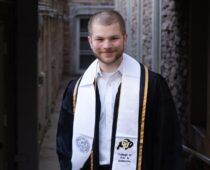






When Jacob Giron graduated high school, he was shocked by the price of student housing and tuition at the University of Colorado Boulder. Giron, like many prospective students in Boulder and East County, initially desired to attend CU Boulder. But CU and other public universities in Colorado enforce on campus housing during a student’s freshman year. So when Giron saw the tuition and housing costs that the University would require, he instead opted to attend Front Range Community College.
The price for residence housing at Boulder ranges from $8,000-$10,000 per semester on top of tuition. “I remember looking at the prices of (living on campus), it became very inaccessible to me,” said Giron. “When I live close enough to drive to campus, why should I have to pay for a dorm?”
Although Giron is satisfied with his university choice from a financial perspective, he has found that Front Range has not brought the same sense of community as a four-year university would. Lacking on-campus housing, a football team, and a vast range of clubs that would otherwise be found at CU, Giron finds Front Range missing that crucial experience in student involvement and social dynamics.
“I want to go to a school with a lot of people. It makes it easier to find your niche, something that interests you,” he said.
At Boulder, students are afforded more accessible student life opportunities, extracurriculars, and a surplus of amenities. For Giron, life at CU Boulder seemed to be a perfect fit. Yet financial barriers have increasingly made CU out of reach for Giron and many of other students.
CU’s tuition has steadily increased seven years in a row. In 2026, incoming undergraduate students will face a 3% increase in their already substantial tuition. On top of that, students are charged fees for on-campus services such as recreation, transportation, educational resources, and athletics. For students, education at a large public university like CU Boulder comes with a looming financial burden: loans and student debt. Now, some are wondering if tuition and cost increases actually lead to improvements in education and the well-being of students.
Max Harte, an out-of-state CU Boulder student from Texas, was aware of CU’s high tuition cost. For students who live outside of Colorado, tuition is approximately double the in-state rate. Nevertheless, hundreds of out of state students still find themselves drawn to the CU system.
Harte is grateful for the opportunity to study psychology at CU Boulder. They make an effort to attend all of their classes, noting the financial costs that their family has incurred for them to study. Nonetheless, Harte acknowledges a public university system that has become unattainable for many students purely due to cost.
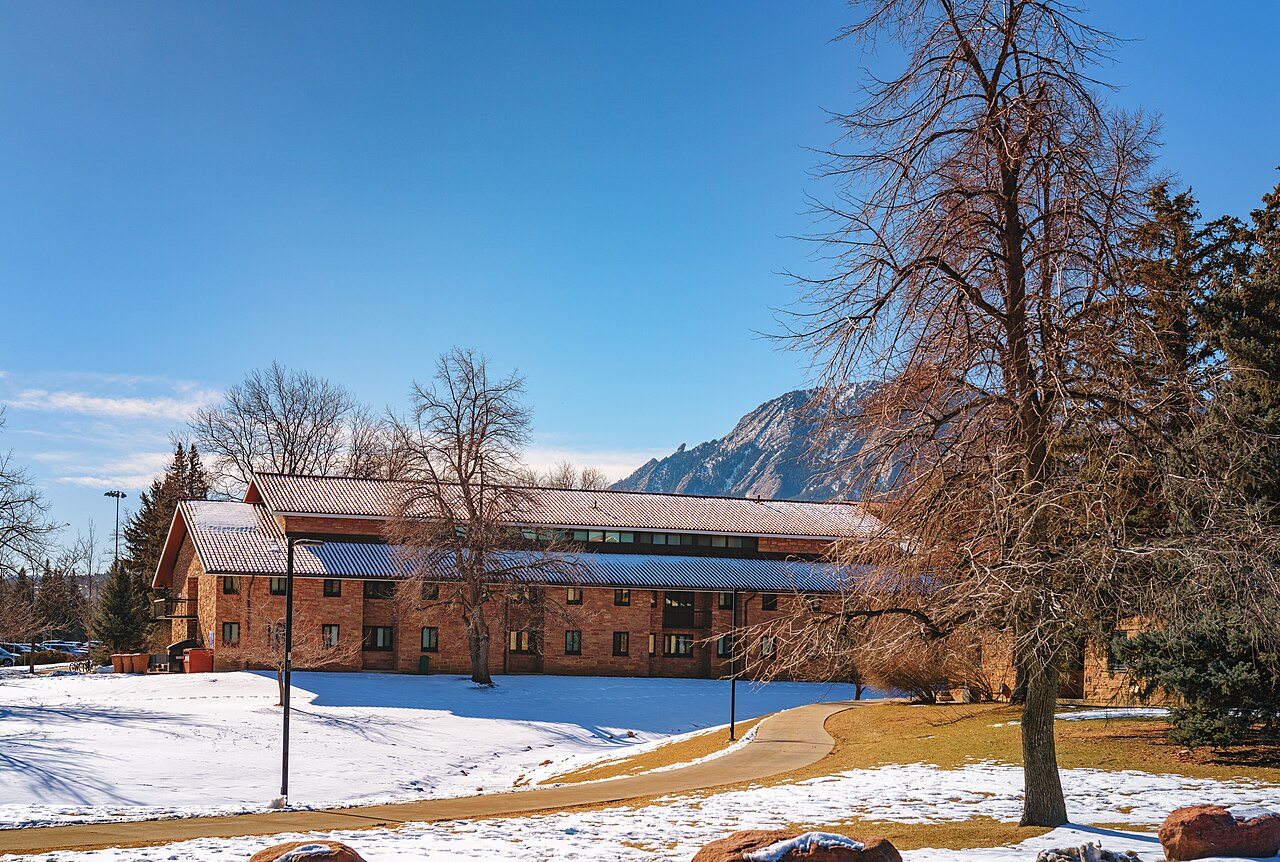
Buckingham Hall undergraduate student housing dorm at the University of Colorado Boulder (CU Boulder) campus in Boulder, Colorado, with the Flatirons in the distance.
“The value of education isn’t valued as highly because it is so difficult, financially, to attain,” said Harte. “I have several friends (back home) that don’t go to college simply because they can’t afford to, not even for in-state schools, let alone out-of-state ones.”
Despite the increase in tuition for new students, Harte has not seen renovations within their department. Harte notes a lack of investment in student research opportunities that are crucial to secure an undergraduate psychology degree. The lack of investment has left some students struggling to secure them. Harte acknowledges that these students are missing out on a key component of attaining an undergraduate psychology degree from the school. On top of the disadvantaged students, Harte themselves have never been paid for any of the research which they have conducted. Some students, like Harte, are fortunate enough to still land a research opportunity. Nonetheless, they feel that the school should be utilizing students’ expensive tuition to ensure research success within the psychology department.
“It shows what the university cares about, where they put their money, and it’s not toward the psychology department,” said Harte.
The contrast between Harte’s tuition and the educational struggles within their department are stark. While they value their education in Boulder, Harte wishes that they could feel the impact of their hefty tuition bill in their day-to-day education.
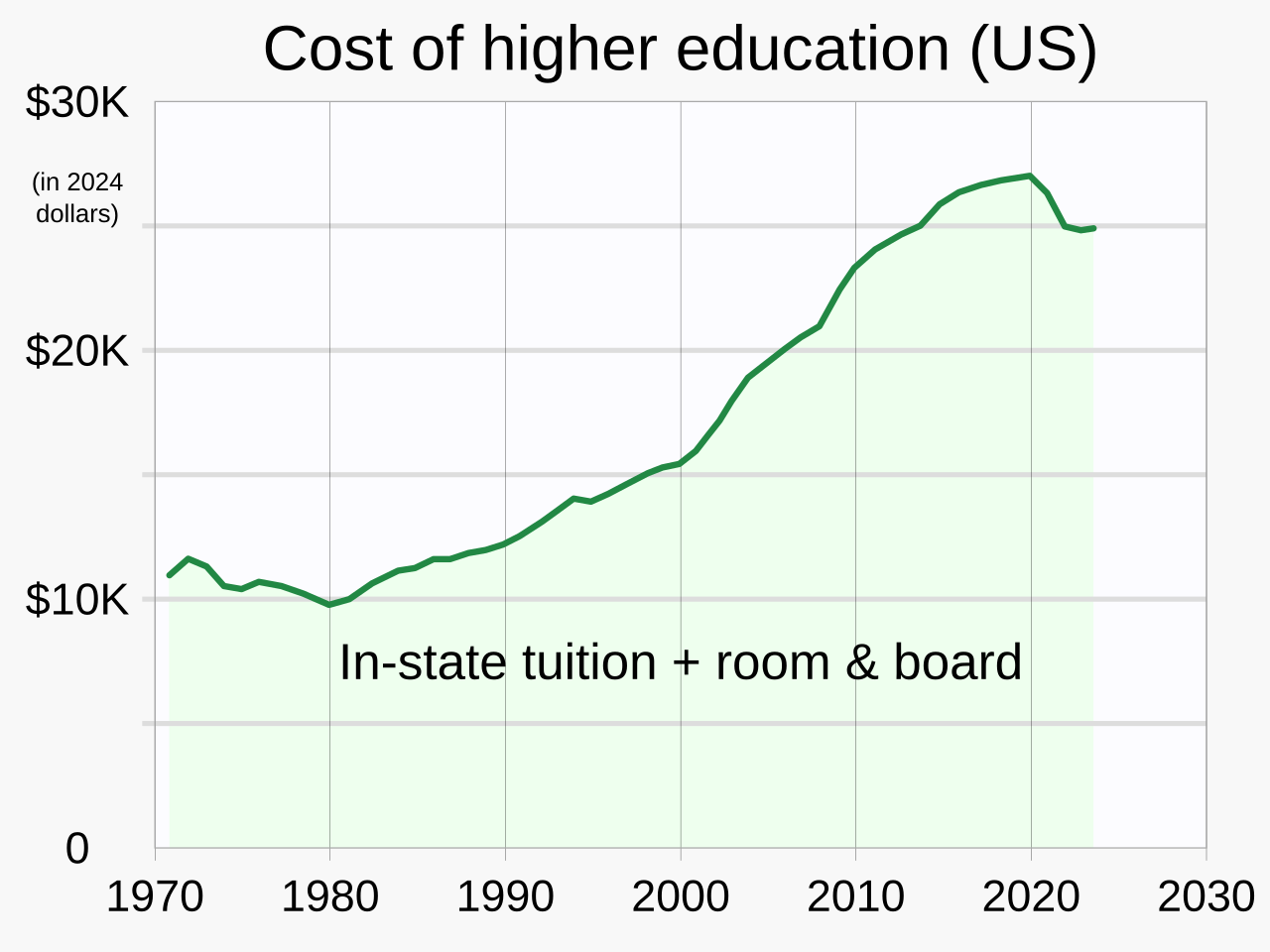
Giron and Harte’s experience with university tuition are not remotely unique to CU Boulder. Nearly every public university in the U.S. has steadily increased tuition over the last two decades. Understandably, these universities face increasing development costs and payroll for already underpaid educators. Nonetheless, these financial burdens are often offloaded onto students through a raised tuition and increased fees. Instead of incurring these costs, some Colorado students have opted for a different path in life.
In Colorado, the popularity of community college is rapidly growing. From 2024 to 2025, data from the National Student Clearinghouse Project saw a 3.9% increase of enrolled students into community college. At the same time, the number of incoming freshmen at big universities in Colorado has fallen. The state’s public universities have experienced an enrollment drop of 0.5%, while private ones saw a drop of almost 9%. For some, tuition is expensive enough to rule out college altogether. For others, the high cost means sacrificing their top choices for whichever institution offers the best financial aid package. Many of Colorado’s student population simply take what they can get.
Mooji Boldbaatar graduated from the University of Denver in 2017. She mainly relied on scholarships to pay her way through college because, although she had lived in the U.S. since she was 10 years old, Boldbaatar was still classified as an international student from Mongolia. Due to her status, she was not able to receive adequate financial aid from a public university despite consistent academic success. The University of Denver, a private institution, offered her scholarships, and she ended up studying there instead. Originally, she wanted to attend Colorado School of Mines to study chemical engineering.
“I got into Mines, and then I couldn’t attend because I couldn’t afford it,” said Boldbaatar. “The lack of finances dictated which school I could go to.”
A lack of aid was not the only barrier for Boldbaatar in obtaining her college education. Out-of-state tuition was worse. She researched and applied to out-of-state universities and, similar to DU, she was able to receive financial aid from some of the schools. But it wasn’t enough; the financial burden of an out-of-state school wasn’t worth the acceptance.
“I really wanted to study elsewhere, but in order to save on living expenses, I had to stay in Colorado. It was another difficulty for me,” said Boldbaatar.
Boldbaatar, like numerous other students, finished her degree from the University of Denver while working almost full-time hours. There was also the cost of room and board at the University; the high costs forced Boldbaatar to live with family off-campus. The result was a daily commute of about an hour and 20 minutes. For her, it was the only way to financially sustain herself while pursuing her education.
After she graduated, Boldbaatar used her college degree to kickstart a professional career working with other young students. She is now a program manager with the Mongolian School of Colorado. While not directly related to her studies, she values the knowledge and experience that her education gave her. Boldbaatar credits higher education for her work ethic and time management.
“Getting my education opened up doors that I had never really thought about,” said Boldbaatar. “The most valuable part (of my education) was the mindset that I got from it.”
But for many other young Coloradans, a college degree isn’t always attainable or valued. Are tuition, student loans, and lifetime debt worth it for the degree? While people like Max Harte have the incredible opportunity to attend a four-year public university, for others like Jacob Giron, a community college degree was the only option. Academically, Giron has been happy with his experience studying at Front Range Community College. But as a whole, he was looking for something more out of his college education—and, due to the increasingly unaffordable tuition bills at prominent state universities, Giron can’t help but feel that he may have missed out on a valuable experience.
Yellow Scene’s 2026 Summer Support Drive is underway with a goal of 1,000 Sustaining Supporters by summer’s end.
For 26 years, we have remained fiercely independent, free from sponsored content and outside editorial influence.
Reader-driven support keeps local journalism unbossed, unbought, and our journalists fed. Become a sustaining supporter for $8/month and get Yellow Scene delivered to your home.
Join the Summer Support Drive and keep local journalism strong.