




The Rise of Homesteading
From grassroots activism to millennial mamas
Sepia-toned women in long skirts tending to their chickens and children while calling themselves “tradwives,” anti-government and anti-establishment dreamers fighting against giant food corporations, environmentalists trying to limit their impact: somehow all falling into the stereotypes of being a Homesteader.
“Homesteading” the new buzzword about town, a fantasy reinvigorated and reinvented during the COVID-19 shutdown. While billions of people around the world were mandated to stay home from work and limit their masked, socially distanced visits to the grocery store, some used this forced slowdown to pick up new skills, such as baking sourdough from scratch or sloppily crocheting hats for all their friends.
A Traditional Way of Life?
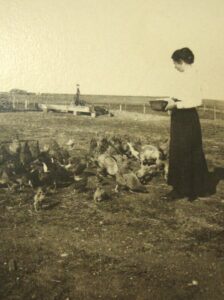 The term homesteading has certainly taken on a new meaning from its Western Expansion origins. The Homesteading Act of 1862 opened up the prospect of land ownership to those willing to farm the land they claimed. From Glen R Durrel’s historical account, Homesteading in Colorado, “Under the Homestead Act a person could claim 160 acres, file on it, and if he built his home lived there and cultivated the land for five years, he could ‘prove up’ his claim and obtain a government patent to it.” Although ostensibly an optimistic piece of legislation, there were many grave issues with the Homestead Act, including lands defined as “unoccupied” being greatly inhabited by Indigenous tribes who had been forced West to reservations by the Indian Appropriations Act of 1851.
In the 21st century, homesteading is less about land grabs and remains deeply rooted in the cultivation of husbandry skills. For some, there is a desire to cultivate a traditional way of life. Popular influencer, self-proclaimed homesteader and externally-identified trad wife Hannah Neelman documents her life on 328 acres with her husband and nine children across social media. After four years in Brazil with her husband and an introduction to farming through farm hotels, she and her husband decided to take up farming and co-founded Ballerina Farm, a family homestead turned lifestyle brand offering cooking and wellness products nationwide.
Additionally, the Trad Wife aesthetic has MAGA undertones. Neelman can be seen in her videos, donned in a long floral dress, looking camera-ready while she harvests eggs, makes food for her family from scratch, and tends to the children, promoting the notion that a full life is one where you are beholden to your partner. This social-media-promoted movement is not inherently one goal of sustainability, but rather a countermovement to feminism and the freedoms from the patriarchy that generations have worked for.
There are other questionable aspects to the Ballerina Farm enterprise beyond the mid-century housewife idealization: her husband’s status as the millionaire son of the owner of JetBlue Airlines and Hannah Neelman’s online shop selling a cutting board for nearly $300. The “simple” life that trad wives are trying to get back to is often funded by trust funds or wealthy husbands. If exorbitantly-funded homesteaders like Hannah Neelman, who are not transparent about their financial status, are sharing their homesteading journeys so others may follow their example, a great deal of their viewership are financially unable to emulate.
What does it cost to Homestead
According to Lauren Dunteman of Boulder’s Flatirons Farming Coalition (FFC), modern homesteading differs from farming in that production is limited to the sustaining of a small group of people, like a family, household, or co-housing group, but not a primary source of income. So the question remains: how achievable is homesteading for those who do not already have access to large amounts of capital?
To identify the reality, let’s start off with a basic list of what is needed to start a homestead: land access, equipment, time, money, farming education, and a clear plan.
If you are someone who is considering land allocation, whether or not you purchase raw land will determine a good deal of costs. Raw land without water, electricity, septic or landscaping can go for as low as $700-3,000 per acre in Colorado, but the more developed and closer the land gets to cities, the average cost of land is $11,000-12,000 per acre. Tennessee Homesteaders Sin City Country Homestead did a detailed breakdown of purchasing and developing their 35 acres on their Youtube page and the costs – including but not limited to building a septic system, a water system, an electric system, and clearing only a couple acres of forest – was around $500,000, before building a home or installing crops.
35 acres is a lot of land if you do not have a background in farming and are just starting out your growing journey. Real Estate expert of Boulder Source, Greg Smith said, “For many aspiring homesteaders, starting with 2 to 5 acres is a smart, manageable way to begin.”
Smith explains, ”If your dream homestead revolves around growing your own food, raising a few chickens, and living simply, just 1 to 3 acres can go a long way..With proper planning, even one acre can support: A large vegetable garden or food forest, 4–6 backyard chickens or ducks, a greenhouse for year-round produce and composting areas and water catchment systems.”
What is Needed
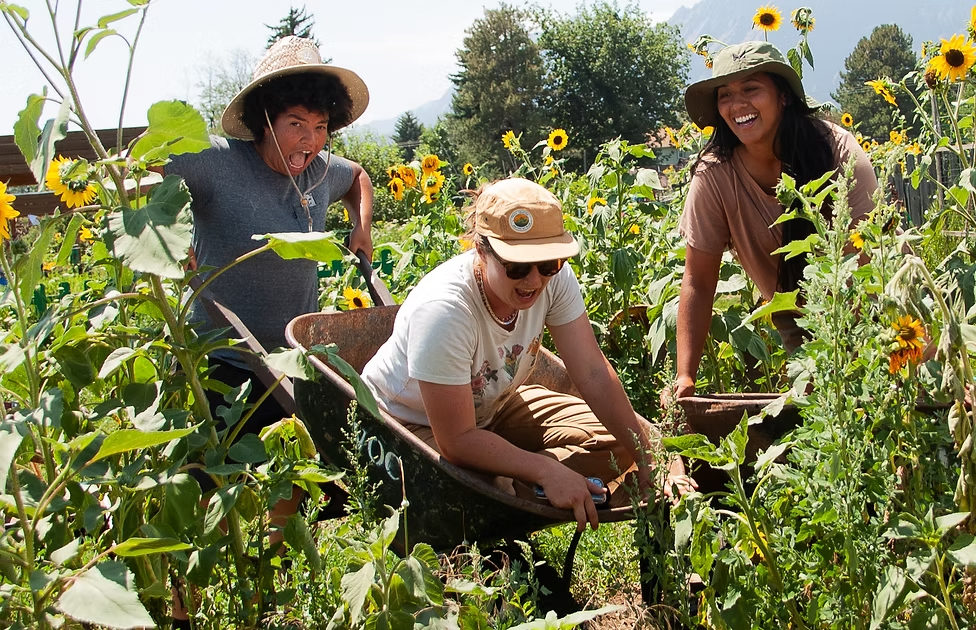 Sunlight, soil, and temperature considerations are crucial in developing a clear plan for a homestead. Shady areas may be amenable to lettuces and other leafy greens, but a tomato trellis in the same area, you may leave you sorely disappointed with the yield. Soil viability can be supplemented with fertilizer or nutrient dense farmer. Raised beds may protect crops from grazing animals, but they also increase the risk of frost damage due to the greater distance from geothermal activity.
Additonally, Colorado’s short growing seasons must be taken into account. Greenhouses, cold frames, and high tunnels are helpful in this regard. For sheds and livestock, town ordinances and HOA regulations must be taken into account, as some restrict what can be built or kept in a residential yard.
For those who are more novice in growing food, farming education is extremely beneficial.. Flatirons Farmers Coalition,exists primarily to support producers,farmers who grow food and raise livestock as their main source of income However, they also provide educational resources applicable to growers at any level, such as workshops on season extension and growing in Colorado’s specific climate.
Coalition Director Lauren Dunteman said, “It takes a lot of practice and education to do all of those diverse things. Especially when it comes to not just growing, but also processing: canning, turning what you grow into shelf-stable food items.”
Making a Plan
In deciding to homestead, it is important to evaluate goals with available resources. Access to arable land is hard enough for farmers in Colorado, let alone homesteaders. It is important to consider what is permitted on the property, time and energy cost, and plans for lost crops or livestock.This brings us to the core of what often drives people to homesteading: a sense of independence. The reverie of “the good old days” being rooted in the insular, nuclear family is a comforting online curation, but it is not so ideal in reality. The same holds for hopes of total isolation and self-sufficiency; the reality becomes much more apparent when faced with the aforementioned barriers: we need one another.
Lauren Dunteman shared a story about the community garden she co-built in her neighborhood on Waite Drive, which was given perhaps the most apt name for a garden in Boulder, “Waite.. Waite Don’t Till Me.” Dunteman collaborated with other houses on the block to facilitate participation for individuals with varying levels of access. Instead of being an individual responsible for maintaining multiple crop types with varying nutritional, sunlight, and watering requirements, each participant took responsibility for growing only a couple of crops. If they were experiencing trouble with their crop, like mites or other pests, neighbors would swap tips and grow collective farming knowledge. An aging couple with ample land were not able to participate in some of the physical tasks required for maintaining the gardens, and the folks who were more ambulatory but did not have access to land where they lived tended to the gardens built in the elderly couple’s yard. Same with new parents, whose time commitments were not as static or predictable as those of homes with older children. People with varying levels of access – to capital, land, mobility, time, and education had an easier time participating because they did not have to be the one person holding it all together. Dunteman said, “It’s as much about community as it is about food.”
Flatiron’s Farmers Coalition is made up of farmers, homesteaders, as well as non-growing members called “advocates.” FFC holds community-building workshops for producers, as well as non-producers. This is an excellent resource because not everybody can grow wheat in their backyard, but they may meet someone else in town who grinds his own flour. You may not be producing it yourself, but you are sourcing closer to home than the flour found at a Safeway. Dunteman remarked, “It may not be more independence, but more reliance on people within my community.”
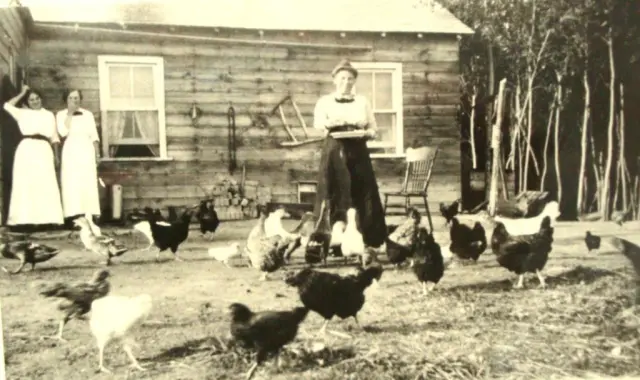 A “return to tradition” can mean different things to different people with different traditions. One largely lost practice is the ability to exist within a community: knowing your neighbors, creating a relationship with the rancher you source your beef from, admitting what you do not know and asking for help, collaborating and working through problems as a collective. It all requires a level of interdependence and vulnerability that could make anyone squeamish. Dunteman recalled her own fears starting out with the community garden. “I remember getting this scarcity fear, that I could not share what I grew and get what I needed in return. But I had to learn to trust.”
Homesteading may look less like pioneers in the Wild West and more like city folks learning proper pruning techniques for a summer squash. It may not be the romantic curation of trad wives milking adorable cows for their morning coffee, but more like a Mission-Impossible-level groundhog with a taste for your bell peppers becoming your arch nemesis. It might start with two pots of heirlooms, a basil plant in the window, and seeking out your area’s community gardens and growing resources. Organizations such as Growing Gardens of Boulder make growing more accessible by offering plot rentals and classes, particularly for youth and teens to begin their gardening education early. Some may be drawn to homesteading to revert to the “simpler,” 1950’s Christian nuclear family dream, and some dream of disassembling capitalistic structures and futures with food security for all. There are those like Lauren Dunteman who believe that growing food can be the antidote to the chronic individualism that pervades modern society. She said, “Relationship-building is a fun form of rebellion that draws people toward homesteading in the first place.” Homesteading does not have to be, and perhaps should not be, done alone.