





“Just Say No,” First Lady Nancy Reagan’s signature anti-drug slogan of the 1980s, framed drug use as a test of peer pressure and personal resolve. Around the same time, the D.A.R.E. program brought uniformed police officers into classrooms nationwide, responding to what federal officials described as a surge in youth drug use following the widespread experimentation of the 1970s and the rise of cocaine and crack in the 1980s.
From its beginnings in Los Angeles, D.A.R.E. quickly expanded across the country. At its height, the program drew nearly $750 million in federal funding, according to a 2004 National Institutes of Health report.
But by the early 2000s, multiple studies concluded the program’s approach did little to prevent drug use among students.
“Someone pushing in and talking about the dangers doesn’t work,” said James Hurley, a health and physical education consultant with the Colorado Department of Education.
Today, drug education in Colorado looks very different. Rather than centering on abstinence-only messaging, schools emphasize health, wellness and decision-making skills. The shift reflects research showing that knowledge alone does not necessarily change behavior.
Colorado teens still report higher-than-average drug use compared to peers nationwide. State data shows Colorado adolescents are more likely than the national average to have used drugs in the past month. Educators caution, however, that higher usage rates do not necessarily mean the newer approach has failed, particularly as drug availability and social norms continue to evolve.
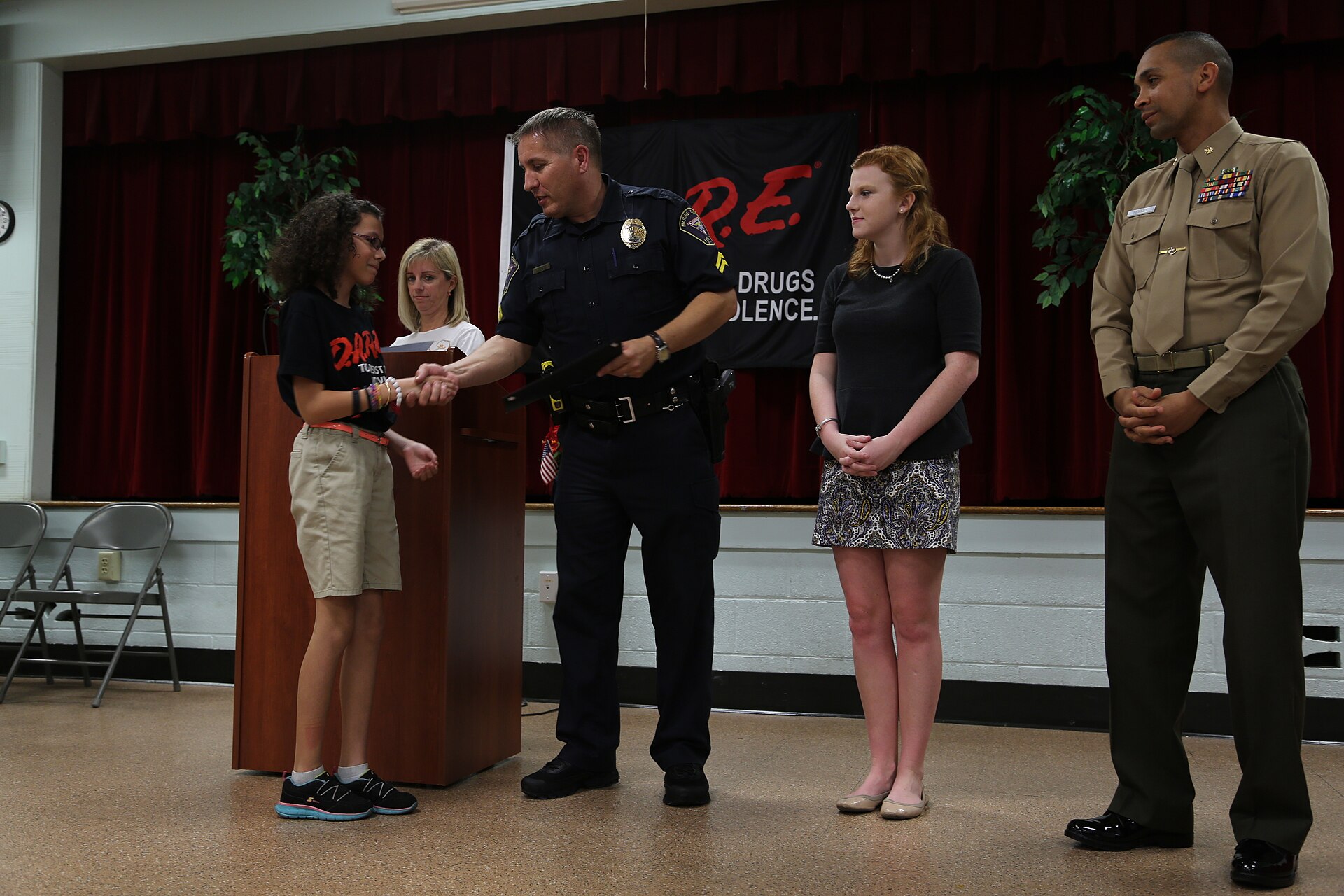
Police Officer Chris Stephens (left), Emily Gayle (center), and Maj. Eduardo Pinales present a certificate to a student during a D.A.R.E. graduation at Laurel Bay on Dec. 16.
Public domain, U.S. Marine Corps photo.
Nationally, D.A.R.E. restructured its curriculum in 2011, moving toward skills-based education. The organization now operates through grants and fundraising rather than federal appropriations and continues to train officers to teach its updated curriculum in select states, according to its 2024 annual report.
In Boulder, the program is no longer part of school life. The Boulder Police Department stopped teaching D.A.R.E. so long ago that officials cannot pinpoint when it ended, said department spokesperson Dionne Waugh. Today, drug education falls largely to teachers.
In Boulder Valley School District, students begin learning about healthy decision-making as early as second grade. The goal is not simply to warn students away from drugs, but to help them build habits and skills that carry into adolescence.
Jordan Goto, the district’s health and wellness coordinator, said BVSD uses the Quaver Ed curriculum for elementary students. The program aligns with Colorado’s academic health standards and introduces substance use concepts at age-appropriate levels, continuing through high school with more detailed instruction.
“We know from the research that knowledge alone doesn’t always change behavior,” Hurley said. “We want students to build real skills. That includes analyzing influences, finding reliable information, decision-making, communication, refusal skills and self-management.”
Educators say earlier models focused too heavily on fear-based messaging. Today’s curriculum instead gives students space to practice making decisions and following through on them.
“Ten years ago, vaping wasn’t a thing. Marijuana use looked very different,” Hurley said. “We push students to build skills that will still matter when the next drug shows up.”

Modern health education still covers drugs, but the focus has broadened. Lessons now include nutrition, stress management, coping strategies and overall wellbeing. Hurley said the field continues to evolve alongside changes in student needs and social realities.
Another major shift is how schools respond when students do use drugs. Rather than defaulting to suspension, many districts prioritize keeping students in school and connecting them with support.
In BVSD, students who are caught using or possessing substances are often referred to trained school nurses through an evidence-based early intervention program called Teen Intervene. The goal is to assess the student’s situation and provide targeted support rather than punishment.
Hurley said public perception often exaggerates how widespread teen drug use really is. While Colorado’s rates remain higher than the national average, most students are not using drugs regularly.
State-level data from 2023 shows that about 11 percent of Colorado youth ages 12 to 17 reported drug use in the past month, most commonly marijuana. Use of substances such as cocaine or methamphetamine was reported by fewer than 1 percent of respondents.
“Most kids aren’t smoking. Most kids aren’t drinking. Most kids aren’t vaping,” Hurley said. “Changing those perceptions matters. Health education can help do that by focusing on what students are doing right, not just what they should avoid.”
Like journalism like this? Consider becoming a sustaining supporter — and get our print edition delivered to your home each month.
Democracy needs journalism more than ever. For 25 years, we’ve told the truth — your support helps us keep doing it for the next four and beyond. Administrations come and go. Our team stays, ready to lead no matter who’s in charge.