









Some members of Boulder’s Police Oversight Panel are sounding the alarm that structural changes may be quietly eroding the panel’s independence.
At the panel’s November 10 meeting, Police Monitor Sherry Daun announced that the panel would no longer review every internal investigation into complaints of officer misconduct. Going forward, Daun said she would close certain cases without panel input if she and the department’s Professional Standards Unit (PSU) determine that complaints are unfounded or that officers should be exonerated. Daun added that the ordinance grants her “sole authority to classify those complaints” — a claim the panel has contested.
That dispute over authority is part of a broader pattern. In recent months, the city has narrowed the number of cases the panel can review, denied its request to hire independent counsel, and told members they cannot meet privately to discuss these disputes. The panel was created in 2020 specifically to provide independent civilian oversight after an officer drew his weapon on Zayd Atkinson, a Black student picking up trash outside his own home. The cumulative effect of these changes has raised serious concerns about whether the panel retains any meaningful independence at all.
Those concerns are not unfounded. According to data released by the Boulder Police Department and analyzed by Boulder Progressives, disproportionate stops of Hispanic and Black residents have increased despite years of reform efforts: including the creation of the oversight panel itself, the installation of the Office of Police Monitor, and the adoption of a training protocol known as ICAT (Integrating Communications, Assessment and Tactics). Some evidence suggests there is an ongoing trend in use-of-force incidents by the Boulder Police Department. Officers drew firearms on people 240 times in 2024: roughly 20 times per month. Taser use rose from approximately 1.2 incidents per month between 2019 and 2021 to 1.5 per month in 2024.
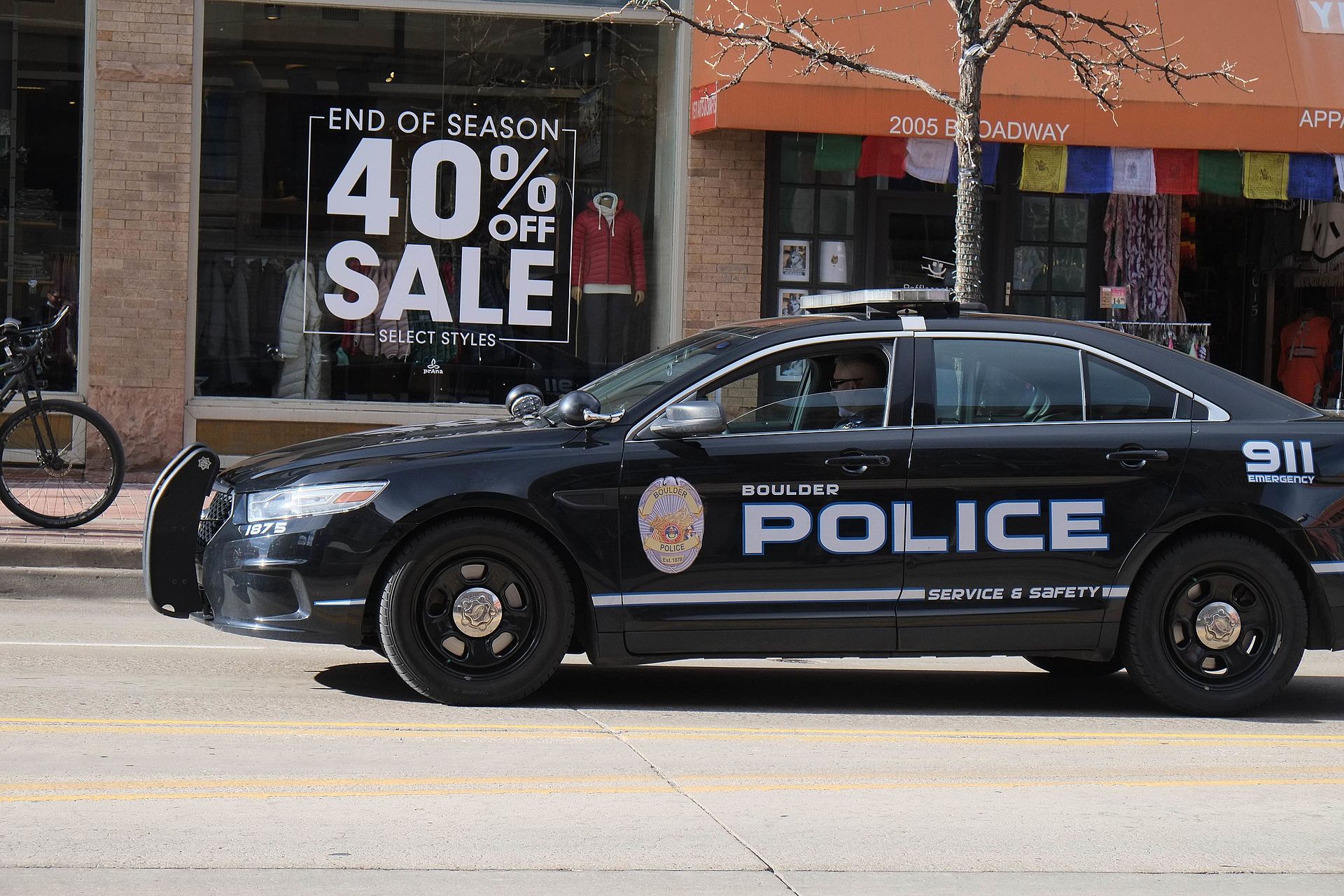
“The new data from the BPD shows that the police are continuing to move in the wrong direction despite the recent reforms implemented by the Boulder City Council,” said Dan Williams, Executive Committee member of Boulder Progressives. The reforms, in other words, are not working at the same time many worry that the panel charged with holding the department accountable is being systematically weakened.
Since its founding, the panel has faced persistent obstacles. It struggled to keep seats filled due to the sheer volume of cases. In 2022, a founding member resigned in protest after city officials advised her not to speak publicly about a high-profile misconduct case. The dispute was rooted in deep disagreements about transparency and what information panelists were permitted to share with the community.
The tension escalated in 2023, when the city council voted to remove panelist Lisa Sweeney-Miran. Sweeney-Miran was a vocal advocate for police reform and had been involved in a lawsuit seeking to overturn the city’s camping ban that named the police chief. City officials argued that her documented history of activism constituted a bias that could render the panel’s decisions vulnerable to legal challenge and appeal. There was no allegation that she had behaved improperly in her role on the panel, only that her public record made her a liability. Many observers feared this set a dangerous precedent: that any criticism of police, even if expressed outside the panel, in the form of civic participation, could be grounds for disqualification.
That precedent is now being applied more broadly.
The Boulder Police Officers Association (BPOA) recently filed a formal complaint, which was obtained by Yellow Scene through a CORA request, against panelist Maria Soledad-Diaz, who also serves as co-chair of the oversight panel. The complaint accused her of a “clear biased approach” to her role and claimed her statements were “damaging” and “divisive.”
To understand what actually prompted those accusations, it helps to look at the two cases cited in the complaint.
In the first, the panel disagreed with both the department’s internal investigation and the independent police monitor, finding the officers involved in a complaint regarding investigation MI2025-023 may have taken discriminatory actions. Diaz was one of three panelists who reached that conclusion. An external review was subsequently conducted and sided with the department. The complaint characterizes this disagreement as evidence of a compromised process, stating that it raises “serious concerns regarding the integrity of the panel’s review process and suggest a departure from a fact-based approach to police oversight.” But no specific procedural failure is identified. The complaint offers no evidence that the panel mishandled testimony, ignored evidence, or violated protocol. The argument, stripped down, is that reaching a different conclusion than the department is itself proof of bias. That seems to be a standard that would make independent oversight structurally impossible.

In the second case, Ms. Diaz acknowledged that an officer’s actions were within department policy. But nonetheless described the encounter as involving “racial undertones” and a “power imbalance.” The complaint treats this as contradictory behavior. It isn’t. Whether conduct is technically within policy and whether it reflects racial dynamics or imbalanced power are entirely separate questions. Whether Diaz’s assertions were correct is a different question, but they do not appear to be in themselves disqualifying.
The third basis for the complaint involves public statements Diaz made outside of panel proceedings. She told community members she had limited faith in the complaint process and would not encourage people to file complaints. The BPOA characterized this statement as a breach of impartiality.
A separate complaint was filed by a private citizen, Aaron Brooks, against panelist Mylene Vialard, for “public misconduct and loss of impartiality.” The complaint alleged that Vialard had participated in and led chants at a public protest related to issues the Boulder Police Department manages, that this conduct demonstrated “clear advocacy behavior,” and that it created an “unavoidable appearance of bias.”
What the complaint does not include is any allegation about Vialard’s conduct during panel proceedings. There are no alleged, nor disputed cases, no improper ruling, no procedural violation. The entire complaint rests on the fact that she attended a protest. This raises a serious question about scope: are panelists now subject to removal based on their off-duty exercise of free speech and freedom of assembly? And if so, who decides which protests constitute bias, and against whom?
The Sweeney-Miran case established that prior advocacy against police could disqualify a panelist. That precedent now appears to be extending to the statements of a sitting co-chair and the protest attendance of another member. The effect, intended or not, is to define “impartiality” as the absence of any public skepticism toward law enforcement. Some panelists argue that these moves are producing a system that is structurally biased towards protecting the department from scrutiny.
Communities of color, who are disproportionately subject to use-of-force and disproportionate stops, are statistically more likely to have direct experience with or public opinions about policing. Under the standard being applied, the city may label their lived experience and civic participation as liabilities. Imagine a Black panelist who has attended a community meeting on police brutality, or liked a post in support of Black Lives Matter, or expressed frustration with a complaint process they have personally navigated — each of these experiences could now be framed as evidence of disqualifying bias.
The communication between the panel, the independent police monitor, and the city attorney’s office has also grown strained.
Diaz told Yellow Scene Magazine, “It has been hard to land in a place of understanding. The panel has been through a couple of changes in the interpretation of the ordinance by the city attorney’s office, and this has impacted its authority and its ability to review cases.”
The disputes have brought panel meetings to a near-standstill and prompted the city to reexamine the panel’s scope. The panel is entering its five-year review, which will determine whether its mandate should be expanded, narrowed, or restructured. Concurrently, the City Manager will launch an independent review of the oversight system to evaluate what is working and identify potential improvements.
Under the new regulations, cases that do not advance to a full administrative investigation are no longer eligible for full panel review, though the panel will continue to receive case summaries, which the city describes as “preserving a level of oversight.” The city has explained these changes as necessary because the system was overwhelmed and the ordinance was always intended to focus the panel on cases where full investigations were already underway, not lower-level complaints.
There is a legitimate argument to be made about workload and efficiency. But the question is whether reducing the panel’s caseload, restricting its ability to hire independent counsel, prohibiting private deliberations, and using complaints to remove members who publicly question the system are all happening in service of a more effective panel — or a more compliant one.
“I think right now, we are in a position where this input is viewed and perceived as a challenge, rather than something that should complement the system,” Diaz said. “The panel is not challenging the system; we want to work and build on the system together.”
With the five-year review underway, there is a real decision point ahead. The city can use it to strengthen the panel, allow it to continue to languish, or dismantle it altogether. All paths have major implications for the evolving relationship between Boulder residents and their police department.
















Trust me……there are some very bad police within PD. I am a retired CU professional who was once roughed up by a very bad uncheck officer. Chief Redfearn is doing a better job of weeding out a bad culture of “arrest or shoot first” in dealing with the public. I went though the
BPD oversight process and it was a joke of the Blue Code of silence and protection of police even
when officers were way out of bounds of civil behaviors. We MUST have a citizen oversight that has
authority beyond the Chief or Union to get bad cops out of BPD.