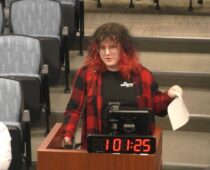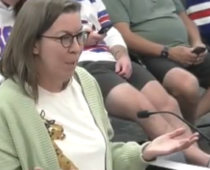




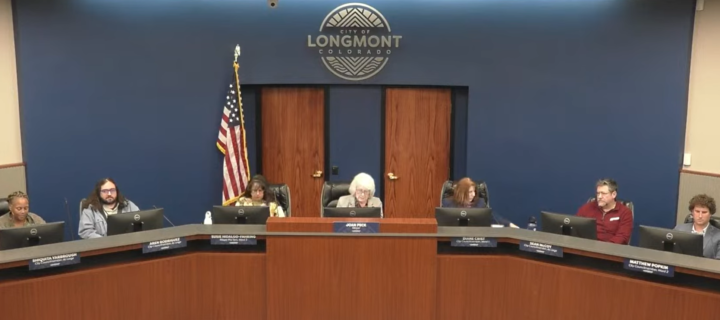

After a lengthy and at times impassioned discussion, the Longmont City Council voted 4–3 late Tuesday night to advance a proposed ordinance establishing landing fees at Vance Brand Municipal Airport, setting the stage for a second reading and public hearing in November. The vote capped a meeting that stretched past midnight and also featured budget adjustments, a recycling facility update, and a contested land-use variance hearing.
The landing fee proposal, Ordinance 9C, would authorize the city to charge aircraft operators for using the airport’s runways, with the intent of creating a more self-sustaining enterprise fund. The move follows years of debate over how to balance the airport’s infrastructure needs with equity concerns between residents and transient aircraft operators.
Airport Fee Sparks Debate Over Fairness and Process
City staff presented the fee proposal as a step toward aligning airport funding with city policy that requires enterprise operations, such as the airport and golf courses, to cover their own costs. The suggested model calls for a $5 per 1,000-pound landing fee, with exemptions for military, medical, and emergency operations. Based aircraft, including those renting hangars on-site, could also qualify for exemptions, pending FAA approval.
Councilmembers praised staff for exploring new revenue sources but expressed concern that the proposal was moving forward without sufficient analysis. Councilmember Sean McCoy noted that of the 125 emails received by the city, “a majority opposing the fees came from outside Longmont,” while local residents tended to support the idea. “This is about fairness,” McCoy said. “Our residents already help pay for airport operations, and it’s reasonable to ask outside users to share that cost.”
Others, however, questioned both the timing and the amount. Councilmember Aren Rodriguez said he supports the concept of landing fees but not the process that brought it forward.
“We need data before we legislate,” he said. “We don’t know what this will do to flight activity, and we haven’t seen a clear plan for how the revenue would be used.”
Councilmember Shiquita Yarbrough echoed the concern, suggesting a smaller fee or phased approach to avoid discouraging student pilots and aviation programs. “We all know it costs money to maintain an airport,” she said, “but we don’t want to put up barriers to education and local youth involvement.”
City Manager Harold Dominguez emphasized that unlike recreation or other general fund departments, the airport operates as an enterprise fund and must be financially self-sufficient. He suggested the city consider a 90-day operating reserve policy to strengthen the airport’s fiscal stability.
Mayor Pro Tem Susie Hidalgo-Fahring and Mayor Joan Peck supported the ordinance moving forward, citing the need for a consistent financial framework even if fee details change later.
After nearly 90 minutes of debate, the council voted 4–3 to advance the ordinance to second reading, with McCoy, Peck, Popkin, and Hidalgo-Fahring in favor, and Yarbrough, Rodriguez, and Christ opposed. Staff will return with FAA feedback, comparative data from other municipal airports, and potential exemption models before final adoption.
Council Reviews Infrastructure and Hangar Development
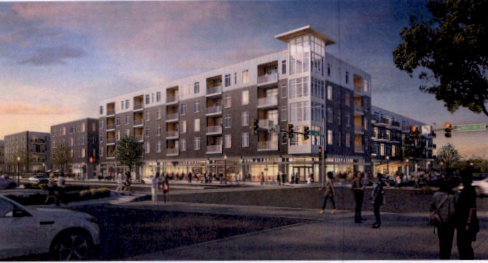
Concept rendering of the proposed Longmont Station Redevelopment, Exhibit A from the City Council packet. Courtesy: City of Longmont.
Beyond the fee discussion, council heard updates on long-term airport infrastructure planning. Staff outlined progress on the south side of the facility, where water and wastewater extensions and stormwater improvements are underway. The next major hurdle, officials said, is electrical infrastructure which is a costly but necessary step before any new hangars can be built.
“Airports make more money when they own hangars,” a staff member explained, noting that federal funding for hangar construction is available once basic utilities are installed. Council also discussed possible partnerships with Longmont Power & Communications to trade land for infrastructure development.
Budget Adjustments and Recycling Facility Discussion
Earlier in the meeting, the council approved mid-year budget adjustments tied to capital improvement projects, including reallocating funds for park development and public safety equipment. Councilmember Yarbrough questioned changes to several project budgets, while Chief Financial Officer Teresa Malloy clarified that most adjustments reflected grant timing and construction cost updates.
The council also received an update on the proposed Front Range Recycling Facility expansion, a joint venture with Waste Services of Colorado. The expansion would modernize sorting operations and increase recycling capacity by up to 40 percent. Several councilmembers voiced support for the project’s environmental and economic benefits but requested more data on the facility’s carbon footprint and long-term financial implications. Staff plans to return with a full financial model in early 2026.
In a brief procedural action, the council recessed and reconvened as the Longmont General Improvement District No. 1 Board of Directors to adopt its 2026 budget, a step required annually for the downtown district. The board approved the resolution unanimously before reconvening as City Council.
Later in the evening, the council reopened a public hearing on the Residences at AltaVita riparian setback variance, which would allow development closer to a protected waterway than city code typically permits. The developer, Don Macy, and his project team presented updated environmental assessments and mitigation plans, while residents raised concerns about erosion control and wildlife impacts. Council ultimately denied the variance in a split vote, citing consistency with Longmont’s environmental protection standards.
Next Steps
The City Council will revisit the airport landing fee ordinance at its next regular meeting, where the public will have another opportunity to weigh in. Staff is expected to present additional financial data and FAA guidance before a final decision is made.
The council also scheduled further budget workshops for November as it prepares to adopt the city’s 2026 budget by year’s end.