




Ahead of the upcoming midterm elections, shoppers outside local grocery stores like King Soopers are routinely greeted by volunteers with stacked clipboards, asking for a name, city, and signature. Much of this grassroots presence is driven by Big Tent BoCo, a community initiative aiming to expand the Boulder Board of County Commissioners from three members to five.
The petition, submitted to the Secretary of State on July 14 after collecting more than 18,000 voter signatures, has successfully cleared the initial hurdle to place the expansion on the November ballot. If verified, constituents will vote on whether to increase the number of elected officials by 2029. They will also face a secondary ballot measure to decide how those five seats are structurally elected, choosing between two methodologies.
The first secondary option relies on a “3 + 2” model, where three commissioners are elected strictly by geographic districts and two are elected at-large by the entire county. The second option would completely eliminate countywide voting, redrawing the Boulder County territory into five distinct districts where each neighborhood selects its own lone representative.
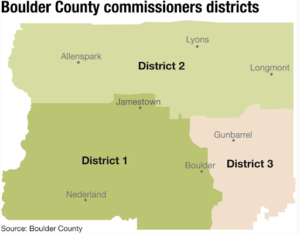
Currently, Boulder County utilizes a mixed system. All three commissioners are voted on at-large by everyone in the county, but candidates are tied to residency districts, meaning they must live within the specific boundaries they run to represent. Historically, this hybrid model was intended to ensure that leaders understand localized neighborhood problems while remaining motivated to serve the collective county to win a broader base of votes. Critics, however, argue that this layout often leaves smaller municipalities and rural enclaves with little say compared to bigger districts.
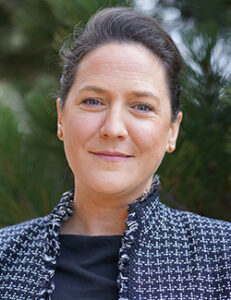
Commissioner Ashley Stolzmann. Photo from Boulder County Website
Big Tent’s organizing committee includes County Commissioner Ashley Stolzmann, a Louisville resident who represents the third district encompassing southeastern Boulder County. Stolzmann is an outspoken proponent of moving toward more localized, district-centered voting; believing it allows leaders to more intimately understand and fight for unique community issues.
Stolzmann notes that during her past election, she drew 60 percent of her votes from her home district but only 40 percent in District 1. Under the current countywide setup, higher-population hubs like Boulder and Longmont possess the sheer numbers to have a big influence on every single race, regardless of local preferences. Boulder consistently sees massive participation, including a 50 percent turnout in primary elections, while Longmont carries the largest overall volume of voters. Stolzmann argues that adding two seats provides a necessary structural path to give southeastern towns like Lafayette, Superior, Erie, and Gunbarrel, alongside sprawling unincorporated areas, an actual voice.
Stolzmann also argues a larger board would allow for faster communication, better constituent services, and more frequent local town halls.
Stolzmann’s belief draws on her past experience serving on the seven-member Louisville City Council, where she found it notably easier to manage heavy workloads, address fast-evolving community issues, and foster deep debate. She argues that three-member groups are uniquely vulnerable to rapid stalemates. “When you’re decision making with three people,” she said, “oftentimes what happens is when there’s agreement among two, the discussion stops.”
Attendance also plays into her critique. In 2025, roughly 27 percent of regular commissioner meetings were attended by only two out of the three members. If an absent commissioner holds a strong dissenting stance on an incoming measure, their perspective is effectively erased from the record when the vote is called.
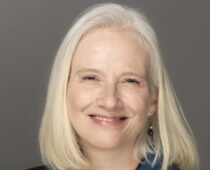
Commissioner Claire Levy, who represents District 1, stands in strong opposition to the expansion. While she acknowledges that many constituents feel they are underrepresented, she views Big Tent BoCo’s petition as a fundamentally flawed remedy for that frustration.
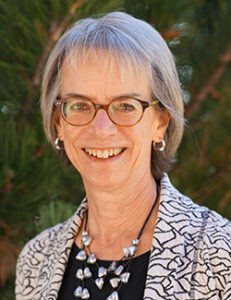
Commissioner Claire Levy. Photo from Boulder County Website
Levy emphasizes that the county board has never previously deemed this an appropriate or effective form of governance, which is why commissioners chose not to refer the measure to the ballot themselves. She says that neither the five-district model nor the 3 + 2 format can mathematically guarantee a district tailored exclusively to represent mountain or unincorporated communities, which are the very populations loudest in demanding change. Furthermore, she argues that district-specific voting historically struggles to recruit candidates, leading to uncontested races.
“Parochial” is how Levy describes district elections. “If I only have to look to the folks in my district to get elected, 70,000 people versus 350,000 people,” Levy said, “I am going to be incentivized to ignore the whole rest of the county.”
From an internal workflow perspective, Levy argues that expanding the board simply invites bureaucratic friction. The vast majority of county decisions are already passed unanimously, and she rejects the idea that debates would become qualitatively richer with five commissioners instead of three. Instead, she anticipates that needing to coordinate and build consensus among more politicians will simply slow down daily operations and render public meetings less productive.
The financial cost is another major friction point. Although Boulder County maintains a substantial 754 million dollar budget, recent monetary shortfalls in late 2025 and early 2026 led to the elimination of roughly 130 county positions. While Stolzmann views the projected 300,000 dollar administrative cost of adding two commissioner seats as a worthwhile investment for better representation, Levy considers it irresponsible to expand political offices while the county is actively cutting frontline staff.
Levy also points to an ideological rift among the petition’s backers as a sign of an impractical plan. The organizing group itself is heavily concentrated, with 60 percent of its board hailing from the city of Boulder, and they remain publicly divided on whether the five-district or 3 + 2 model is the superior path forward.
“I think that’s indicative of the lack of unity on what problem we’re trying to solve and how to solve it.” She added, “If we’re going to upend our system of government and replace it with something else, It does not seem prudent to do that when even the people who are advocating for the change can’t agree among themselves on how to do it.”
Rather than restructuring the charter, Levy has focused her term on boosting traditional public access, expanding town halls, and implementing individual direct-email options on the county website. While Stolzmann maintains that structural expansion is the only way to manage the sheer volume of constituent requests, Levy argues that existing engagement channels are sufficient.
The ballot debate has also illuminated an entirely different faction of local political reform. Volunteer lobbyist Celeste Landry, an active member of the League of Women Voters and a proponent of Colorado’s Alternative Voting Methods Task Force, alongside Boulder City Council Member Nicole Speer, share the belief that a five-commissioner board is ideal, but they strongly oppose both secondary options currently on the ballot.
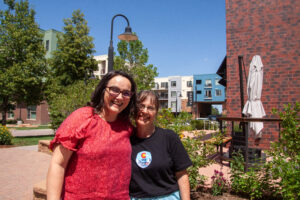
Nicole Speer (left) and Celeste Landry (right). Photo from Finn Feldman
Landry and Speer point to structural modeling conducted by the League of Women Voters back in 2019, which mapped out potential district layouts for an expanded board. In every single geographic scenario, the cities of Boulder and Longmont were large enough to command at least two districts each.
“It’s actually less representation,” warns Speer.
They also raise a distinct transparency detail due to Colorado’s open meetings law. Under current statutes, because two out of three members constitute a legal quorum on the current board, any political discussion between two commissioners must happen in a noticed, public meeting. If the board expands to five, the quorum moves to three. This would allow any two commissioners to meet in private, strike backroom deals, and align their positions one-on-one without a public record of the conversation.
Instead of standard district voting, Landry and Speer advocate for proportional representation utilizing ranked-choice voting. Under their proposed alternative, all five county commissioners would be elected at-large countywide. Constituents would rank multiple candidates in order of preference. If a voter’s top choice secures enough ballots to win a seat, their surplus voting power transfers down to their second or third choices.
This model is explicitly designed to eliminate wasted votes in traditional winner-take-all block systems, ensuring that any political group that wins a certain percentage of the vote secures an equivalent percentage of representation on the board. While some progressive residents have expressed concern that this framework might allow a conservative candidate to break into Boulder County’s left-leaning leadership, Speer emphasizes that democracy means all voices are heard. “There are republicans spread out over Boulder County,” Speer said. “If we went to proportional representation, they might get a seat on the county commission, but they are not likely to get 5 seats.”
Proportional ranked-choice voting has a historical footprint in Boulder, where it was utilized between 1917 and 1947 before being repealed amidst the political anxieties of the early Red Scare. Critics of the system at the time pointed to vote leakage, a phenomenon where voters rank candidates across party lines, inadvertently shifting seats to opposing platforms. However, modern data compiled by advocacy groups like FairVote indicates that up to 95 percent of voters in active ranked-choice systems successfully see one of their top three choices elected to office.
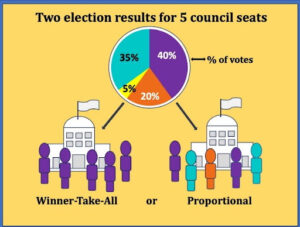
Graphic from League of Women Voters Boulder County
Landry previously attempted to integrate these mechanisms at the state level via House Bill 24-1177, which sought to mandate five-member commissions for all Colorado counties with populations exceeding 70,000. Landry pushed for a proportional representation amendment to the bill, but the overall legislation ultimately died in committee. While state election administrators expressed broad historical support for modernizing representation laws to ensure equity, specific amendments regarding ranked-choice voting were never formally reviewed or adopted into state policy.
Landry, who is running for Secretary of State under the Colorado Forward Party banner, remains hopeful about bringing proportional voting methods back into mainstream local discourse. She and Speer had hoped to see a proportional ranked-choice measure accompany the expansion question on this fall’s ballot, arguing that it is best to have this systemic conversation while the structure of the board is already open to change.
However, translating these alternative voting theories into immediate ballot options faces severe legal blockades. When asked over email her thoughts on ranked choice voting (RCV), Commissioner Levy noted, “while I support proportional representation and ranked-choice voting, I don’t know whether it is practical for the county to add that to the ballot. I doubt that we could do both things in a single ballot measure without violating the single-subject rule. Implementing it requires that the Secretary of State adopt rules, which I don’t know whether they would do absent state legislation and funding.” Levy also voiced concerns that election software is not ready for RCV.
Photo from Finn Feldman
Commissioner Stolzmann similarly concluded that while she supports the philosophy of proportional voting, she does not see a legal pathway under existing state law to insert it into the upcoming election cycle.
When Boulder County voters head to the polls this November, they will navigate a choice between maintaining a historic countywide structure, shifting toward a localized district model, or leaving the door open for future alternative voting systems to manage a rapidly growing population.
Yellow Scene’s 2026 Summer Support Drive is underway with a goal of 1,000 Sustaining Supporters by summer’s end.
For 26 years, we have remained fiercely independent, free from sponsored content and outside editorial influence.
Reader-driven support keeps local journalism unbossed, unbought, and our journalists fed. Become a sustaining supporter for $8/month and get Yellow Scene delivered to your home.
Join the Summer Support Drive and keep local journalism strong.