




Pouring love on pets who defy the odds
Photos from Dustin Doskocil / Doskophoto
The staff at Longmont Humane Society are ready to love any pet that comes through their door, whether it is a three-legged dog or a cat with no eyes. No pet is turned away, regardless of their disabilities or special care needs.
“We look at each dog individually,” Lynsey Georgen, the humane society’s Director of Operations told Yellow Scene. She said “We look at each animal’s specific personality and figure out what we can do to make them adoptable, and get them into their forever home.” There are special challenges to consider when planning to adopt or foster a handicapped pet. They might need ongoing physical therapy, daily medicine, or another kind of accommodation. One of the biggest deterrents to taking in an animal with special needs is the financial commitment. Despite this, it can be a rewarding experience that many people choose to do over and over.
Georgen has a special place in her heart for disabled pets. She said that handicap is her “favorite breed.” She has opened her home to dogs with just one eye, dogs with missing limbs, and multiple deaf dogs. “I fostered a blind puppy that had dwarfism because of overbreeding, and she was a handful,” Georgen shared, “but also, my soul dog.”
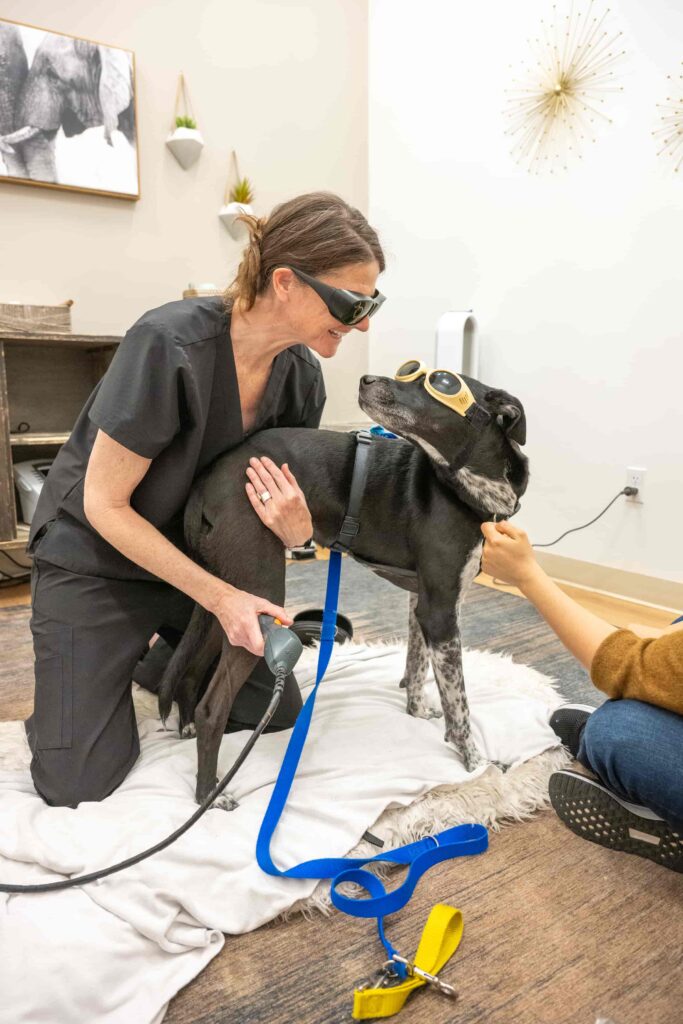
Photo credit: Dosko Photography, Dustin Doskocil
When it comes to fostering, there is more stigma around taking in a handicap pet as opposed to one that is seen as healthy, according to Georgen. She said this is likely due to the challenges that already exist for fostering. “Fostering is already so hard and requires so much patience and time,” Georgen said. “I think that when you add on the idea of a handicap, it pushes people away from that just a bit.” But caring for a handicap pet becomes second nature, Georgen said. “I just have a special place in my heart for spending that extra time to make sure they’re given a chance.”
Even when owners are willing and able to give a special needs pet the accommodations they need, the financial commitment is still a major factor. The potential cost is one of the main considerations that Dr. Danyel Wynn, the owner of Walking Paws Rehab, wants potential adopters to keep in mind. There are resources for mitigating costs, such as pet insurance, but adopting a disabled pet is still a long-term financial commitment. This is especially true of animals that require ongoing physical therapy.
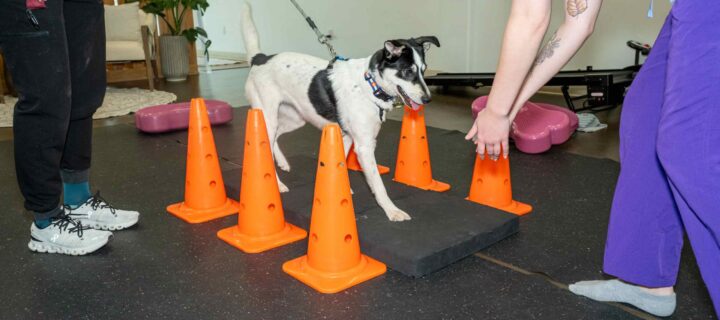
“It takes time,” Dr. Wynn told Yellow Scene. “It’s not a quick fix. It’s not an instant moment where a dog is healed. It really does take a commitment of doing the physical therapy, doing these exercises, and helping that dog get healed again.”
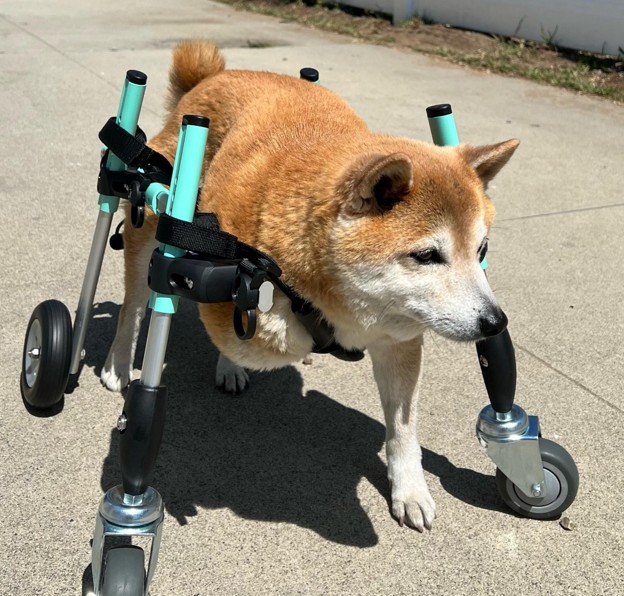
There are other resources that can potentially help mitigate costs and challenges, such as specialized nonprofits. Handicapped Pets Foundation is dedicated to enhancing the lives of disabled dogs and cats. They donate new or reconditioned pet wheelchairs to low income families in need. Nearly every month, over 100 applications come in.
“We respond to all of them, and we award ten to twenty wheelchairs to families each month,” Rachel Shields, the Foundation’s Executive Director told Yellow Scene. To date they have donated over 120 used wheelchairs and nearly 600 new wheelchairs.
In her time at Longmont Humane Society, Georgen noticed that some disabilities “tug at the heart strings” and make it more likely for those pets to be adopted. She has seen dogs that are blind and deaf get the same attention as any other dog, and sometimes they are even adopted quicker.
Georgen said that caring for disabled pets is not as big of a deal as it seems. “Don’t look at it as a barrier,” she said. “It’s just a unique piece of the animal that’s part of their personality, and they almost always will accommodate for their disability in other ways. My one-eyed dog, who has very poor eyesight in her other eye, makes up for it by having an incredible sense of smell. She’s kind of a licker because she’s finding out her environment through her other senses. I think a lot of time, they make up for it in other ways.”
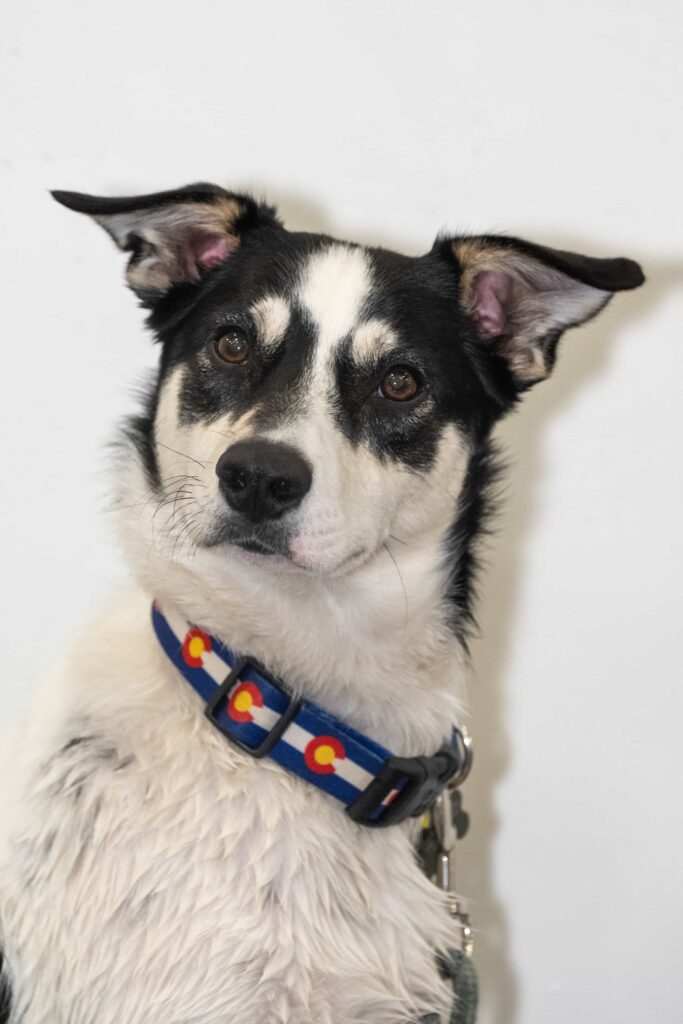
Photo credit: Dosko Photography, Dustin Doskocil
A New Sense of Purpose
Dr. Wynn established Walking Paws Rehab to transition out of general practice and into rehabilitation work with animals. The idea for the clinic came from a strong interest in working with injuries. She said that she’s able to do work she feels good about.
“When we would cry in general practice, it was often because of a euthanasia, or a sad moment,” Dr. Wynn explained. “But in physical therapy when we cry, it’s because of a lot of hard work and reward.”
Working with patients at the clinic, Dr. Wynn has seen animals go from fully paralyzed to regaining the ability to walk. When she opened Walking Paws, she wasn’t sure if there was a need for that type of veterinary practice in the area. It didn’t take long for her to see just how much of a need there was.
Dr. Wynn vividly remembers one early patient that helped her believe in the work she could do.
“She fractured her back limb when she was a puppy and was placed in a cast by the primary vet,” Dr. Wynn said. “Unfortunately, she was left in that cast for a couple of months, and she continued to grow. When they got to the point of taking the cast off, her limb was atrophied.”
The back leg was left unstable and nonfunctional. Multiple orthopedic surgeons in the Fort Collins and Denver area recommended the owners have the limb amputated, Dr. Wynn shared. They turned to Walking Paws Rehab for another option, and they found one. The clinic’s team used a custom brace and physical therapy to save the limb and restore function. In the end, the puppy was able to walk again without the help of a brace.
“It’s amazing when you have a dog that is completely paralyzed, and is given a poor prognosis of never being able to walk again, when euthanasia is on the table and recommended, and then we defy all the odds,” Dr. Wynn shared.
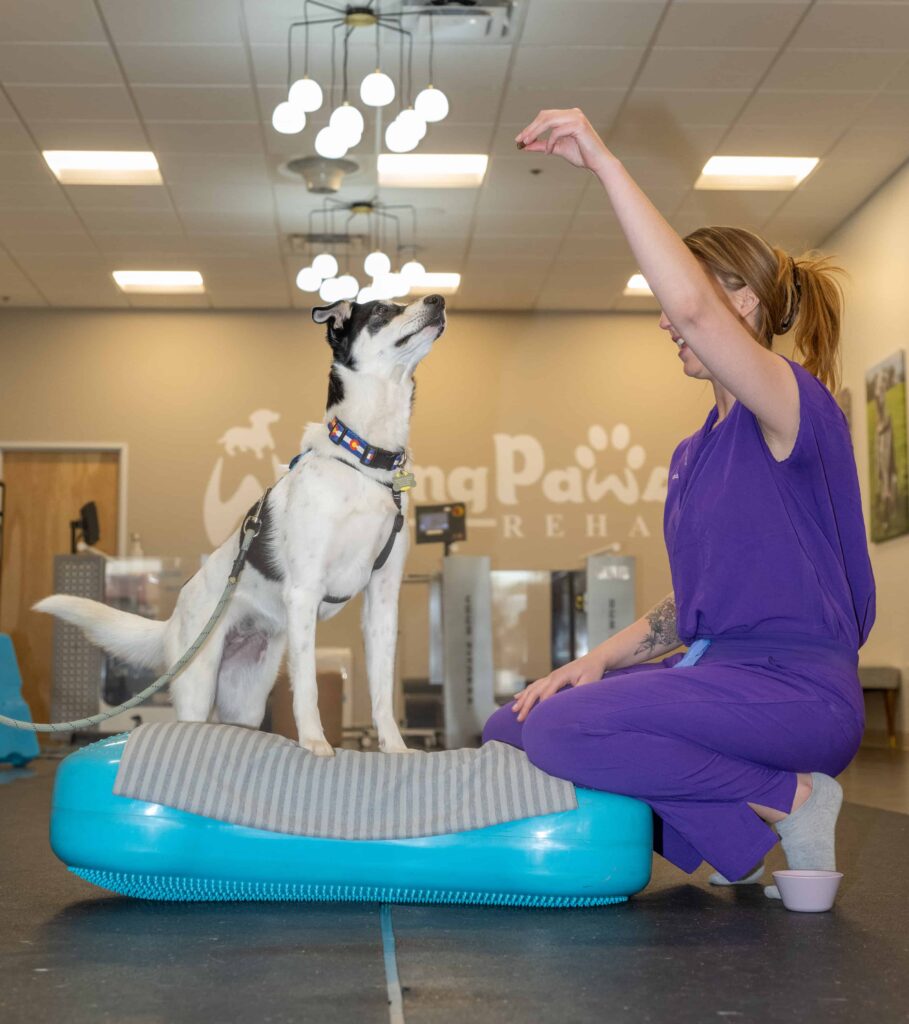
Photo credit: Dosko Photography, Dustin Doskocil
“A Complete 180”
Shields found Handicapped Pets after her senior dog Squirtle passed away. He used a wheelchair for the last year of his life. “Once I put him in the wheelchair, it was like a complete one-eighty,” she said. “He could get around like he used to. He had to be supervised in the wheelchair because he could flip himself over because he would get excited and try to go very fast.” Squirtle used the chair until he passed away.
“It really extended his life because I wouldn’t have been able to keep him in the condition that he was in without his wheelchair, because he wasn’t happy being immobile.”
When Squirtle passed, Shields wanted to find a way to donate his wheelchair to another animal in need. Shields was grateful that she was able to buy the chair when she needed it, and she knew there were plenty of pet parents who would not have been able to.
This led her on a search to find a way to donate it. Shields found Handicapped Pets Foundation and they helped her chair get to another dog in need, Paco. She was sent pictures of Paco in the chair and loved getting to see him enjoy it.
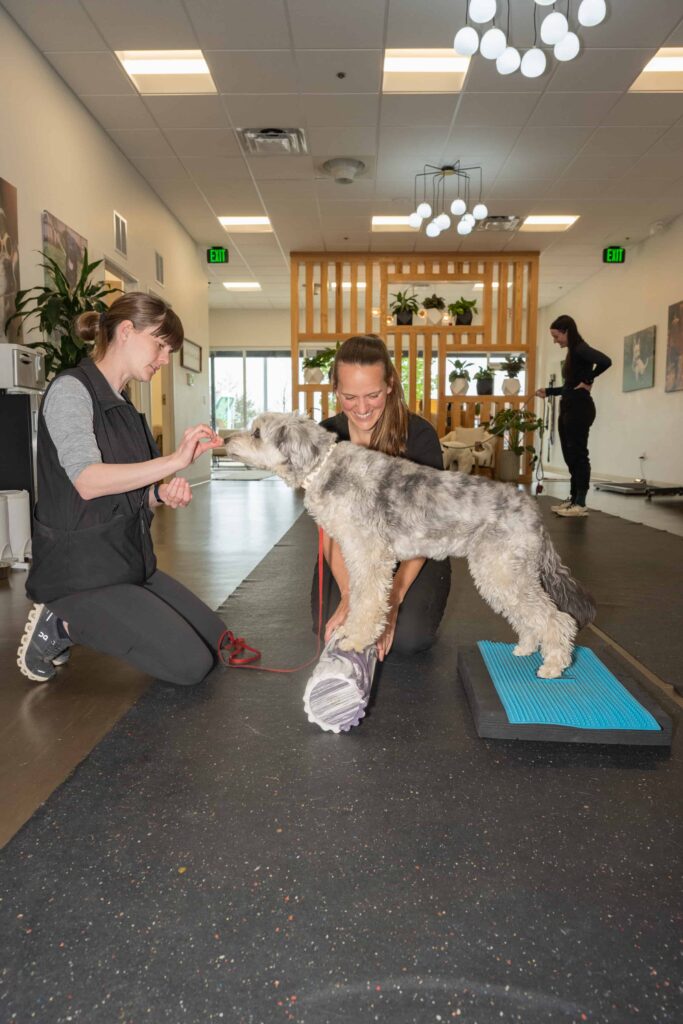
Photo credit: Dosko Photography, Dustin Doskocil
Around this time, the foundation was looking for board members, and Shields, who has a background as an attorney, put herself in the running. Handicapped Pets is located in New Hampshire, but they work with families around the globe which their testimonials, or “happy tails,” attest to. Anyone can fill out the application on their website and feel confident that a team member will review it. They accept donated pet wheelchairs too but rather than have donated chairs sent to the foundation, they work with donors to send them straight to the family.
Shields believes the cost can be a major challenge for many families with disabled pets, and the foundation wants to help offset some of that burden. “I think the biggest hurdle for a lot of people is just the cost that’s associated with helping a pet that has mobility issues,” Shields said. “A huge stigma is that it can be more challenging having a dog with mobility needs, but they’re just like a normal dog once they’re able to get around.”
Walking Paws also has an expanded reach. They work with several animal rescues that take in handicapped pets, Dr. Wynn shared. Sometimes the clinic can offer the work pro-bono in order to get an animal healthy again. The rescues play a major part in caring for the disabled pets they take in and giving them their best chance at getting adopted.
The Right Path is Not Always Easy
Disabled dogs and cats are, for the most part, just like other pets, according to Shields. “I think sometimes people view them as defective or like they’re suffering if they have mobility issues,” she said.
While that can be true for some handicapped animals, many just need extra support. “When we’re able to put them in a wheelchair, they really just have another shot at life and they’re really resilient and happy.”
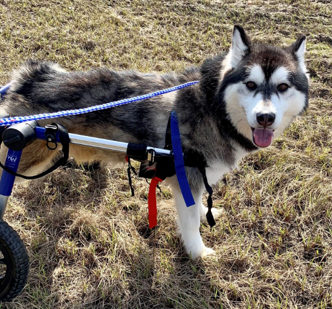
A husky using a donated Handicapped Pets Foundation wheelchair
Belle is supported by a donated wheelchair
Adopting or fostering a special needs pet can be a wonderful journey to make, but that doesn’t mean it is for every one. “It’s not necessarily an easy path to go down to adopt a disabled dog,” Dr. Wynn said.
There are multiple factors to consider, such as the extra care they will need and additional medical expenses. Disabled pets will require more care than a pet that is young and healthy. It can be challenging, but that doesn’t mean it’s not worth it. For many owners, it is one of the most rewarding decisions they make.
And who knows? You might just meet your soul dog (or cat).
Feature Box: The Story of Coachella
Longmont Humane Society’s current longest stay cat resident is a disabled cat. Coachella, a one year old domestic short hair with tuxedo coloring, has been at the shelter for four months now. She can’t properly walk due to a nervous system condition, and she has trouble making it to her litter box in time. She is FIV positive, and would need to be the only cat in a home. However, she gets along with children of all ages and is trained to walk on a leash.
Coachella gets extra attention from staff members because of how sweet she is, but Georgen said her special care needs make it harder for her to find a home. Shelter staff hope to see her adopted out as a “shop” cat. The idea is similar to barn cats, but Coachella would need to be indoors. “She needs to be in a situation where she’s going to still get that love and feeling of being inside a home, but maybe the opportunity where her litter box situation isn’t a huge obstacle to overcome,” Georgen said.
Coachella is given extra attention on the humane society’s social media accounts, and was taken to Longmont’s recent Cat Fest.
“We’re looking for the best match where she can still be herself and still be successful in a home, and have owners that are understanding and love her anyway,” Georgen said.
Sidebar:
Owners and rescues alike can use the Disabled Pets Project to find resources for caring for special needs pets. The online directory includes a list of the disabilities found in pets, with descriptions of each. They also have a checklist that highlights important steps for rescues hoping to adopt out disabled pets. For example, they recommend getting three references from potential adopters and doing a home check. In addition, they highlight the importance of considering the pet’s needs and the adopter’s lifestyle.
Like journalism like this? Consider becoming a sustaining supporter — and get our print edition delivered to your home each month.
Democracy needs journalism more than ever. For 25 years, we’ve told the truth — your support helps us keep doing it for the next four and beyond. Administrations come and go. Our team stays ready to lead, no matter who’s in charge.