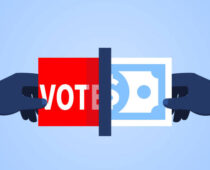





This past month, Yellow Scene Magazine published our endorsements for the upcoming primary election. What haunted much of our coverage was the specter of dark money: who has it, who does not, which donors we viewed as disqualifying, and which we did not. Particularly in a post-Mamdani electoral landscape, a candidate’s financial connections are beginning to resonate deeply with everyday voters.
Candidates have learned to capitalize on this shift, weaponizing their opponents’ financial ties against them to sell themselves as grassroots alternatives. Whether pointing out candidate Heidi Henkel’s ties to One Main Street or the hundreds of thousands accepted from AIPAC by Senator Michael Bennet, opposing campaigns are leveraging these relationships to paint themselves as the true champions of the common person. At the same time, there is far more nuance here than what is typically expressed during the mudslinging and political shots taken in debates. How did we get here, how should we understand the mechanics of dark money, and most importantly, if almost everyone agrees its influence on elections is undesirable, which candidates are actually willing to curb it? Yellow Scene Magazine reached out to candidates and conducted our own digging to tackle these questions.
To understand the current crisis, it is necessary to first separate how political campaigns are financed. Campaigns are expensive, and spending correlates strongly to winning. Traditional election spending, or “hard money,” comes directly from campaign fundraising. Hard money features strictly disclosed donors and legal limits to individual donations, and includes standard Political Action Committees (PACs). On the other hand, outside or “soft money” comes from external corporations and nonprofits, which can under certain conditions accept unlimited amounts of money from individuals, corporations, or unions. Outside groups that are not required to disclose their original sources of funding are what we define as dark money groups.
As a nation, we arrived at this point in 2010, when five conservative Supreme Court justices hampered campaign finance laws by overruling four liberal appointees in the landmark Citizens United case. The Court ruled that a ban on independent expenditures from corporations violated free speech under the First Amendment, allowing corporations and nonprofits to spend unlimited amounts on political races. In the following years, the Courts have reversed even more legal precedents, allowing entities to use their treasuries for electioneering expenses and independent expenditures directly for political candidates. Later in 2010, the Court ruled that PACs could accept unlimited money as long as they did not coordinate with campaigns, which prompted the creation of independent expenditure committees, commonly known as Super PACs. These decisions granted outsized political power to these organizations and facilitated the spread of dark money.
According to Colorado law, independent expenditures are contributions made “without the support of or coordination with a candidate, candidate committee, or candidate’s agent”. Independent Expenditure Committees (IECs) in Colorado are required to disclose the occupation and employer information for any donations exceeding $250. In theory, IECs must legally function without candidate coordination. In practice, this boundary is incredibly difficult to enforce.
This dynamic creates a scenario where a candidate can be running a completely clean, grassroots race, only for a wealthy, moneyed interest to decide to throw its financial weight behind them unprompted. Conversely, other candidates deliberately cater their platforms to court these financial windfalls. Because of how IECs operate, it is challenging for voters to distinguish one from the other and know exactly when a candidate should be held accountable for the outside groups bolstering their campaign.
Furthermore, nonprofits and shell companies can give unlimited money to these PACs, effectively turning them into dark money outlets when the original donations cannot be traced. IECs thus give the appearance of being transparent while potentially operating as conduits for dark money. Nonprofits funding these PACs are legally required to spend less than half their money on political activity, but these organizations routinely skirt the rules by funneling money back and forth between different entities.
Dark money has become rampant across federal and state elections. Yellow Scene Magazine published a deep dive last year detailing how anti-public school billionaire Reed Hastings routinely funded pro-charter school candidates, essentially buying access to educational boards over the course of several years. We have also reported on moneyed interest groups popping up across Boulder County over the last five years, exerting influence in Louisville, Erie, Broomfield, and beyond.
Television ads, online ads, and mailers constitute the bulk of dark money spending, representing the front-facing result of outside money that Colorado voters see the most. Kenny Nguyen, running for re-election in House District 33, noted that voters are tired of the “bombardment of advertising” during campaigns.

Nguyen stated that reporting rules for donations are too loose to track, and repercussions are far too few.
“Colorado is a complaint-based system, and as a grassroots campaign we don’t have an army of attorneys to file complaints,” Nguyen wrote.
Mapping the paper trail of dark money remains the most difficult hurdle for anyone hoping to understand who is spending on whom. With shell companies, LLCs registered in other states, and creative funneling methods, the trail is often too convoluted for an informed voter to follow.
Anil Pesaramelli, a candidate for House District 19, echoed these concerns.
“Most voters do not have the time, expertise, or resources to trace money through layers of Independent Expenditure Committees, nonprofit organizations, political committees, and pass-through entities.”
Junie Joseph, running for House District 10, agreed that tracing IEC money “often requires significant time, expertise, and resources”. She added that “transparency should be meaningful and accessible, not something only political insiders can understand”.
Even if a voter could excavate all the outside money in a given election, they would be forced to make voting decisions based on which organizations are deemed “good” or “bad”. Nguyen made a point to note that all IECs are not the same, acknowledging that his own campaign is a recipient of financial support from union backed IECs. He argued that groups like the Colorado AFL-CIO identify themselves transparently when spending, whereas corporate special interests like oil and gas or private prisons do their absolute best to hide who they are behind nonprofits before dumping cash into an IEC. Cervantes noted that labor and conservation groups, organizations considered by some to be defensive IECs, are often created in direct retaliation to those built by major corporations. This ethical proposition introduces a heavy moral obligation, leaving voters wondering if certain financial connections are strong enough to mar a candidate’s credibility, or if certain links are tenuous enough to forgive.
Even though IECs are barred from coordinating with campaigns, politicians have found ways to dodge these rules with few repercussions. A prominent example includes a retreat at a Vail hotel last October between Colorado lawmakers and lobbyists, which ultimately spawned an ethics complaint. The retreat was hosted by the nonprofit Colorado Opportunity Caucus. One Main Street, a group heavily invested in Democratic primaries in recent years, maintains financial connections to that nonprofit. This May, lawmakers backed by the caucus struck down legislation that would have required caucuses like themselves to disclose their funding.
The systemic nature of the problem is acknowledged even by those within the majority party. Junie Joseph wrote that money’s “influence can be used not only between political parties but also within parties to reward allies, punish opponents, and shape political outcomes”. She noted, “The difficult truth is that many people in positions of power, including Democrats in a state like Colorado, where we hold a trifecta, understand the power of money and are often reluctant to give up tools that can be used to maintain influence.”
Kenny Nguyen reinforced this reality, writing simply, “Dark Money is truly all over Colorado”.
Because political gridlock at the federal level has prevented changes to campaign finance laws, the responsibility has fallen to individual states to corral unregulated spending. The Federal Election Commission (FEC) experiences its own partisan gridlock and rarely reprimands organizations, citing the protection of free speech in line with Citizens United.
The newest effort to nullify Citizens United comes from Montana. Former state officials created “The Montana Plan,” which uses state corporation law to strip corporations of their political spending power. Under this framework, out-of-state entities are only allowed the same rights as in-state corporations, effectively ending outside corporate spending in state elections. The Montana Plan will be a ballot initiative in that state this year, and reform organizations are attempting to adopt it state-by-state. The Transparent Election Initiative is currently working to get a similar ballot initiative on the Colorado ballot in 2026 or 2028.
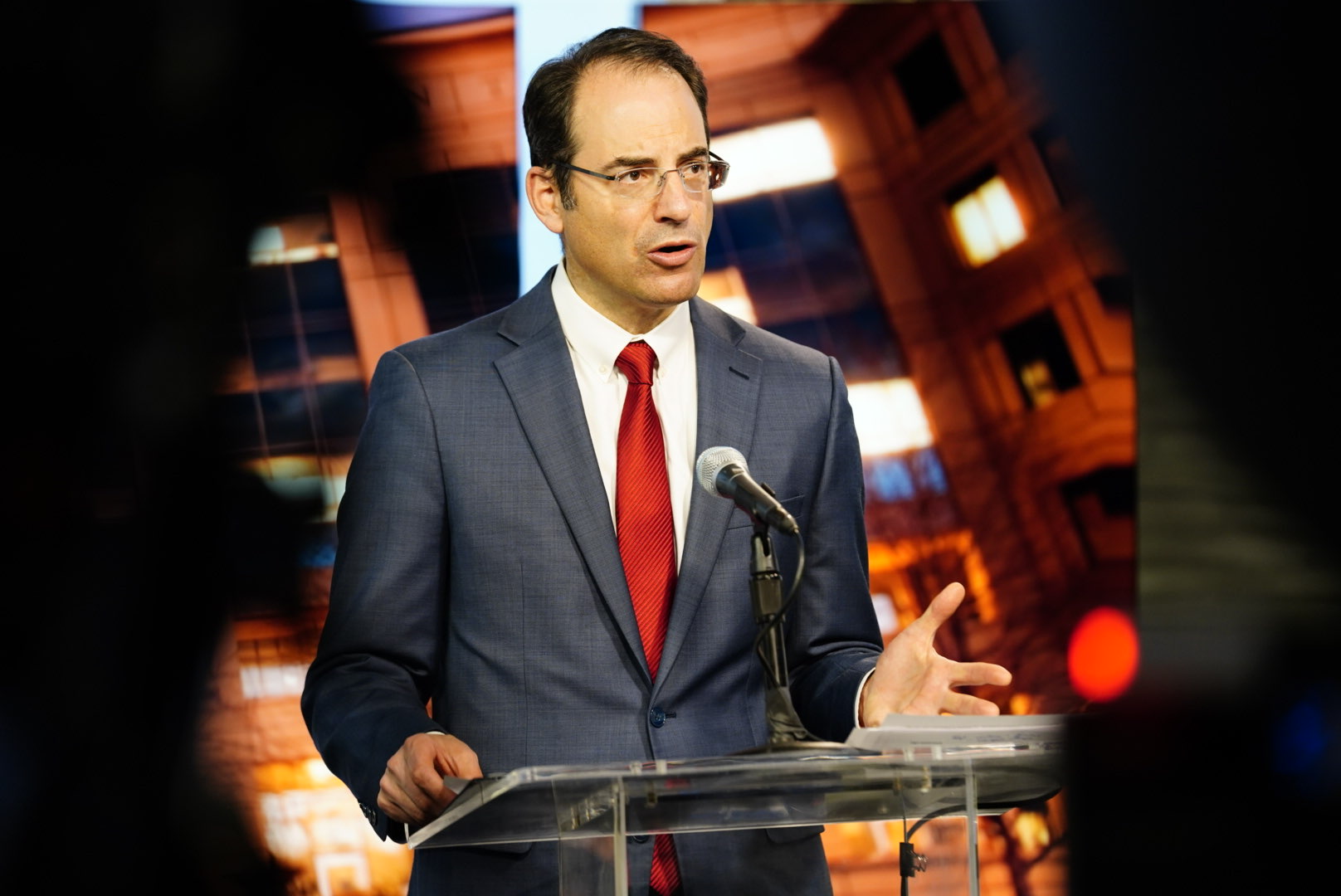
Attorney General Phil Weiser
Local support at the highest levels of state government has already begun to crystallize. In a 2025 op-ed, current Colorado Attorney General and candidate for Governor Phil Weiser wrote in favor of Colorado joining The Montana Plan. In a televised debate in June, Weiser stated, “I’ll be the candidate who overturns Citizens United in Colorado”.
When we turn to individual platforms, the candidates who identify campaign finance laws as a major issue have devised a variety of local and state-level solutions.
Jillaire McMillan noted that the systemic issues in Colorado intensified when maximum contribution limits to individual campaigns were capped at $450, while unaffiliated groups were left free to give unlimited sums. The low limit “requires a lot of work to raise the amount of money needed for mailers, cards to leave when knocking doors, online ads, staff salaries, and the other necessary expenses of a campaign,” McMillan wrote. She added that this framework creates a strong incentive for wealthy individuals to self-fund their campaigns, which has no legal limit.
To improve transparency, McMillan suggested investing in a comprehensive overhaul of the Secretary of State’s online Tracer system to create a streamlined, user-friendly portal to track finances. However, she remained candid about voter priorities, noting that while candidates obsess over campaign finance, her potential constituency has other concerns.
“As I knock doors and connect with voters, they talk to me about affordable housing, the cost of child care, losing their jobs to AI, and their worries about water and clean air,” McMillan wrote.
Anil Pesaramelli wrote that “democracy works best when voters can evaluate messages knowing exactly who is paying for them.”

He stated he would support state-level legislation that reduces outside money “while respecting constitutional protections for political speech”. Specifically, Pesaramelli advocates for the real-time disclosure of major expenditures, clear identification of the original funding sources behind IECs, stronger anti-coordination rules, and clearer disclaimers on political advertisements. If elected, he committed to actively sponsoring or co-sponsoring these transparency reforms as a legislative priority.
Junie Joseph proposed implementing lower contribution limits, faster reporting of political expenditures, and a public matching funds system to amplify small donations. Acknowledging the financial constraints imposed by Colorado’s Taxpayer’s Bill of Rights (TABOR), Joseph suggested a creative workaround. She proposed exploring a state enterprise “funded through a dedicated fee on a service, or a voluntary donation during a government transaction such as a license plate renewal, that could support a public matching fund for elections”. Such public financing has already been successful at the local level through existing municipal fund matching programs in Denver and Boulder. Joseph noted that public financing would empower ordinary working-class individuals and first-time candidates to run for office without needing access to wealthy networks.
Gabriel Cervantes took a direct regulatory stance against outside groups. “I will champion legislation that revokes a corporation’s ability to spend in elections and ban IECs,” Cervantes wrote, describing the execution of this legislation as top of mind. When asked how he would handle a hypothetical $1 million expenditure on his behalf by an IEC, Cervantes admitted his response would depend entirely on the source. Pointing to his own race, he wrote, “over $100,000 has been spent in my district supporting Rep. Phillips and viciously attacking me, so if a labor backed or conservation backed organization were to spend that level of money, it would be responsitory [sic] to the dark money already being spent here”. He stated explicit plans to run legislation modeling the reforms in Montana and Hawaii.
Heidi Henkel in her response to Yellow Scene Magazine focused heavily on reducing ballot barriers, reforming endorsement incentives, and increasing lobbyist transparency. She noted that the high cost of ballot access forces candidates to rely heavily on professional signature gatherers who can charge up to $17 per signature.
“I’ve often wondered whether candidates could instead collect signatures directly at county offices, reducing reliance on professional signature gatherers,” Henkel wrote.
Henkel also criticized the existing endorsement system, stating that “too often, endorsements function as a form of political currency” where elected officials offer endorsements while simultaneously seeking commitments on future legislative votes. She called for greater transparency by making endorsement questionnaires and responses publicly available, and advocated for stronger disclosure requirements for lobbyists. “Currently, candidates can claim they are not receiving contributions from industries such as oil and gas while accepting donations through lobbyists whose clients are not immediately apparent to the public,” Henkel wrote.
Kenny Nguyen emphasized that the spending by IECs now completely dwarfs the actual spending of grassroots campaigns, turning overnight organizations into multi-million dollar startups that vanish after three weeks. He committed to sponsoring legislation to address dark money, noting his past support for SB26 -168, the legislative caucus transparency bill that died in committee earlier this year. Nguyen argued that, at minimum, IECs should be legally required to publish major donor reports within 24 hours just as individual candidates do, and should be barred from accepting money from nonprofits that do not report their own original donors.
With a federal system locked in partisan gridlock, states like Colorado must work to end the spread of outside money in local elections. Whether through transparency portals, public matching systems, or structural overhauls like the Montana Plan, the future of local corporate influence rests entirely on the willingness of state lawmakers to reform the very systems that put them in power.
John Hickenlooper, Julie Gonzales, Michael Bennet, Melat Kiros, Wanda James, Diana DeGette, Shannon Bird, Manny Rutinel, and Jacque Phillips did not respond to Yellow Scene Magazine’s requests for comment.
Yellow Scene’s 2026 Summer Support Drive is underway with a goal of 1,000 Sustaining Supporters by summer’s end.
For 26 years, we have remained fiercely independent, free from sponsored content and outside editorial influence.
Reader-driven support keeps local journalism unbossed, unbought, and our journalists fed. Become a sustaining supporter for $8/month and get Yellow Scene delivered to your home.
Join the Summer Support Drive and keep local journalism strong.