




What does it really mean to break down?
Culturally, we dread the idea of reaching a “breaking point,” or having a “nervous breakdown.” Yet in nature, breaking down is often the start of something new. Compost becomes fertile soil. Seeds split open to sprout. Even our bodies rely on breaking down food to release energy.
Maybe breaking down isn’t so bad. Sure, there’s chaos and a little pain, but that’s also where self-discovery happens and new ideas find a way to burst through.
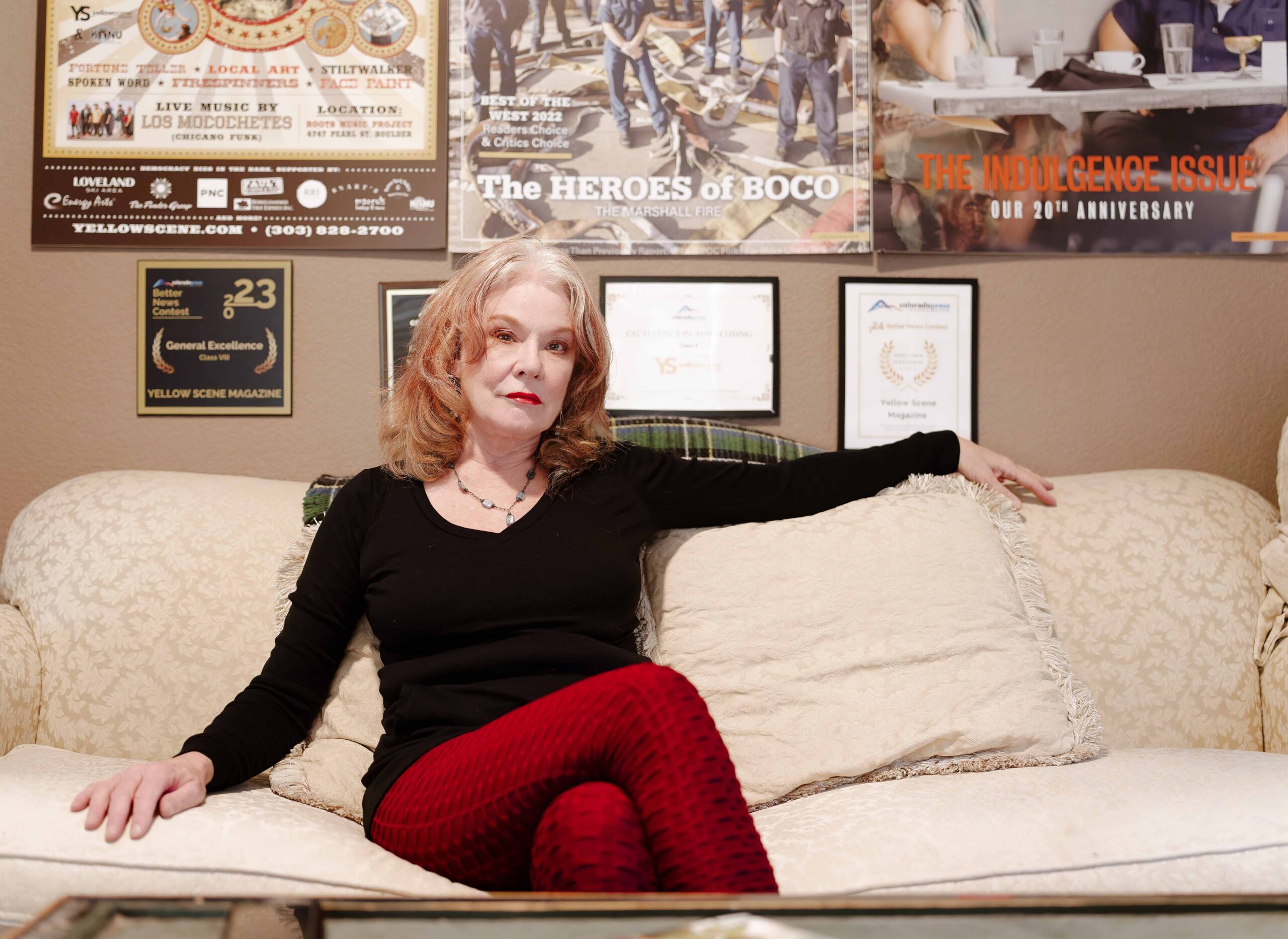 No one understands that better than publisher Shavonne Blades, known around here as the Red Tornado. She’s made a career out of tearing up traditional media by the roots to clear space for independent voices to grow. And to be frank, surviving as a small indie publication for more than two decades requires weathering more than a few breakdowns along the way. Those breakdowns and breakthroughs began well before Yellow Scene, back in the days when she was hustling ads on the California coast.
In the 1980’s, Shavonne was living in Santa Cruz, California, sketching ads by hand for an alternative weekly. It was there she sharpened her sales instincts and grew a genuine love for news. But her time on the coast was literally bookended by upheaval.
An earthquake struck. “There was a crack in the road to get to my house,” she recalled. “So deep you couldn’t see the bottom, so long you couldn’t see the end. My God. And my house was, you know, now on shaky ground — literally.”
The quake left more than just cracked pavement; it left Shavonne rethinking her own footing. It was one more sign it was time to head back to Colorado and build something new on steadier ground.
Erie, Colorado became and remains her chosen home where she would immerse herself in a sales role with Boulder Weekly for five years. There she would learn from and get inspired by Joel Dyer and Greg Campbell, both deep diving journalists who were deeply dedicated to their work.
The Boulder Weekly focused, unsurprisingly, on Boulder proper. But Shavonne was watching East Boulder County grow at a breakneck pace, and she couldn’t help but notice an issue, entire communities just outside the city limits were being left without a strong voice in local news.
So, she made a decision. She left the Weekly and struck out on her own. Her first venture was called Goldmine, its name hinting at the stories waiting to be unearthed. With a knapsack full of issues slung over her shoulder, Shavonne walked door to door through Erie, delivering copies herself to every household she could reach, while raising a son and bartending at night.
It was scrappy, exhausting work, but also the beginning of what would eventually become Yellow Scene, a publication rooted in the belief that every corner of the county deserved to see itself reflected in print.
Unsurprisingly, one of the first major challenges Shavonne faced was price. Printing hundreds of pages was expensive, and printing full-color copies was proving to be a recipe for bankruptcy. Resourceful as ever, she bartered with a local copy shop and secured a deal for yellow paper.
“It’s an optimistic color, and it would stand out,” she said. That choice would become a defining feature of Yellow Scene — a publication for bold optimists, unafraid to be seen.
Once the printing was figured out, the next hurdle was getting the magazine into people’s hands. In those early days, margins were tight, promises were few, and every day felt like a test of stamina and willpower. Shavonne treated every potential reader and client as essential.
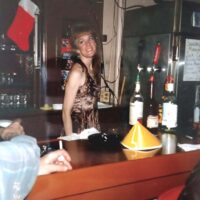
Shavonne Blades, bartending at the Erie Inn when YS was just a little flyer
Delivering copies in Erie, 4,000 doors back then, took a full week. Some days, she pushed her infant son, Nick, now 29, in a stroller, dashing from the sidewalk to each front door and back again. On top of that, she worked part-time at a local coffee shop in town, and bartended at night. Her passion for putting Yellow Scene into readers’ hands was so intense that she sometimes tried to hand out copies to customers while waiting tables until the owner told her, in no uncertain terms, to “leave the customers alone.” (She kept handing them out anyway.)
That kind of drive, persistence, and inventiveness became the backbone of what Yellow Scene is today.
Like a canvasser deciding whether to stop and drop literature or keep moving, Shavonne constantly had to balance her long-term goal of bringing an independent media outlet to East Boulder County with the day-to-day reality of building it by hand: hustling, strategizing, and improvising every single day.
Just as she was gaining momentum and weighing her next steps, an early, unexpected tragedy struck: September 11th. It was a difficult time, people were anxious, skeptical about the future of the country, and hesitant to engage with anything new, including independent media. Yellow Scene was put to the test, and in response, the publication began to sharpen its identity: rebellious, unflinching, and unafraid to push boundaries.
One of those defining moments came in the form of an early controversy. An early contributor, Brian Ball, penned a column called The Wrecking Ball.
Shavonne recalls, “It got us so many letters, sometimes the most outraged, unhinged responses. But that was to be expected. The column had a reputation as a knock-down, drag-out critique of aspects of local society.”
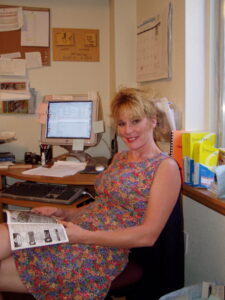
The early days of Yellow Scene, circa 2003
Early on, Yellow Scene had to make a choice: defend this kind of fearless, challenging content, or dilute its voice. They chose to own it, to be creative, provocative, and unapologetically independent. That decision has continued to echo in the publication’s ethos ever since, shaping every story, column, and feature with the same bold, independent spirit.
It seems like a million years ago, back when us journalists were slipping papers under doors and fending off angry letters. It was a simple time for local news.
At the turn of the millennium, hardcopy still reigned supreme. Only about 23% of Americans got their news online in 2000; today, that number has jumped to 86%. But even then, the industry was already shifting. Institutional investors were starting to eye newspapers as profitable acquisitions. Family-owned papers were being sold to private equity firms, and after the 2008 recession, many outlets faced massive layoffs, budget cuts, and relocations, a trend that left local newsrooms thinner and farther from the communities they served.
Today, much like the national trend, just a handful of corporations control most media, raising questions about independence, coverage, and local voice. In our region, for example, 9News is owned by Tegna and is being bought out by Fox News, a publicly traded company, while the Denver Post, the only remaining Denver print paper after the Rocky Mountain News closed in 2009, is owned by Alden Global Capital, a New York-based hedge fund. Alden, the second-largest newspaper owner in the U.S., has earned the nickname the “destroyer of newspapers” for its pattern of acquisitions and drastic cost-cutting measures.
For the team at Yellow Scene, these trends underscore the stakes of being a truly independent local publication and highlight why their work remains vital to the community.
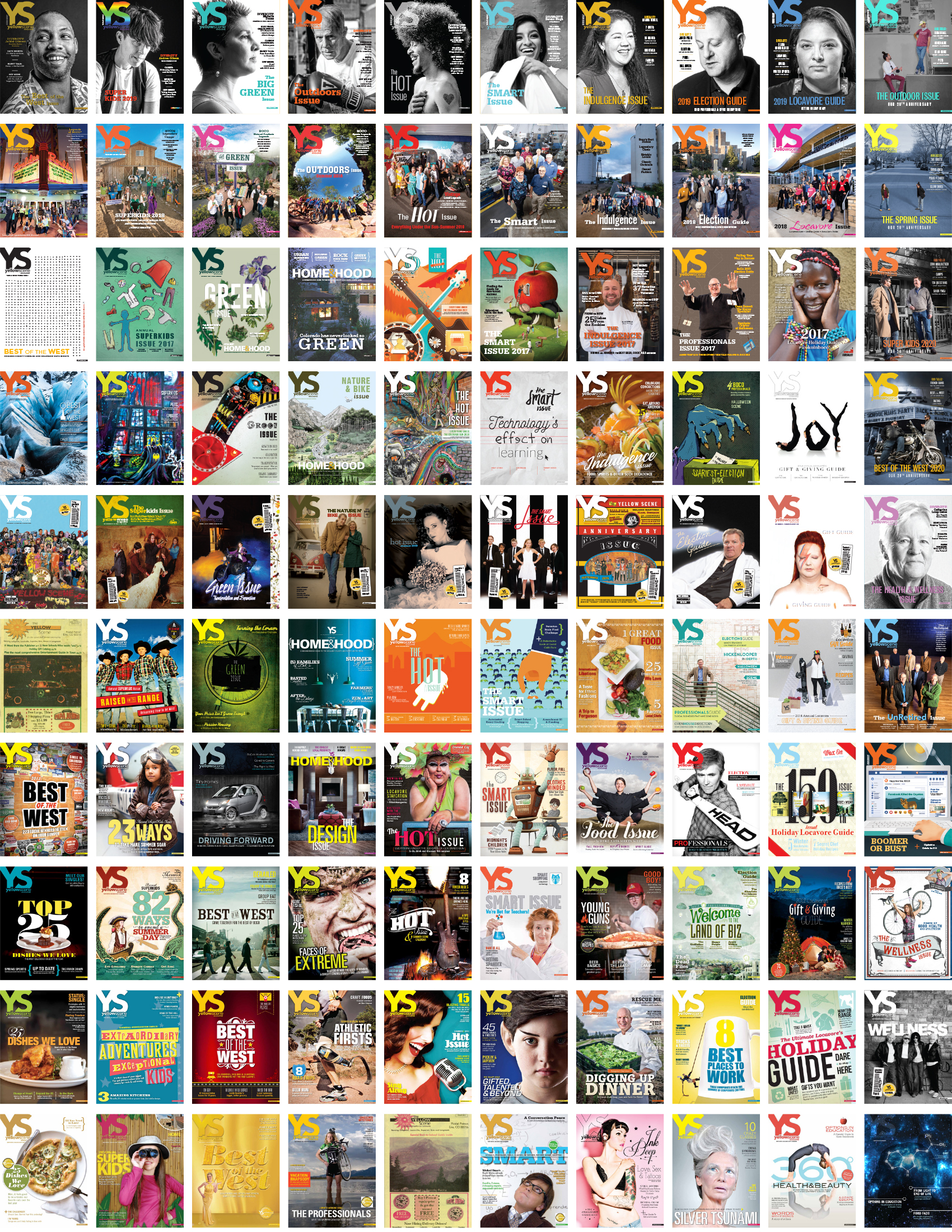
Yellow Scene: Then and Now
Yellow Scene’s roots have shifted just as much as the media landscape itself. The publication began in a 500 sq ft apartment, moved into a privately owned office building, and now exists within the walls of each contributor’s home, as writers continue remotely.
Shavonne recalls, “In 2015 I had a building and had to sell it. So we moved Yellow Scene to a 500-square-foot apartment, and ultimately back into my own basement.”
By 2017, she remembers, “I thought I was being one of the big boys, investing all revenue back into Yellow Scene. I was spending $50,000 a month on payroll. All I could think was, ‘Wow, I’m losing money.’ But I was investing. I was trying to push it over the hill. My thinking wasn’t wrong, I just didn’t have the resources to manage it, and I lost control. It led to chaos and a shame spiral.”
“Before we could get out of it,” she continues, “I had to break down my views around donations and not just relying on ad revenue. Reader-supported journalism was completely new for us. For 25 years it was our advertisers who sustained Yellow Scene and supported local journalism. Thankfully, those advertisers—along with readers now—value our independence, collaboration, inclusivity, and resiliency, and they’re willing to put their money where those values are.”
While it would be nice for news to be free, Shavonne notes that journalists need to be compensated. Without hedge fund backing or public shareholders, independent publications have to get creative. People are willing to pay for information they can’t find elsewhere. Many other outlets prioritize pleasing boards or investors, which often waters down reporting and compromises the truth; they’re effectively “bought and bossed.”
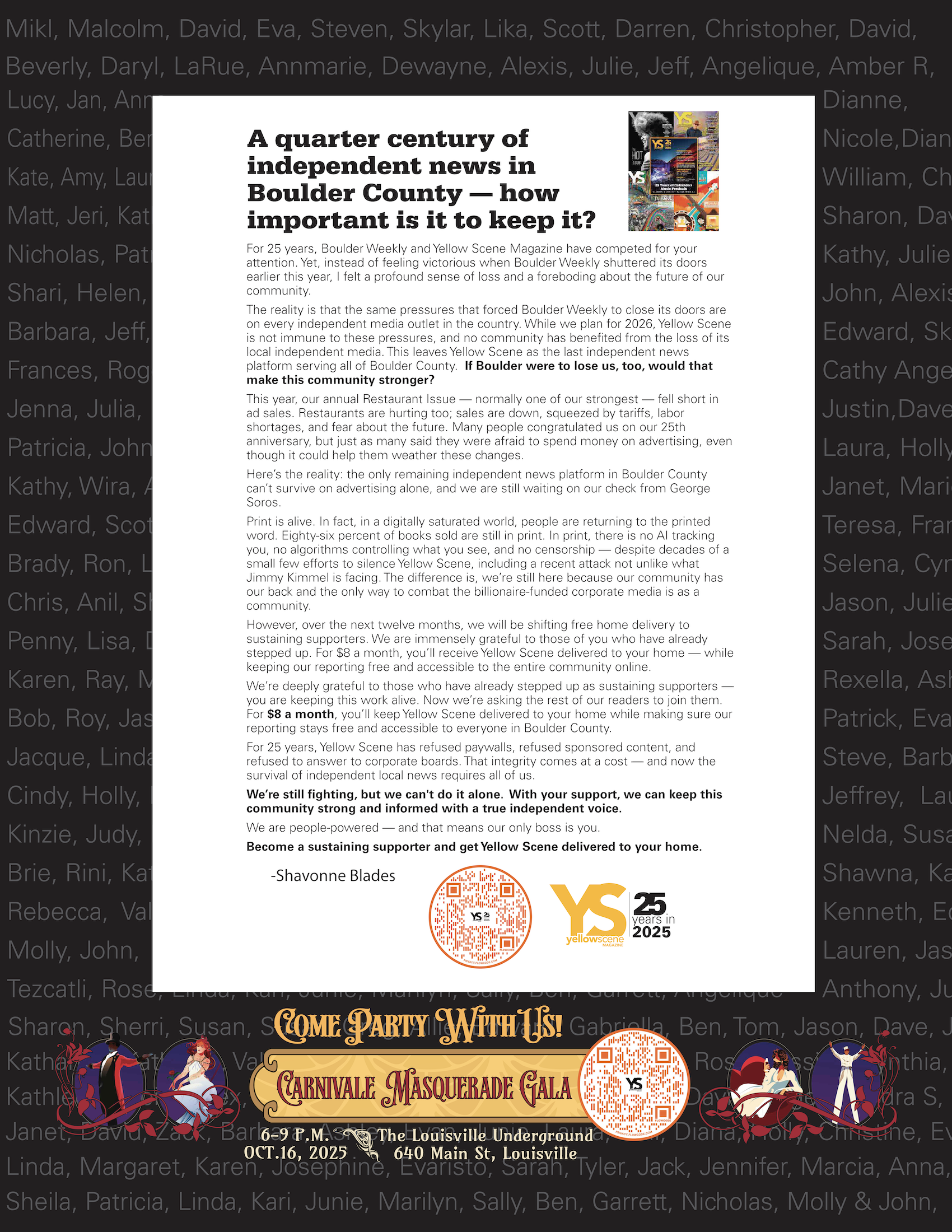
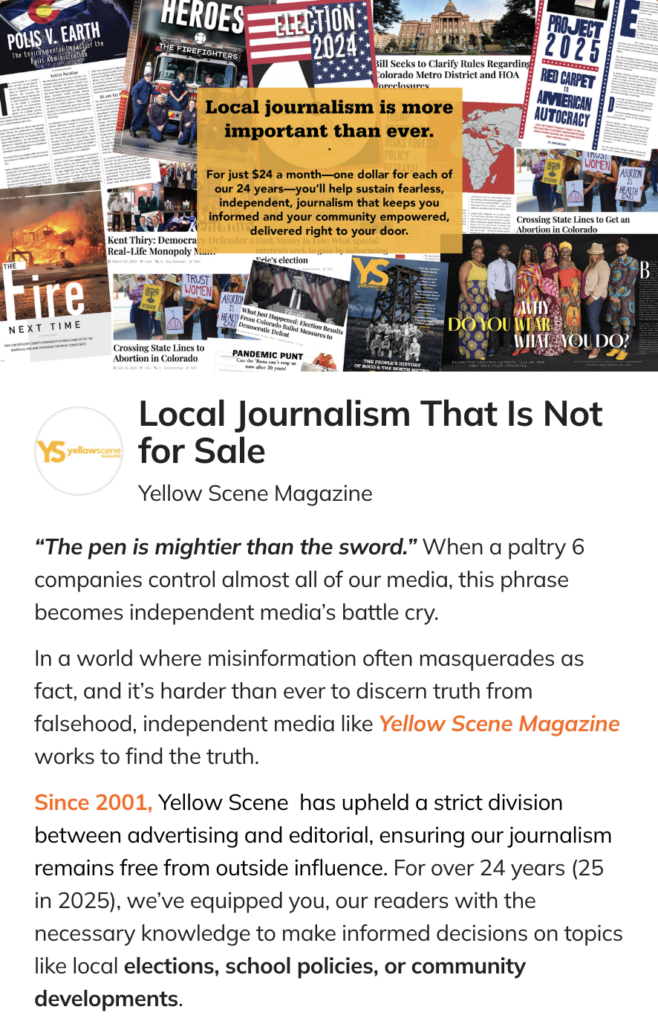
While readers may feel powerless against big media nationally, there are ways to support local independent journalism. One option is becoming a sustaining supporter of Yellow Scene, for less than a dollar a day, or $24 a month. Yellow Scene remains free and without a paywall, but because we refuse sponsored content—something Shavonne says she’d quit before allowing—sustaining true local journalism is 100% dependent on the community.
Another is attending the annual Gala, with tickets at $25 and VIP passes at $55. This year’s 25th Gala takes place at The Louisville Underground on October 16 from 6–9 pm, featuring music from The Pamlico Sound, an 11-piece funk band with plenty of dancing. Guests can break it down on the dance floor while helping build back better news.
In an era of sophisticated AI and limited transparency, independent journalism has become a rare lifeline. Yellow Scene isn’t in the business of compiling news from other sources. Our articles aim to challenge readers, encouraging a more informed and engaged community through creative takes and special series rooted in our perspective as Boulder County residents.
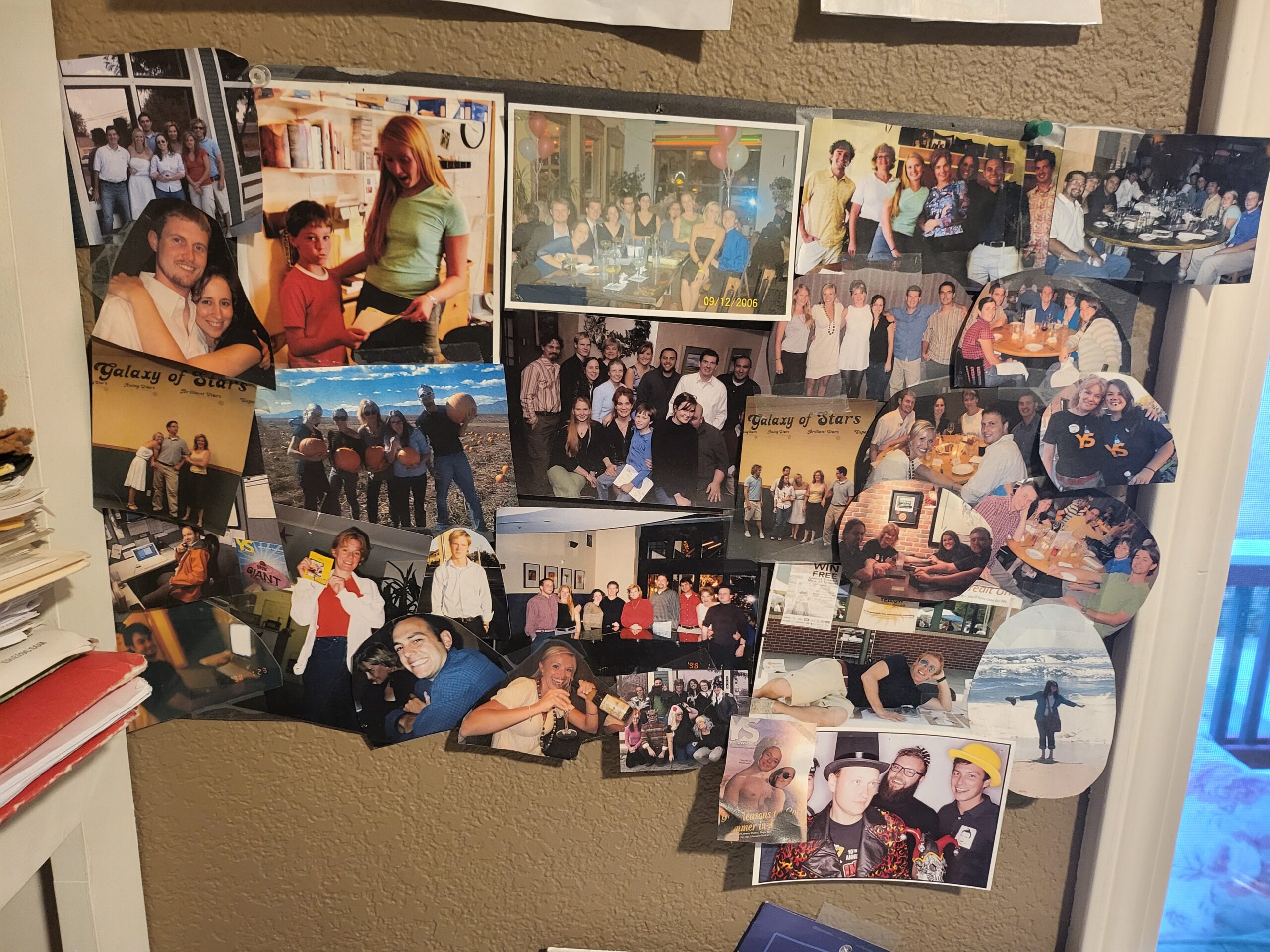
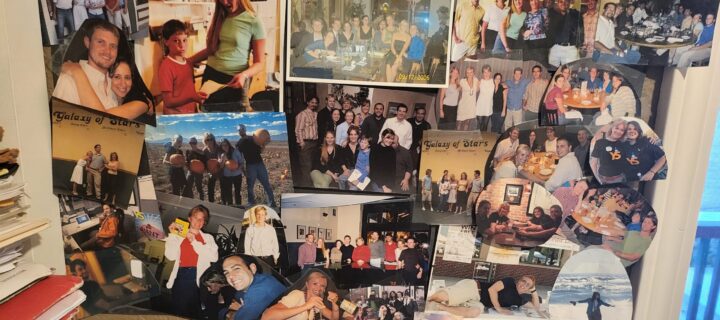
A collection of the people who built Yellow Scene
Like journalism like this? Consider becoming a sustaining supporter — and get our print edition delivered to your home each month.
Democracy needs journalism more than ever. For 25 years, we’ve told the truth — your support helps us keep doing it for the next four and beyond. Administrations come and go. Our team stays, ready to lead no matter who’s in charge.