



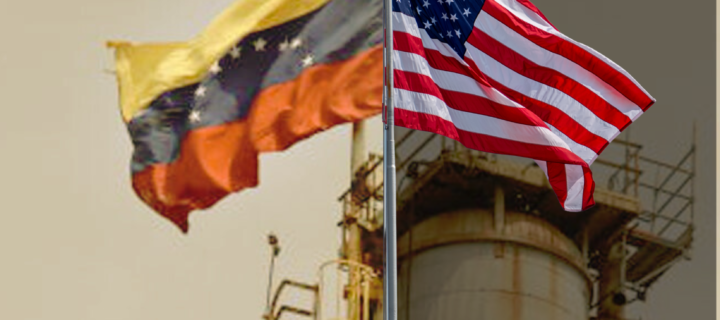

This piece is part of Yellow Scene Magazine’s Opinion section. The views expressed here are those of the author and do not represent a reported news position. At Yellow Scene, opinion pieces speak freely, challenge assumptions, and say the quiet parts out loud.
As the U.S. claims control over Venezuela’s future, Americans are responding not with rallying energy, but with exhaustion, disbelief, and growing fear for their own democracy.
They may act with force, but they no longer control belief
Today we woke up to a set of headlines that have Americans talking. Overnight, the United States carried out a strike on Venezuela. Some reports describe it as the abduction of President Nicolás Maduro and his wife, followed by Donald Trump telling reporters at a January 3, 2026 press conference, held after the attacks, that the United States would take control of Venezuela and place its oil industry under U.S. management.
People are uneasy, and not just about foreign policy. The economy does not feel as strong as this administration claims. Democratic guardrails are eroding in plain sight. And despite the familiar language of strength and freedom, Americans do not seem to be buying it. They are not rallying around the concept of “America the Great.”
That reaction tells us more about the state of the country than any press briefing ever could.
This legitimacy disconnect did not come out of nowhere. It is reinforced every day by the material reality Americans are living with.
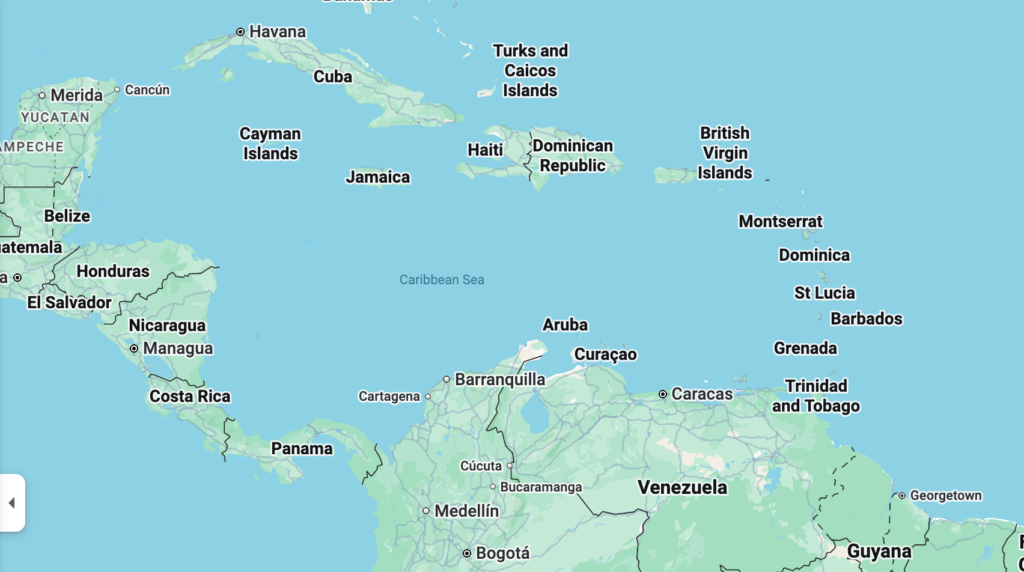 What the hell is happening in Venezuela?
As more information becomes available, one thing is already apparent: the administration’s version of events is not aligning with what reporters, international observers, and Venezuelan dissidents are describing on the ground.
The official narrative frames this action as liberation, freeing the Venezuelan people and Americans from a criminal drug cartel. That framing does not withstand even basic scrutiny.
Whatever language is used to describe it, whether strike, seizure, or abduction, it represents a unilateral use of power with serious implications for constitutional oversight, international law, and future precedent.
Beneath every explanation offered so far, one constant keeps resurfacing.
Oil.
Venezuela holds some of the largest oil reserves in the world. Years ago, its government reclaimed control of those resources, shifting them away from foreign, often American, corporate dominance and into state hands.
Whether that control was handled responsibly or disastrously is a legitimate debate. It does not justify U.S. intervention legally, historically, or morally.
This is a familiar pattern.
Which is why focusing solely on the character of Nicolás Maduro misses the larger point. You do not have to believe Maduro is a good leader, or even a legitimate one, to recognize that unilateral force carried out without legal authorization is still illegal. The obvious question then becomes what comes next. Invading China?
 Socialism, state control, and a well-worn shortcut
Part of how actions like this are sold to the American public relies on political shorthand that collapses important distinctions.
Socialism refers to collective or democratic control of economic resources. State control refers to centralized authority exercised through government power. They are not the same thing.
That complexity has been flattened into an easy shortcut: socialism becomes tyranny, capitalism becomes democracy.
Venezuela does not fit neatly into either category. It is best understood as a state-controlled oil economy shaped by corruption, sanctions, and repression, not as a clean example of socialism as an economic theory. Naming that accurately matters, not to defend the regime, but to prevent propaganda from doing the work of justification.
When reclaiming resources from multinational corporations is treated as authoritarian by default, force can be sold as liberation rather than extraction.
The hypocritical pretext of drugs
Drug trafficking has been offered as a moral justification for U.S. action against Venezuela. It is a familiar claim, and a selective one.
Venezuela is not a major drug-producing country. Some trafficking routes pass through its territory, as they do through many countries in the region. That does not amount to evidence of a state-run narco enterprise.
The hypocrisy becomes harder to ignore in context. Trump has welcomed cartel-linked families into the United States and shown tolerance toward criminal actors when it aligned with his interests. He is also notably cozy with Saudi Arabia and its leadership, despite well-documented ties between the Saudi state and extremist networks, including figures linked to al-Qaeda.
Americans have seen this script before.
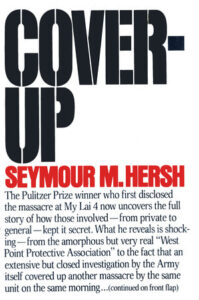
Vietnam was justified through a credibility gap later exposed by the Pentagon Papers.
Iraq’s weapons of mass destruction were sold with urgency and certainty, only to be revealed as fiction.
Afghanistan was framed as a necessary response to terror, stretching into a twenty-year occupation that ended in withdrawal and devastation, and it did nothing to reduce what the United States calls terrorism. If anything, it expanded it.
That history is not distant. It shapes how people hear claims like these now.
 American buy-in is missing
What makes this moment distinct is not only the action itself, but how Americans are responding to it.
The public is not disconnected in the way it is often portrayed. People are talking, sharing information, and trying to make sense of what they are watching unfold. Many are openly naming authoritarian drift and the erosion of democratic norms.
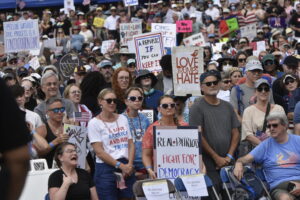
Large-scale protests, including the recent No Kings demonstrations that became the largest protest in American history, make one thing clear; aside from MAGA followers, the public is not supporting the actions of the current administration.
What is missing is consent.
The government has acted, but it has failed to convince the public that this action represents them. Protest is widespread, but it is protest against state power, not mobilization behind it.
Exhaustion is not apathy
This disconnect is reinforced by the conditions people are living under.
Housing insecurity is widespread. Medical care remains precarious and tied to employment. Debt keeps millions under constant pressure. Job stability feels fragile even for those technically employed.
Layered on top of all this is exhaustion. Just one year into Trump’s second term, people are tired, and that fatigue is not accidental. It is the point of attack after attack on civil liberties.
People are expected to perform citizenship inside a system that no longer seems capable of protecting them. When leaders insist the economy is strong while daily life feels brittle, trust erodes further.
Are non-voters to blame?
Roughly one-third of Americans did not vote, and they are often blamed for the state of the country. That framing is convenient and incomplete.
Some are discouraged, convinced participation no longer changes outcomes. Others refused to choose between candidates they felt neither represented nor listened to them, with Gaza playing a decisive role. Still others were blocked by voter suppression, access barriers, or intimidation, factors that remain consistently underexamined in post-election narratives.
In many cases, Democratic leaders responded by blaming “the left” rather than examining their own failures to listen, adapt, or meaningfully respond. That reluctance is hard to separate from the fact that they accept much of the same corporate and lobbying money as the GOP.
Disengagement exists, but what we are witnessing is a participation crisis rooted in legitimacy, not indifference.
When the Democrats echo the same story
Cynicism deepens when Democratic leaders reinforce the same framing.
Colorado Governor Jared Polis publicly celebrated the removal of Venezuela’s leadership while acknowledging the absence of congressional oversight and a clear plan. Statements like these attempt to split the difference, condemning procedural failures while endorsing the outcome.
For many Americans, that contradiction confirms there is no meaningful institutional opposition to executive overreach, only variations in tone.
Why “freedom fighters” are cheering it on instead of fighting
MAGA did not appear overnight. It was built over decades through coordinated propaganda efforts by organizations like the Heritage Foundation, whose mission was to reshape political reality for conservative voters.
MAGA voters often frame themselves as distrustful of government and defenders of freedom. Yet as the leaders they support act in openly authoritarian ways, resistance has been replaced by celebration.
Freedom is defended when it is personal or partisan, and dismissed when it applies universally. That alignment explains enthusiasm, but it does not create legitimacy. It also illustrates how authoritarianism gains power, not by convincing everyone, but by securing a loyal minority willing to excuse force as long as it targets someone else.
Force without legitimacy
Force does deliver short-term results. It can remove leaders, criminalize dissent, and illegally seize assets. What it cannot do is compel belief.
Rule by force produces compliance, not consent. Over time, systems built on coercion require constant escalation to maintain control, while public trust continues to erode. The result is not stability, but a governing structure that survives by pressure rather than participation.
 What can we learn from history?
Authoritarian systems rarely collapse all at once. More often, they hollow out slowly as belief erodes faster than force can compensate.
In late Soviet Eastern Europe, regimes did not fall because tanks disappeared, but because legitimacy did.
Spain’s dictatorship ended through prolonged stagnation, elite fracture, and public disengagement that made continued repression unsustainable.
Even the French Revolution began as a legitimacy crisis rooted in extraction without representation.
Closer to home, the Vietnam War unraveled not only on the battlefield but in public consciousness. Once the Pentagon Papers exposed the gap between official narratives and reality, belief collapsed. The war did not end immediately, but its legitimacy never recovered.
History does not promise restoration. It offers clarity.
America is not returning to a normal most people recognize. There is always an after. What ours will be, and how long it will take, remains unknown. Force can hold power for a time, but it cannot manufacture belief. And when belief disappears, something else always begins. History rarely offers certainty. It does, however, record what happens when people stop accepting what no longer feels legitimate.
Like journalism like this? Consider becoming a sustaining supporter — and get our print edition delivered to your home each month.
Democracy needs journalism more than ever. For 25 years, we’ve told the truth — your support helps us keep doing it for the next four and beyond. Administrations come and go. Our team stays, ready to lead no matter who’s in charge.