






Senate Bill 26-097, a Colorado bill that would have decriminalized commercial sexual activity throughout the state, was dropped a few weeks ago just hours before it was set to come up for a first vote in the state Capitol. The legislation sought to repeal state criminal offenses related to sex work, including soliciting, patronizing, and owning or controlling a place for such activity. While the bill would have maintained penalties for pandering involving intimidation, its primary goal was to replace the term “prostitution” with “commercial sexual activity” to distinguish consensual work from exploitation.
This distinction is central to the argument for reform, as supporters suggest that current law conflates consensual adult sex work with human trafficking. While trafficking relies on force, fraud, or coercion, sex work involves consensual activity between adults. Proponents argue that removing criminal penalties is not an endorsement of the industry but a recognition that criminalization pushes the trade further underground. This displacement makes it harder for law enforcement to identify genuine trafficking victims and harder for those victims to seek help.

State Senator Nick Hinrichsen, sponsor of the stalled SB 26-097, photographed in 2022. Photo from Jeffrey Beall
Despite these arguments, the bill failed to gain the political momentum necessary for a hearing. State Senator Nick Hinrichsen, a lead sponsor, confirmed that the measure lacked the votes to clear the Senate Judiciary Committee. Rather than advancing the bill to a contentious hearing where sex workers feared public exposure and harassment, Hinrichsen chose to postpone the legislation indefinitely. “Without the votes to get the bill out of committee, it was not worth the risk,” he told Colorado Politics. Though he is not running for re-election, Hinrichsen noted that the effort was a significant step in educating the public on why the current system fails.
The safety concerns cited by Colorado supporters are mirrored in other jurisdictions and research. In Maine, selling sex has been decriminalized to make reporting crimes easier, and research from New Zealand suggests that decriminalization allows workers to feel more able to refuse dangerous clients. Pasha Ripley, founder of Parasol Patrol and executive director of Red Light Sources International, argues that criminalization creates a “perceived institutional impunity” for those who commit violence against workers. As Ripley told Yellow Scene Magazine, “Criminalizing sex work does not end exploitation, it just makes it more dangerous.”
Beyond local laws, federal actions like SESTA-FOSTA have further complicated the safety landscape for sex workers. While intended to stop trafficking, these laws shut down websites that workers used to vet clients and negotiate safety. Researcher Danielle Blunt notes that these policy failures often stem from a lack of direct engagement with the community.
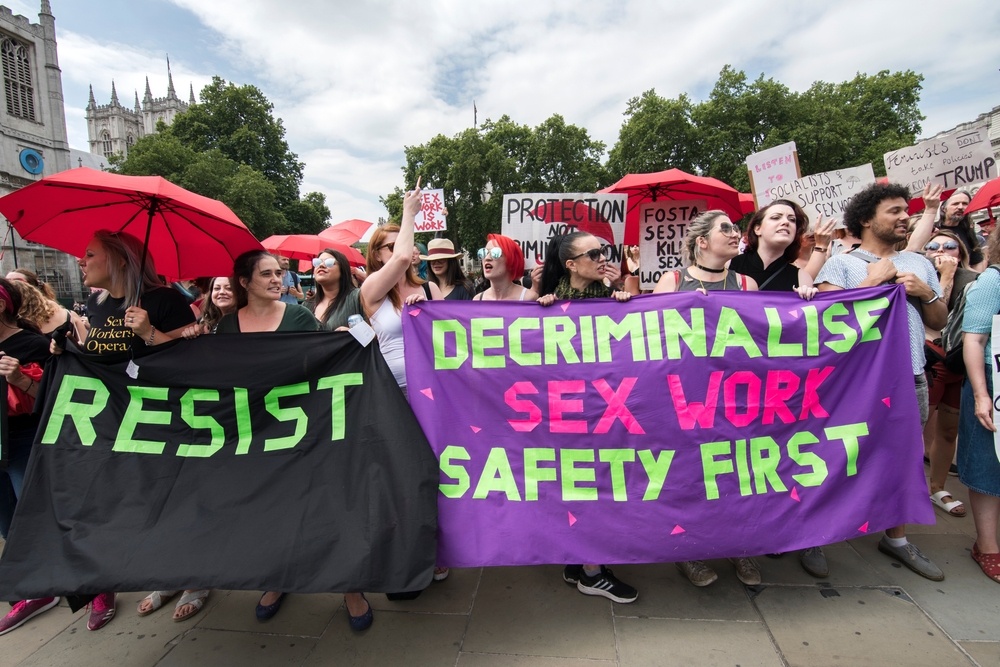
Advocates in London demand legal protection and decriminalization outside the Houses of Parliament in 2019. Similar global movements for safety and autonomy informed the arguments behind Colorado’s stalled Senate Bill 26-097.
Photo from Koca Vehbi
“They’re coming at it from an academic standpoint with no real experience. And a lot of what they’re asking about is based on stereotypes,” Blunt told WHYY.
This disconnect suggests that media portrayals and academic research often ignore the violent crimes and safety issues workers face due to their legal status.
The failure of Senate Bill 97 highlights a persistent gap in how society regulates sexual activity and addresses exploitation. For many advocates, the exclusion of sex workers’ voices is the primary reason for their ongoing vulnerability. Any successful future policy will likely require lawmakers to center the voices of those most affected by the law to ensure it provides meaningful protection rather than further marginalization.
While the bill is stalled for now, the debate over autonomy and harm reduction remains active in the state Capitol. Hinrichsen remains hopeful that the conversation will eventually lead to a policy that prioritizes the safety of all involved. As he told Yellow Scene, “big changes do not often happen on the first attempt. Some policies can be a major shift, and they can take time.”
Like journalism like this? Consider becoming a sustaining supporter — and get our print edition delivered to your home each month.
Democracy needs journalism more than ever. For 25 years, we’ve told the truth — your support helps us keep doing it for the next four and beyond. Administrations come and go. Our team stays ready to lead, no matter who’s in charge.