






Last September, Kevin Matisheck, tired of the constant distractions of his phone and social media, switched to a flip phone.
“I definitely wanted to fix my screen time and screen addiction because I felt like all of the time I spent on Instagram was sucking energy out of me and it was active time that I could be using on other stuff,” he told me. “I was really busy this past semester so I was like, I think I could be a lot happier if I cut that out. And for a while I did cut that out.”
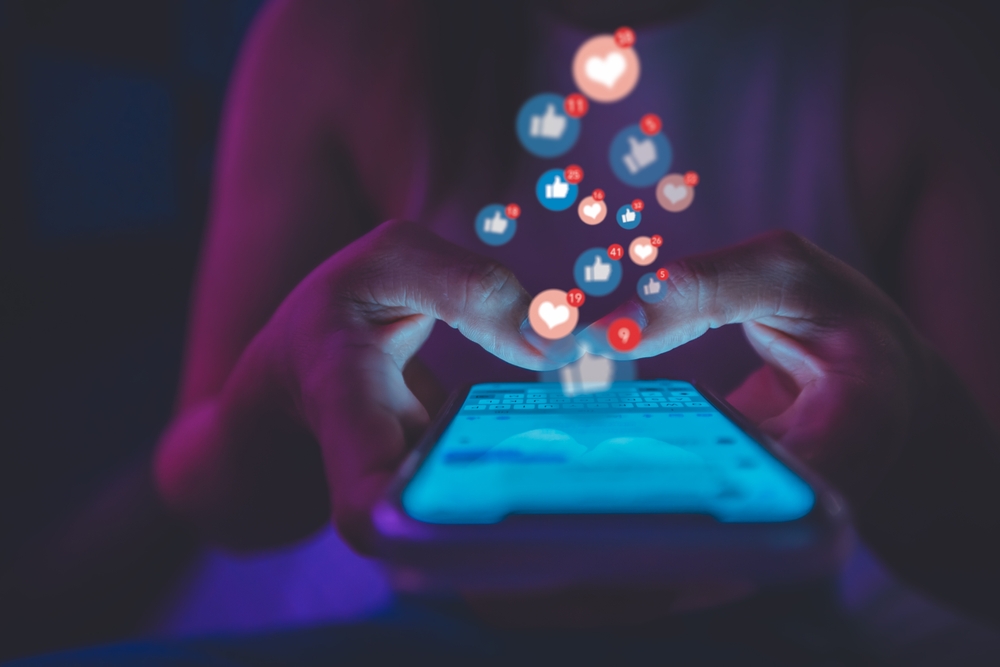
Many young people, including Matisheck, a student at Lewis and Clark University, feel they spend too much time on their phones, and have joined a growing trend among Gen Zers to ditch their smart phones and go old school.
“I don’t like spending a lot of time on social media, but it just happens when I’m bored,” Amelia Bretz, a graduate student at the University of Colorado, said as we sat in her car. “I just feel unproductive when I’m on my phone a lot.”
She isn’t alone. In 2022, the Los Angeles Times reported that Gen Z spends an average of 7.2 hours a day watching videos on their phones, while a Stanford study from the same year revealed that most children receive their first smartphone around age 12.
These habits carry subtle consequences. “Phones can have small, often hidden, costs for well-being that can nonetheless add up over time,” Kostadin Kushlev, an assistant professor of psychology at Georgetown University, told the university’s online publication in February. “There’s an emerging literature around digital detox. There is evidence that disconnecting from technology can work in the short term, but what we lack is evidence on how to help people build sustainable digital habits that work in the long term.
To see if this generation is finding a path toward those sustainable habits, I spoke to several college students. Every student interviewed expressed a desire to switch to a flip phone, yet each cited an overwhelming dependency on modern tech as the primary barrier.
“I use it for everything,” said Simon Jones, a recent graduate from The New School in New York. “You kind of need it all the time. It would be a disadvantage to not have it at this point.”
Bretz faces the same dilemma. “I don’t want to be on my phone as much as I am,” she said. “But modern life requires it, whether it’s scanning a QR code menu or just going out to eat.
Matisheck, who had previously switched to a flip phone, but then switched back after it broke, described his experience to be transformative.
“There was a week and a half where I had no phone,” he said. “I did the thing where I was constantly grabbing for my phone and I didn’t have it. But eventually I felt way, way more human. I became a lot more focused. Focusing was easy for me. It’s like I had gained a new ability. If I wanted to do homework or read a book, I could just do it. And it wasn’t difficult for me at all.
Matisheck explained that navigating without Google Maps actually made traveling easier. “It forces you to pay attention to where you’re going and memorize directions,” he said. “It forces you to pay attention to where you’re going and actually memorize directions. […] I went to this one cafe and I noticed there’s a theater right next to it. And then that theater was playing this band I like. And so I went out to a show that I would not have gone to if I was not thinking and paying attention to the road.”
But, after his flip phone broke he returned to the smartphone. This time an iPhone SE instead of his old iPhone 15.When asked how he maintained his old minimalist habits, he admitted he couldn’t.
“When I got the iPhone SE, I felt that pull again just because the screen itself is so interactive,” Matisheck said.
“I wasn’t on Instagram, but my friends would make fun of me because I would literally be scrolling on Google Maps. I would look up something on YouTube and then find myself on Shorts. That screen really pulled me back in.
Despite his initial discipline, the friction of modern connectivity eventually won out.
“The truth of the matter is that I was originally very strict about I’m not gonna download or touch Facebook or Instagram on my iPhone. I think that lasted about two weeks,” Matischeck said. “It’s like, okay, whatever. I’ll just do it for a day. And ever since then I feel like I’ve lost that ability where I can just instantly focus. Life was easier. I felt more in control of my motion. And I think I’ve lost an ability.”
Yellow Scene’s 2026 Summer Support Drive is underway with a goal of 1,000 Sustaining Supporters by summer’s end.
For 26 years, we have remained fiercely independent, free from sponsored content and outside editorial influence.
Reader-driven support keeps local journalism unbossed, unbought, and our journalists fed. Become a sustaining supporter for $8/month and get Yellow Scene delivered to your home.
Join the Summer Support Drive and keep local journalism strong.